
Reviewed · SCUBA DIVING COURSES
WaterColors – PADI Scuba Diver Certification in Boracay
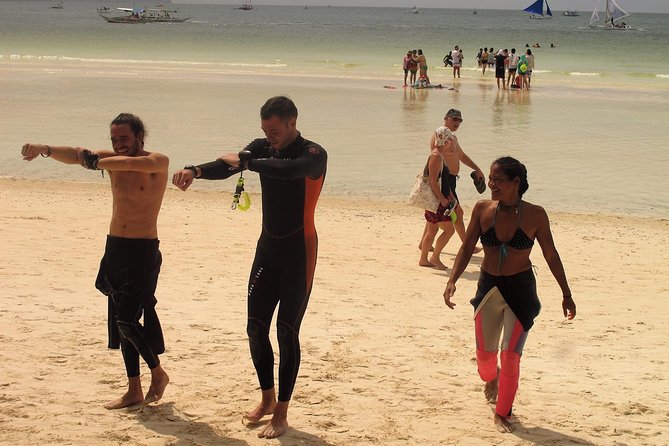
Boracay’s white beach is more than a pretty backdrop for this two-day PADI course. You’ll study the basics, practice skills from shallow water to a section where you cannot stand, then head by boat for supervised open-water sessions. The course follows PADI standards and provides the equipment, books, and certification processing.
I like the small-group format, which should give you more direct time with your instructor than a crowded class. I also like that the schedule includes several chances to repeat skills, ask questions, and catch up before the final paperwork. Instructors including Jimmy and Jenny Jara are praised for their patience and careful explanations.
The main consideration is time. This is not a quick resort activity you squeeze between beach stops. You need two fairly full days, a good level of fitness, medical clearance in some cases, and enough time before your flight because flying within 48 hours after scuba activity is not recommended.
Key points to know before booking
- Two days of real training: Expect theory, quizzes, confined-water practice, boat sessions, logged skills, and certification paperwork.
- Small group, maximum 15 people: The class is not private, but it is designed to keep costs below a one-to-one course.
- Instructors receive strong praise: Jimmy and Jenny Jara are noted for patient teaching, clear explanations, and careful attention to safety.
- Equipment and course materials are included: You do not need to rent the basic scuba gear separately.
- A useful Boracay location: Meet at WaterColors Boracay Dive Resort on White Beach, Station 1, near Willy’s Rock and Balabag Plaza.
- Plan around flights: Do not schedule this course too close to your departure. A 48-hour gap after scuba activity is recommended.
What the $485 price really covers
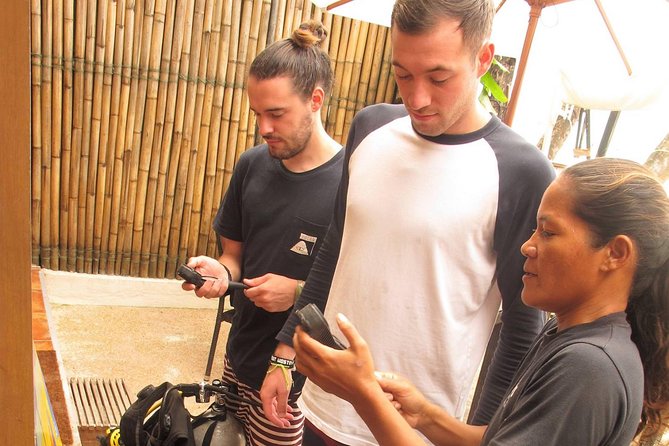
At $485 per person, this is a serious training purchase rather than a casual beach add-on. The fee covers a PADI scuba instructor, course materials, certification processing, scuba equipment, and coffee, tea, or water on both days.
That package matters. If you booked separate lessons, rented equipment, and paid certification fees one by one, the total could become harder to predict. Here, the major course costs are bundled together. The small-group setup also helps keep the price lower than private instruction.
Still, you should budget for lunch, other food and drinks, hotel transfers, and optional souvenir photos. The resort is on White Beach, so getting there may be simple if you are already staying nearby, but transfers are not included.
The value is strongest if you genuinely want a recognized beginner qualification. If you only want to try breathing underwater once, a shorter introductory session may suit you better. This course asks for study, physical effort, and a commitment to completing the required skills.
More Scuba Diving Courses in Boracay
- WaterColors – Open Water Diver Certification in Boracay
★ 5.0 · 35 reviews - Scuba Diving in Boracay: SSI Basic Diver for Beginners
★ 5.0 · 20 reviews - DiveGurus – Open Water Diver Course SSI/PADI
★ 5.0 · 13 reviews
Meeting at WaterColors near Station 1
The course begins at WaterColors Boracay Dive Resort on Boracay Highway Central, at the beachfront near Willy’s Rock and beside Balabag Plaza. The listed meeting time is 8:00 a.m., although the first day can be arranged to begin at 8:30 a.m. or, in some cases, earlier so you can finish the following day sooner.
That central beachfront setting is practical. You can reach it by public transportation, and you are not being sent to an isolated marina or an inconvenient inland office. Your activity also ends back at the same meeting point.
Bring the required PADI forms printed and signed. You will need to provide your height and weight when booking, and you must complete a health questionnaire before entering the water. Certain medical conditions, including asthma or heart problems, may require special clearance or may prevent participation, so check the medical statement with a doctor before you arrive.
The minimum age is 10. The course also requires a strong level of physical fitness. That does not mean you need to be an athlete, but you should be comfortable with the physical demands of swimming, handling equipment, and practicing skills in open water.
Day one begins with paperwork and scuba theory
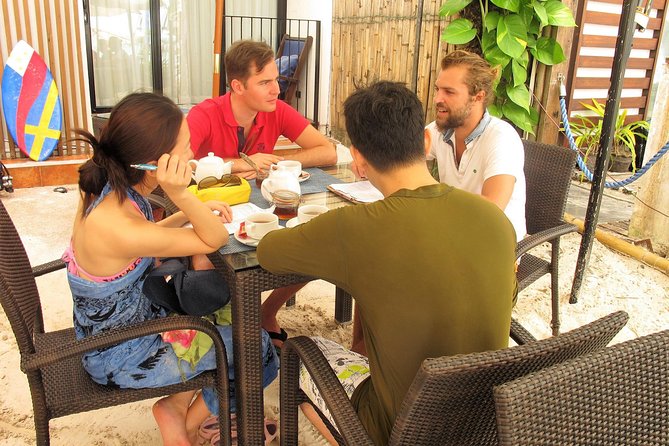
Registration and documentation take place at about 10:00 a.m. on the standard schedule. You will then move into the theory portion, which includes an instructor briefing, three videos, three knowledge reviews, two quizzes, reading, and discussion of your underwater sessions.
This classroom work is not filler. You need to understand equipment, procedures, communication, and safety before you are asked to manage those skills in the water. The course also includes a record of each session and a discussion afterward, giving you a chance to review what went well and what needs more practice.
The schedule includes a lunch break at noon. Food is not included, so plan to arrange your own meal. Coffee, tea, and water are provided, which is useful during a day that combines concentration with physical activity.
You can expect the pace to feel structured. If you are new to scuba, that is a good thing. The instructor does not simply hand you equipment and send you toward the beach. You first learn what the equipment does, then practice with supervision.
Beach practice moves from shallow water to deeper water
At about 1:00 p.m., the instructor takes you to the beach for confined-water training. The session begins in shallow water, where you can stand, then progresses to an area too deep to stand in. By the end of this part, you are expected to complete three confined-water training modules.
This progression is one of the most useful parts of the course. Shallow water gives you a calmer place to learn the basic actions. Moving to deeper water introduces a more realistic setting while keeping the session controlled and supervised.
Expect to repeat skills. That may feel slow if you are eager to see the reef, but repetition is exactly what you want in a beginner course. The aim is not only to perform a task once. You need enough practice to become comfortable with the equipment and the instructor’s signals.
Jimmy is specifically praised for taking time with students and explaining each step carefully. Jenny Jara is also noted for patient instruction and making sure students understand the material. Your assigned instructor may vary, and the operator can advise about multilingual guide availability.
More Scuba Diving in Boracay
- DiveGurus -Scuba Diving in Boracay
★ 5.0 · 25 reviews - Boracay Helmet Diving
★ 4.5 · 17 reviews - Boracay Island Hopping + Hot Kawa + Parasailing + Helmet Diving
★ 3.0 · 10 reviews - Boracay PADI Discover Scuba Diving
★ 5.0 · 9 reviews
The first boat session puts your training to work
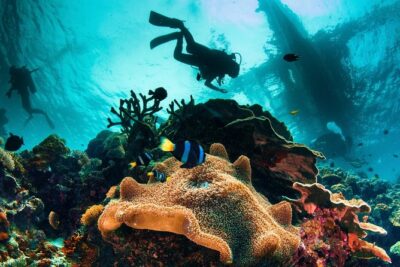
Once you are ready, the instructor takes you by boat for the first open-water session, scheduled at about 3:00 p.m. The depth is selected to meet the course requirements, and the instructor supervises the required skills in that setting.
This is where the course begins to feel like a qualification rather than a lesson at the shore. You are using the equipment in open water, following procedures, and applying what you practiced on the beach. The timing can vary because readiness and conditions matter more than rushing through the clock.
The plan is to complete two open-water sessions by the end of the course. You will also log the session and return to theory at about 4:30 p.m. That combination is useful because you can discuss what happened while it is still fresh in your mind.
Do not expect the first afternoon to be a long sightseeing trip underwater. The purpose is training, and required skills take priority. Boracay provides the setting, but certification depends on completing the lessons safely and correctly.
Day two adds another skill session and the final checks
The second day starts at about 8:00 a.m. with more confined-water practice. This gives you a chance to correct problems from the first day before the next open-water session, scheduled around 9:00 a.m.
That order makes sense. You are not expected to remember everything perfectly overnight. The morning practice lets you review the equipment and repeat any skill that still feels awkward. Afterward, the second open-water session gives you another supervised opportunity to apply the training.
Scuba theory continues at about 11:00 a.m., followed by a lunch break at noon. The afternoon is reserved for logging sessions, catching up on any unfinished skills or theory, and completing the certification paperwork.
The schedule leaves room for instruction rather than pretending every student moves at exactly the same speed. If you need more time, the catch-up period is important. You should view it as part of the course, not as a sign that something has gone wrong.
Once the required work is complete, the course ends with your PADI certification paperwork and a well-earned celebration. The certification processing is included in the price.
Patient instruction is the strongest reason to choose this course
The most consistent strength of this course is the teaching style. Jimmy is repeatedly singled out for patience, clear explanations, and careful supervision. One account describes a one-to-one session in which he took time to demonstrate each step before asking the student to perform it.
Jenny Jara is also praised for explaining details thoroughly and checking that students understood the material. Another account credits the team with attentive handling from the initial briefing through the boat procedure. These details matter more than a fancy reception area when you are learning a skill that depends on calm decisions.
WaterColors has also received praise for friendly staff, good organization, and a comfortable place to rest between sessions. Bo is mentioned for taking underwater photos on another scuba course, but souvenir photos are optional and cost extra. Do not assume photography is part of this certification package.
You cannot select a particular instructor from the information provided, so treat the names as examples of the teaching team rather than a guarantee. If you have a preference, ask about availability before booking.
What is included, and what you still need to arrange
The included items are straightforward:
- PADI scuba instructor
- PADI course materials
- Certification processing
- Scuba equipment
- Coffee, tea, and water
You pay separately for food and drinks beyond those beverages, hotel transfers, and souvenir photos. Since the course occupies two days, these extras can affect your final budget more than they would on a short beach activity.
You should also bring the printed PADI documentation and medical statement if required. Completing forms in advance will help you avoid wasting course time at registration.
The operator accepts mobile tickets, and confirmation is provided at booking. Service animals are allowed. The activity can be conducted by a multilingual guide, but availability should be checked for your specific course.
Timing your course around flights and weather
The 48-hour flight rule deserves attention. If you are leaving Boracay soon after the course, build in enough time between your final underwater session and your flight. This is one reason I would schedule the certification early in a longer island stay rather than at the end of a short visit.
Weather can also affect the program. The activity requires good conditions. If poor weather causes cancellation, you are offered another date or a full refund. The standard cancellation policy allows a full refund when you cancel at least 24 hours before the start time. Cancellations or changes made inside that window are not refunded or accepted.
The maximum group size is 15 people. That is still a group course, not a private lesson, but the limit keeps it from becoming an enormous class. If you want the most individual attention possible, ask whether a smaller group or private arrangement is available.
Who will get the most from this Boracay course?
This course suits you if you want to leave Boracay with a formal PADI qualification rather than only a one-time underwater outing. It is also a good choice if you appreciate patient instruction and do not mind spending part of your beach holiday in a classroom.
Families may find the minimum age of 10 useful, provided the young participant meets the physical and medical requirements. The account of an 11-year-old completing the course with a parent suggests the format can work well for families, but each participant still needs to satisfy the operator’s requirements.
It may be less suitable if you have limited time, dislike structured study, or need hotel pickup. You also should not book casually if you have a medical condition that may affect your ability to scuba. Check with a doctor before making plans.
Should you book WaterColors?
Book this course if you want a properly structured beginner qualification, appreciate a small class, and can spare two full days in Boracay. The included equipment and certification processing make the $485 fee easier to assess, while the reported teaching strengths of Jimmy, Jenny Jara, and the wider team add confidence for first-time students.
Skip it if you only want a quick introduction, need transport included, or are flying within 48 hours. For the right person, this is a practical way to turn a Boracay beach stay into a useful new skill. Just arrive prepared, leave room in your schedule, and treat the training with the same seriousness as the fun that follows.
FAQ
How long does the PADI certification course take?
The course takes approximately two days. It includes registration, theory, confined-water training, two open-water sessions, logging, catch-up work, and certification paperwork.
What is included in the $485 price?
The price includes a PADI scuba instructor, course materials, certification processing, scuba equipment, and coffee, tea, or water. Food, additional drinks, hotel transfers, and souvenir photos are not included.
Where does the course begin and end?
You meet at WaterColors Boracay Dive Resort on White Beach, Station 1, near Willy’s Rock and Balabag Plaza. The activity ends back at the meeting point.
What is the minimum age?
The minimum age is 10 years old. All participants must also meet the stated health and physical fitness requirements.
Do I need to bring any forms?
Yes. You must sign, print, and bring the required PADI documents. You also need to complete a health questionnaire, and you should review the medical statement to see if a doctor’s certification is required.
Can I fly immediately after the course?
Flying within 48 hours after scuba activity is not recommended. Plan your departure with that waiting period in mind.
More Scuba Diving in Panay Island
- Boracay: Helmet Diving Experience with Photos and Videos
★ 4.7 · 155 reviews - Cebu: Beach Scuba Diving Experience
★ 4.9 · 130 reviews - Boracay: Introduction to Scuba Diving Experience
★ 4.8 · 104 reviews - Cebu: Scuba Diving Experience beach entry in Mactan
★ 5.0 · 45 reviews
More Scuba Diving Courses in Panay Island
- 2 Days SSI Advanced Open Water Course in Boracay
★ 5.0 · 3 reviews - WaterColors – Discover Scuba Diving in Boracay
★ 5.0 · 127 reviews - El Nido: Discover Scuba Diving with Manta Rays in Sibaltan
★ 4.7 · 24 reviews - Discover Scuba Diving in Boracay
★ 4.9 · 22 reviews
Just added around Panay Island
- DiveGurus – Open Water Diver Course SSI/PADI★ 5.0 · 13 reviews
- 2 Days SSI Advanced Open Water Course in Boracay★ 5.0 · 3 reviews
- Mainland ZipLine Experience in Boracay★ 5.0 · 8 reviews
- Iloilo City Tour (Garin Farm, Molo Mansion/Church, Vanishing Mansion)★ 3.0 · 3 reviews
- Mandala Wellness Spa in Boracay★ 4.0 · 5 reviews
- Boracay PADI Discover Scuba Diving★ 5.0 · 9 reviews
- Boracay ATV Adventure★ 5.0 · 17 reviews
- Boracay Half Day Land Tour with Puka Beach★ 3.0 · 6 reviews
Scuba Diving Courses, compared.
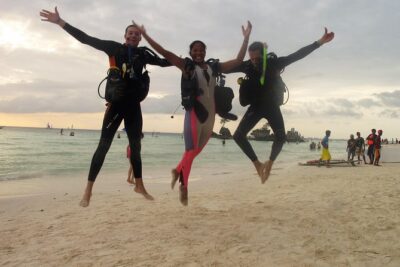
WaterColors – Open Water Diver Certification in Boracay
Read our review →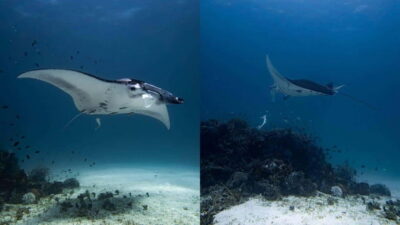
Discover Scuba Diving with Manta Rays in Sibaltan
Read our review →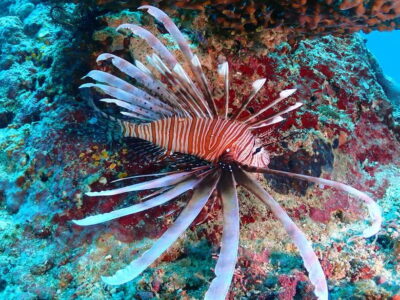
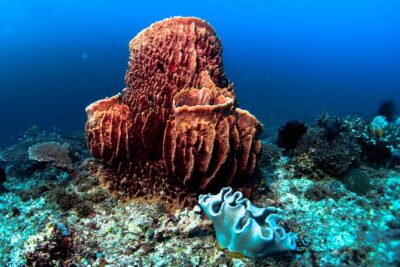
Scuba Diving in Boracay: SSI Basic Diver for Beginners
Read our review →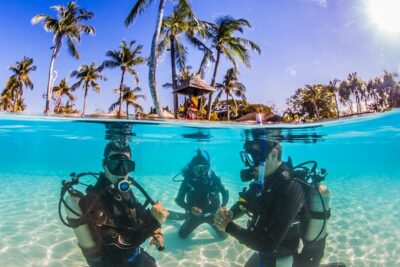
Browse the lists this tour appears in