
Reviewed · FREEDIVING
Beginner Freediving Course (with Bonus Session)
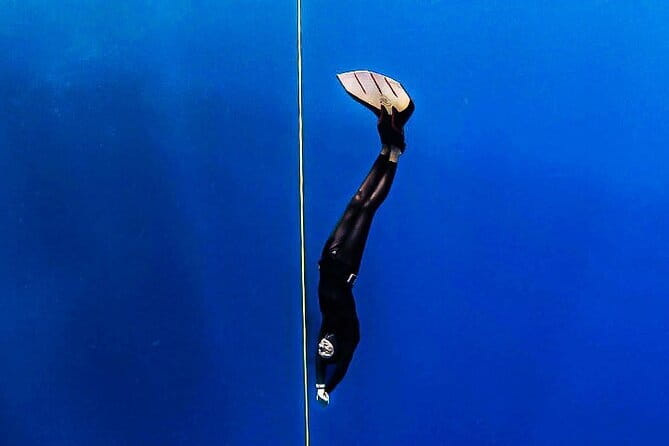
The most useful thing about this beginner freediving course is that it teaches you to stay calm underwater without a tank, using controlled breathing and careful technique. Over roughly 2.5 days, you work toward depths of up to 20 meters, with classroom instruction, pool practice, and open-water sessions at Napaling Reef.
I like the four-person maximum, which gives you room to ask questions and receive close safety attention. I also like the practical value: equipment, certification, photos, videos, and taxes are included, and pickup around Panglao can save you a transport headache. The main caution is simple: this is a serious physical course, not a quick snorkeling outing, and the 20-meter depth is a training goal, not a promise for every beginner.
Key points to know before booking
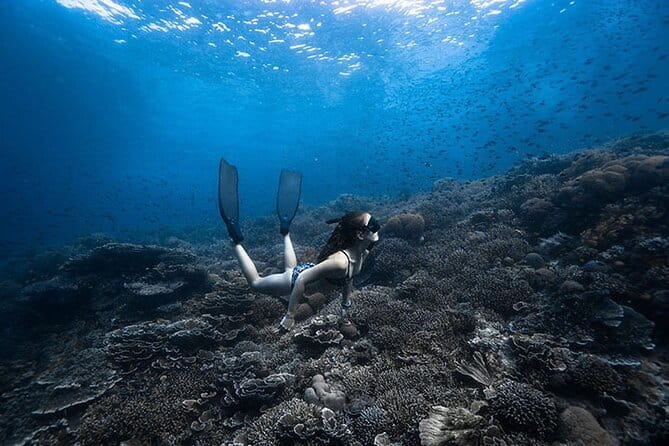
- SSI Level 1 training: Learn breathing, relaxation, pressure safety, and breath-hold skills in a structured beginner course.
- Three kinds of practice: Classroom lessons, pool sessions, and open-water training work together instead of relying on theory alone.
- Small groups: The maximum group size is four, a useful setup for safety checks and individual coaching.
- Napaling Reef session: Your open-water work takes place at one of Panglao’s known underwater spots.
- Strong inclusions: Snorkeling equipment, unedited photos and videos, fees, taxes, and a completion certificate are included.
- Flexible pickup: Collection is available from Panglao Island hotels, the airport, or the port, with the activity ending back at the academy.
What the Panglao course actually teaches
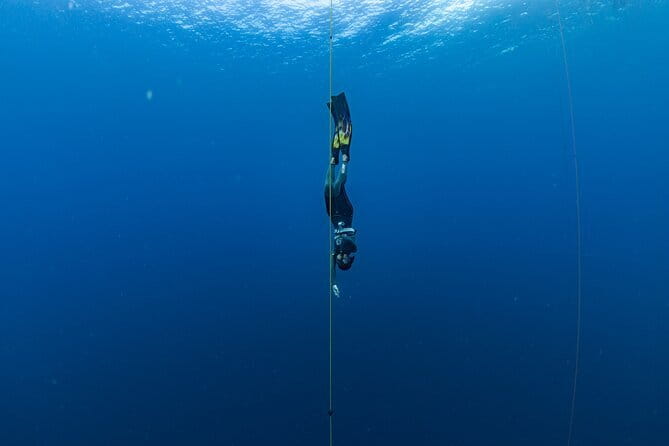
Freediving looks simple from the surface. You take a breath, go underwater, and return. In practice, the hard part is learning to relax while your body wants to hurry back up.
This course deals with that problem directly. You learn breathing and breath-hold methods, ways to relax underwater, and safety procedures for pressure changes. The lessons also cover pressure-related issues, which matter as you move below the easy shallow-water range.
The course follows the SSI Level 1 beginner standard, with the academy also working with AIDA and Molchanovs programs. The supplied details describe the course as lasting 2.5 days and training you toward depths of up to 20 meters, or about 65.5 feet.
That depth can sound dramatic, but you should read it as the upper level of the training program, not a guarantee that you will reach it. Your pace depends on comfort, equalization, breath control, and how well you respond to the water. A good course should help you build skill without turning depth into a contest.
More freediving in Panglao Island:
- Discover Freediving One Amazing Day
★ 4.5 · 4 reviews - Panglao: Napaling Reef and Sardines Freediving Experience
★ 4.9 · 16 reviews - Discover Freediving in Boracay
★ 4.9 · 7 reviews
Day one: classroom skills and a calmer breath
The opening part of the course gives you the information that makes the water work safer. You cover breathing techniques, breath-hold practice, relaxation, and pressure-related safety.
This classroom time may be the least flashy part of the program, but I consider it one of the most valuable. New participants often focus on how long they can hold their breath. The more useful question is how calmly and safely they can do it, and how they behave when something feels uncomfortable.
You also learn the safety procedures used during breath-hold training. That is especially important because you are not simply swimming underwater for fun. You are asking your body to work under a controlled limit, so supervision and correct procedure matter.
The exact daily timetable is not supplied, so you should confirm the start times when you book. The academy lists operating hours from 8:00 AM to 5:00 PM, Monday through Sunday, but that does not necessarily mean your course occupies that entire window.
Pool practice before open water
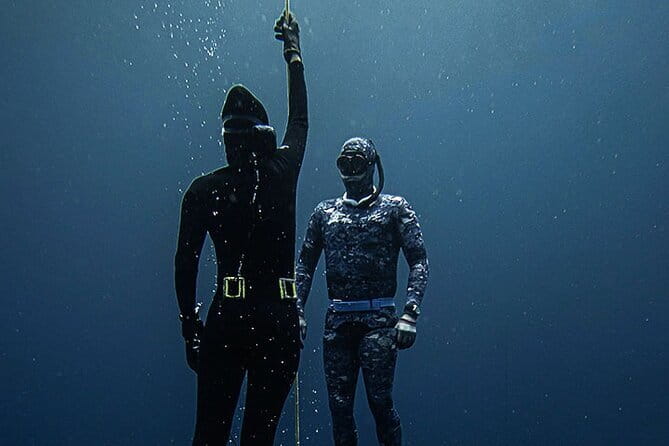
Pool sessions provide a controlled place to work on body position, relaxation, and breath-hold technique. You can focus on the mechanics without the extra movement and visual distractions of the sea.
I like this progression because it gives you a chance to find your rhythm before heading to Napaling Reef. The pool can also help you understand how much effort you are using. Small habits, such as tense shoulders or hurried movement, can waste energy and make breath-hold practice harder.
The group cap of four is especially useful here. An instructor can watch your form more closely, correct small problems, and explain a technique without leaving you waiting behind a large class.
The academy’s instructors include people such as Teo, Jomari, Ramar, Ven, Rashid, Edwin, Rea, Olga, and Vincent. Your assigned instructor is not specified, so do not book around a particular person unless the academy confirms that person will teach your course. The consistent theme in the staff descriptions is patient instruction and careful attention to safety, which is exactly what a first course needs.
Napaling Reef and the move to open water
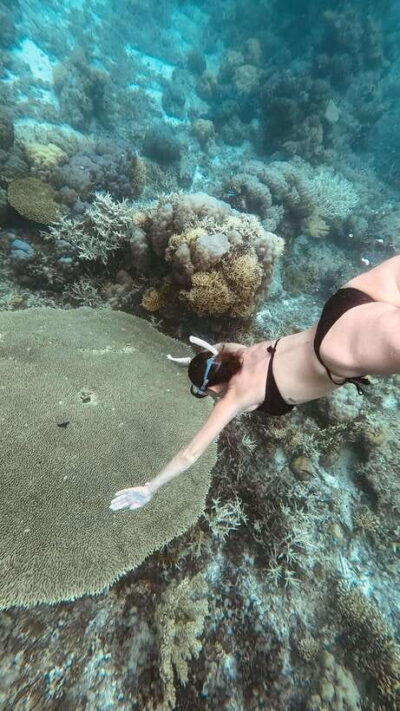
The open-water portion takes place at Napaling Reef. This is where the course begins to feel less like a lesson in a pool and more like a real sea activity.
You practice the same core skills in a natural setting: controlled breathing, relaxed movement, safe descent, and a calm return to the surface. The reef setting adds interest, but it also adds conditions that a pool cannot reproduce. Water movement, visibility, and the open space can change how comfortable you feel.
The location is also useful for people who want more than a certificate. You are learning in the sea rather than completing every exercise in a training tank. The supplied experience details do not promise particular marine animals or visibility on your date, so I would not book it solely for wildlife. Think of the reef as the setting for your training, not a guaranteed sightseeing program.
Snorkeling equipment is included. That wording matters because the package does not list a full inventory of specialized freediving gear. Ask the academy what equipment is supplied for your course and what, if anything, you should bring yourself.
A few more Panglao Island days worth weighing up
- Bohol: Boat Tour to Sandbar and Snorkeling with Turtles
★ 4.3 · 186 reviews - Bohol Chocolate Hills, Tarsiers & Loboc River Shared Tour
★ 4.5 · 35 reviews - Private Bohol and Chocolate Hills with Loboc River Cruise
★ 4.5 · 29 reviews - Bohol Chocolate Hills, Tarsiers & Loboc River Private Tour
★ 4.5 · 13 reviews
Safety is the real measure of the course
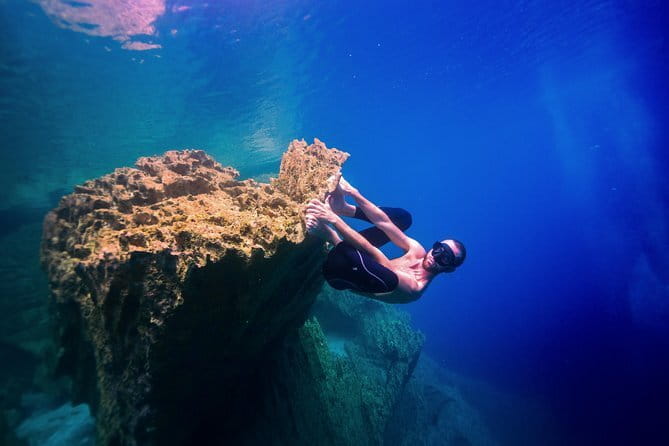
The strongest reason to choose a formal beginner course is safety. Breath-hold activity can look peaceful, but it requires clear rules, proper supervision, and an instructor who notices when you are pushing too hard.
The course includes instruction about pressure-related issues and safety procedures. You also get pool practice before open water, which gives you a gradual path into the activity. With no more than four participants, the instructor can keep a closer eye on each person than in a large commercial group.
I would treat the 20-meter target with respect. You do not need to reach that depth to have a successful course. For a first-timer, learning to relax, equalize correctly, and return safely is more important than chasing a number.
The academy’s staff includes instructors praised for patience and careful guidance. Teo is specifically described as putting safety first, while Jomari is noted for being helpful and patient. Ramar is also identified as an instructor who made participants feel safe and supported. These names reflect the wider teaching team, but they do not confirm who will lead your booking.
What the price includes at $416.70
At $416.70 per person, this is not a cheap half-day water activity. It is a multi-day training course with instruction, practice, and certification, so the price needs to be compared with a proper course rather than a short snorkeling trip.
The package includes:
- Snorkeling equipment
- Unedited photos and videos
- All fees and taxes
- A certificate upon completion
- Small-group instruction with a maximum of four participants
- Pickup from a Panglao hotel, airport, or port, as stated in the experience details
That is a useful bundle. The small class is likely the most important value point because personal attention matters when you are learning breath control and safety routines. The included photos and videos are a pleasant extra, letting you keep a record without arranging a separate photographer.
Lunch is not included. You can order it a day in advance for about 250 Philippine pesos. I would arrange that ahead of time, especially on a full training day when you may not want to leave the academy looking for food.
The word bonus appears in the course title, but the supplied details do not explain the bonus session. Ask what it includes, when it takes place, and if it depends on weather or course progress before you pay.
Pickup and meeting point details
The listed meeting point is Freedive Academy Panglao at Napaling Drive 1, Panglao, Bohol 6339. The activity ends back at the meeting point.
Pickup from a Panglao Island hotel, the airport, or port is included according to the tour details. That is handy if you are arriving without a rental vehicle, but you should still confirm the pickup time and exact location after booking.
The academy is near public transportation, and service animals are allowed. Most participants can take part, although the information does not provide a detailed medical or swimming-ability policy. Because this is a breath-hold course, contact the provider with any health or ability concerns before arrival rather than assuming the general participation note covers your situation.
The booking is mobile-ticket friendly, and confirmation is issued at the time of booking. You can cancel for a full refund if you do so at least 24 hours before the local start time. Changes or cancellations inside that window are not accepted for a refund.
Who will get the most from this course
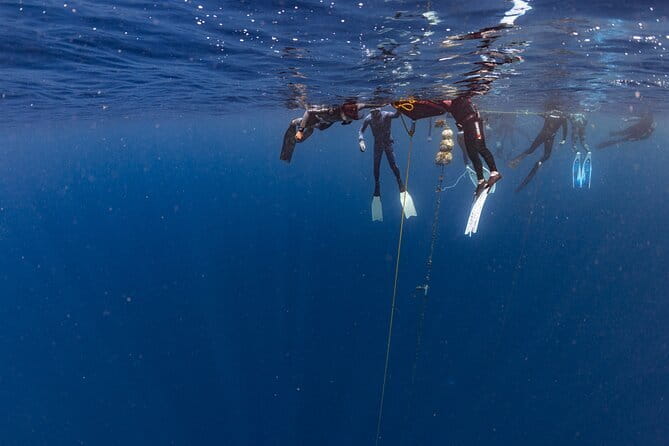
I would choose this course if you want to learn a real underwater skill rather than spend one morning looking at the reef. It suits a curious beginner who likes structured instruction, small groups, and a clear progression from classroom to pool to sea.
It can also work well for someone who has tried snorkeling and found the equipment limiting. Freediving removes the tank and regulator, but it does not remove the need for training. You still need to learn how to breathe, relax, equalize, and use safe procedures.
The academy also welcomes a broad range of participants. Its general information says most people can take part, and the staff has experience helping first-timers and older family members during related water activities. Still, do not confuse a friendly setting with a no-preparation activity. The course asks for focus and patience.
I would not choose it if you want a quick, low-commitment excursion. Three days is a meaningful part of a Panglao itinerary, and the training can be tiring. It is also not the right fit if your only aim is to see fish for an hour. A standard snorkeling trip would be simpler.
What you should bring and confirm
The supplied details do not provide a full packing list, so confirm the academy’s recommendations. At minimum, plan around a full day in and near the water, with suitable swimwear and protection from the sun.
Ask these practical questions before the first morning:
- What exact equipment is supplied?
- Which instructor will lead your group?
- What does the bonus session include?
- What are the daily start and finish times?
- Is lunch available on each course day?
- What happens if sea conditions affect the open-water session?
These questions are not signs of fussiness. They help you understand what the $416.70 covers and prevent surprises during a tightly scheduled course.
The atmosphere at Freedive Academy Panglao
The academy appears to place a strong emphasis on community as well as instruction. The staff named in the supplied material includes friendly, patient instructors and experienced team members. People who have trained there describe a welcoming atmosphere, with instructors encouraging progress while keeping safety in view.
That balance matters. A beginner needs enough encouragement to try, but not so much pressure that the course becomes a test of courage. Names such as Teo, Jomari, Ramar, Ven, Rea, Edwin, Rashid, and Vincent are associated with patient guidance, supportive coaching, and a relaxed social setting.
The facility and equipment are also described positively, though the exact equipment list is not provided. I would still inspect and confirm what is included at check-in, especially if you have specific preferences for masks, fins, or other gear.
My verdict: book it if you want a skill, not just a swim
I would book this course if you have three days in Panglao and want a serious introduction to breath-hold training. The small group, staged instruction, open-water practice, certificate, included equipment, and media make the price easier to justify than it would be for a simple reef outing.
I would skip it if your schedule is tight, if you only want casual snorkeling, or if you are uncomfortable committing to classroom and pool work before the sea session. The course rewards patience more than bravado.
For the right person, this is a thoughtful way to learn freediving in Panglao. Go in aiming to improve your breathing, relaxation, and safety skills. Treat 20 meters as a course ceiling, not a personal challenge, and you will get more from the experience.
FAQ
How long does the beginner freediving course last?
The course lasts approximately 2.5 days. It includes classroom instruction, pool sessions, and open-water practice.
What certification is included?
The course follows the SSI Level 1 freediving program and provides a certificate upon completion.
How deep can beginners learn to go?
The course is designed to teach skills for depths of up to 20 meters, or about 65.5 feet. Reaching that depth is not guaranteed and depends on your progress and comfort.
Where does the open-water session take place?
The open-water portion takes place at Napaling Reef in Panglao.
How many people can join the course?
The activity has a maximum of four participants.
Is equipment included?
Snorkeling equipment is included. The details do not provide a complete list of all specialized equipment, so you should confirm the exact items with the academy.
Is lunch included?
No. Lunch is not included, but it can be ordered one day in advance for about 250 Philippine pesos.
Can I cancel for a refund?
Yes. You can cancel at least 24 hours before the local start time for a full refund. Cancellations or changes made less than 24 hours before the start time are not accepted for a refund.
Just added around Panglao Island
- Bohol Airport or Tagbilaran Seaport Private Transfer (one-way)★ 5.0 · 4 reviews
- Capture the Culture: IG Jeep Bohol Tour★ 5.0 · 7 reviews
- Bohol Countryside Tour to Chocolate Hills and Loboc River★ 4.5 · 11 reviews
- Bohol Chocolate Hills, Tarsiers & Loboc River Private Tour★ 4.5 · 13 reviews
- Bohol Countryside Tour: Chocolate Hills, Tarsier and Loboc River★ 4.5 · 10 reviews
- Panglao Bohol Island: Alona Beach Pub Crawl with Drinks★ 4.5 · 6 reviews
- Bohol Tour Package: 3-Day Paradise Adventure★ 4.6 · 12 reviews
- Bohol: Countryside Tour with Loboc (Buffet Lunch)★ 4.7 · 9 reviews
Freediving, compared.
Napaling Reef and Sardines Freediving Experience
Read our review →
Browse the lists this tour appears in