
Reviewed · GUIDED
Manila Hidden Gems with local guide
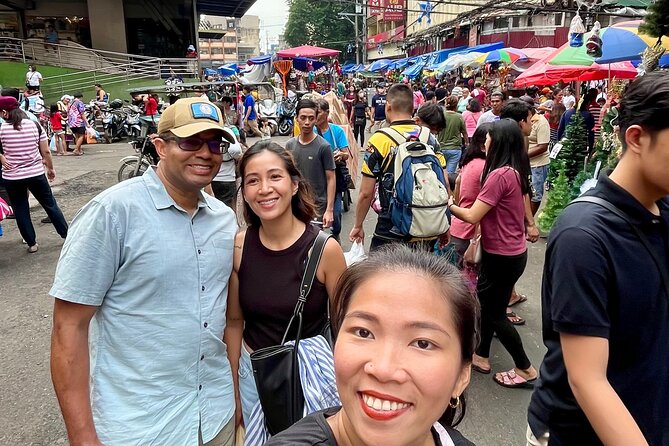
Tondo is not a polished sightseeing district. That is exactly why this two-hour walk can be so revealing. You move through Chinatown lanes, old residential areas, working markets, and back streets where daily Manila life takes place away from the familiar tourist circuit.
I like the jeepney ride and the chance to shop in a real wet market, where you see the practical side of Filipino city life rather than a staged cultural display. I also like the small group limit of 10, which gives a local guide more room to explain what you are seeing.
The main consideration is that food tastings are not included. You will need to pay for any street food, coffee, or market snacks separately, and the walk is better suited to curious visitors than to anyone seeking major monuments and polished attractions.
Key points to know before booking
- Tondo beyond the postcard: Walk through a working Manila district with residential, commercial, and industrial sides.
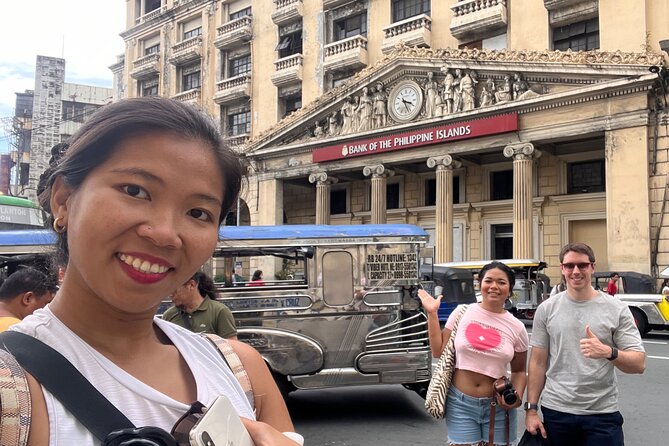
- Jeepney or tricycle ride: Local transport is part of the experience, not just a way to get from one stop to another.
- Binondo meeting point: Start at 1919 Grand Cafe on Juan Luna Street, then return there at the end.
- Old buildings and Chinatown lanes: See structures connected with Manila’s long-established Chinese-Filipino district and buildings dating to the late 1500s.
- Wet market visit: Browse produce, household goods, clothing, and everyday items sold at local prices.
- Small, short format: The walk lasts about two hours and accepts no more than 10 people, making it easy to fit into a Manila itinerary.
Starting at 1919 Grand Cafe in Binondo
Your meeting point is 1919 Grand Cafe, at 117 Juan Luna Street in Binondo. This gives the walk a practical beginning in one of Manila’s most established commercial areas, rather than at a hotel or a remote transport hub.
I like this arrangement because Binondo provides an immediate sense of place. You begin near Chinatown lanes and commercial streets, then gradually move into quieter side roads and residential passages. The change is part of the lesson: Manila is not divided into neat tourist and local zones. Different forms of work, trade, worship, housing, and transport sit close together.
The tour ends back at the same cafe. That makes planning easier, especially if you want to continue exploring Binondo afterward or return to your hotel by public transport. The meeting point is near public transportation, though the supplied details do not specify which routes are most convenient for reaching it.
A mobile ticket is provided, and booking confirmation arrives at the time of booking. The group maximum is 10 people. That is small enough for questions and conversation, while still being large enough to keep the price from reaching the level of a fully private tour.
A few more Luzon days worth weighing up
- Batad Guided Tour
★ 5.0 · 78 reviews - The Hidden Gems of Manila Guided Tour
★ 5.0 · 42 reviews - Manila Intramuros Walking tour with Local Tour Guide
★ 5.0 · 33 reviews
Walking through Chinatown’s side streets
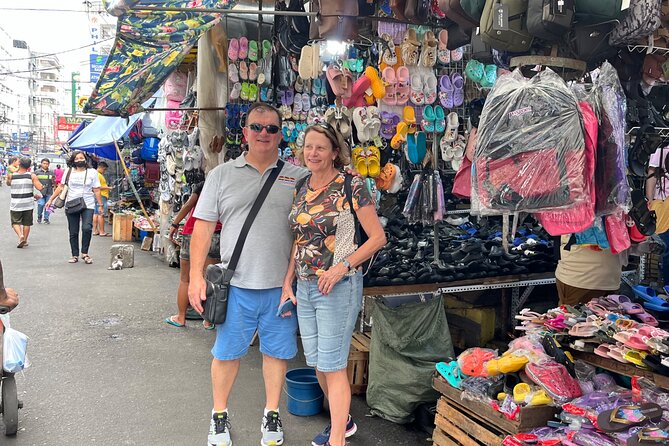
The first major part of the route takes you into Chinatown alleys. Do not expect a parade of grand landmarks at every corner. The appeal is the texture of ordinary streets: shops, narrow passages, food stalls, older facades, and the constant movement of people going about their business.
I find these streets most useful when a guide gives context instead of simply pointing out buildings. A local guide can explain how the district connects to Manila’s trading life and why certain lanes remain important to residents. The tour description also points to old buildings and structures dating from 1595, adding a historical layer to what might otherwise look like a simple neighborhood stroll.
The wording around the oldest buildings is broad, so you should not book this expecting a formal architectural tour with a long list of named monuments. You will likely see older structures as part of the walk, but the main focus remains everyday culture and local routines.
This part also requires a flexible attitude. Alleyways are not arranged for sightseeing comfort, and the route may feel crowded or uneven at times. The supplied details do not give an accessibility rating, so anyone who needs a step-free or especially gentle route should check directly before booking.
Street food, coffee, and the cost of eating
Food is part of the experience, but tastings are not included in the $55 price. That distinction matters. You may be invited to explore different types of street food and sample local coffee or cuisine, but you should budget extra if you want to eat along the way.
I prefer this arrangement to a fixed tasting menu on a short neighborhood walk. It lets you decide what looks appealing and how much you want to spend. It also keeps the experience closer to ordinary local shopping, where people choose food for themselves rather than receiving a preselected plate made for tourists.
At the same time, the extra cost means the advertised price is not the final amount if food is one of your main reasons for booking. Bring some spending money for small purchases. The tour includes bottled water and a welcome drink, but no meal or formal food allowance.
The food portion also depends on timing, availability, and your own comfort level. The supplied information does not identify specific dishes, vendors, or allergy arrangements. If you have dietary restrictions, ask the provider what can be accommodated before you arrive.
Riding a jeepney or tricycle
The transport portion is one of the tour’s most distinctive features. You may ride a jeepney or tricycle, two familiar forms of local transportation in the Philippines. This is not presented as a private vehicle transfer or a sightseeing bus. It is a short look at how people move through the city.
A jeepney ride can be a memorable part of a Manila visit because it places you in the same kind of transport used for ordinary trips. The tricycle offers a different experience, usually on a smaller scale. The exact vehicle may depend on the route and local conditions, so you should not assume both will be included.
The ride also helps break up the walking. Since the whole experience lasts about two hours, the transport section is likely brief, but it adds useful variety. You do not spend the entire tour listening while standing or walking. Instead, you get a direct example of city life that is difficult to understand from a private car.
I would treat this as cultural context, not a comfort upgrade. Local transport can be close-packed and less predictable than a tourist vehicle. If that sounds interesting, it adds value. If you want a quiet, air-conditioned ride, this is not the right expectation.
Same islands, a completely different kind of day:
- Manila Old and New: Sightseeing Tour Including Intramuros and Fort Santiago
★ 4.5 · 377 reviews - Manila’s Walled City: Intramuros Walking Tour
★ 5.0 · 82 reviews - Manila Filipino Cooking Class: Meryenda Favorites
★ 5.0 · 80 reviews - Manila Super Saver: Manila Sightseeing plus Tagaytay Tour with Taal Volcano
★ 4.0 · 75 reviews
The wet market and local shopping
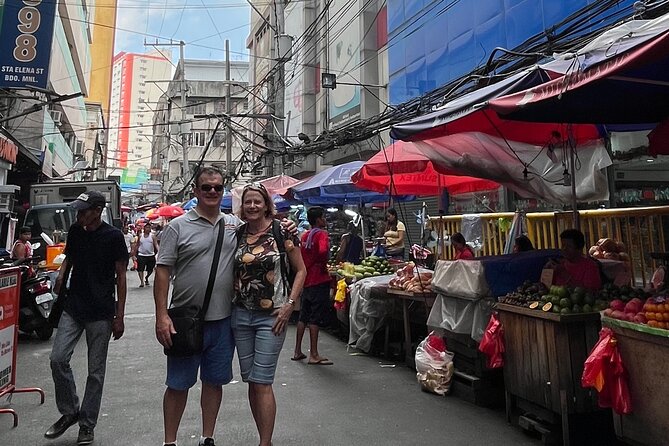
The walk includes a shopping market with housewares, clothes, fruit, and a wet market. This is one of the strongest parts of the route for anyone who wants to see how people actually buy everyday goods.
A wet market gives you a different view of Manila from the restaurant district or a shopping mall. You may notice the practical rhythm of buying food, comparing prices, carrying purchases, and making quick decisions. The market also shows how closely shopping and social life can overlap.
The market is not only about food. The broader shopping area includes household items and clothing, with goods sold at cheap and reasonable prices. That makes it a possible place to pick up a small practical souvenir, though the tour itself does not promise specific shopping stops or special discounts.
There is a cultural point here that I value. A market is not a museum display. It serves local needs first. You should be respectful of people working and shopping, keep your group together, and follow your guide’s advice about photos. The tour includes a photo shoot, but it does not state that every person or stall can be photographed freely.
Seeing residential Manila up close
The route also leads through old apartments, back alleys, and side streets where residents live away from the main traffic. This is where the walk becomes more personal and less like a standard city tour.
The experience may include views of open-air bathing and dining. Those details can be striking because they show how residents adapt shared or limited spaces for daily routines. They also require sensitivity. You are entering lived-in areas, not a performance space, so your guide’s instructions matter.
One guide connected with the experience is Mari, who grew up in the area. If Mari leads your walk, that background can add a useful local point of view. The tour description does not guarantee that she will lead every departure, but the presence of a guide with personal ties to the neighborhood gives the route a stronger connection than a generic city commentary.
The best approach is to watch and listen without turning residents into scenery. Ask questions about the neighborhood, transport, markets, and architecture. Avoid treating poverty or crowded housing as entertainment. The value of this part comes from understanding how people use the city, not from collecting dramatic photographs.
What the two-hour schedule really gives you
Two hours is enough for an introduction, not a full study of Tondo and Binondo. You get a concentrated sequence of streets, food options, local transport, market activity, and old structures. The short duration makes the experience easy to add before lunch, after breakfast, or between other Manila plans.
I like the balance of walking and transport for a compact tour. You cover more ground than you would on foot alone, while still moving slowly enough to notice small details. The drawback is that every stop must remain fairly brief. If you want long shopping time, extended food tastings, or a detailed architectural explanation, you may feel rushed.
The route also seems designed around discovery rather than a rigid list of major attractions. Your exact sequence may change with traffic, weather, market activity, or local conditions. That flexibility is useful in a working district, but it means you should not expect every moment to unfold like a tightly timed museum visit.
Because the tour requires good weather, keep your schedule flexible. If poor weather cancels the experience, you will be offered another date or a full refund. Manila heat and rain can affect a walking route, so light clothing, comfortable shoes, and water are sensible choices. Bottled water is included, but you may want more for your own comfort.
Is $55 a fair price?
At $55 per person, this is not the cheapest way to walk around Manila. You could explore markets and Chinatown independently for much less. The question is what you are paying for beyond the streets themselves.
The price covers a local guide, the planned route, a welcome drink, bottled water, local transport by jeepney or tricycle, and a photo shoot. It also buys structure. Instead of wandering through Tondo without context, you have someone directing the route and helping you understand what you are seeing.
The small group maximum of 10 improves the value. A guide can respond to questions more easily than on a large coach tour, and the route can feel less cumbersome in narrow lanes. The price becomes harder to justify if you mainly want to browse shops or take a quick jeepney ride, since you could do those things independently.
I see the strongest value for first-time visitors who want a guided introduction to ordinary Manila life. It is less compelling for repeat visitors who already know Binondo, speak comfortably with residents, and are confident navigating local transport and markets alone.
Who should book this walk?
I would recommend it to you if you enjoy seeing cities through food, transport, markets, and residential streets. It suits visitors who want more than the usual landmark list and who are comfortable entering places that may feel busy, rough around the edges, or unfamiliar.
It is also a good choice if you have limited time. The two-hour format gives you a clear introduction without taking over half a day. The return to 1919 Grand Cafe makes it easy to continue with your own Binondo plans.
I would think twice if you want a polished attraction with guaranteed food samples, named historic monuments, or a climate-controlled vehicle. Food is extra, the transport is local, and the route focuses on community life rather than a sequence of major sights.
The experience has received a 4.8 rating from 27 reviews, with 93 percent recommending it. Those figures suggest a strong level of satisfaction, while the small sample size means I would still match the tour to your interests rather than book on the rating alone.
Final verdict: book it for local life, not polished sightseeing
Book this tour if you want to see Manila through its side streets, markets, old apartments, local transport, and everyday food culture. The best parts are the jeepney or tricycle ride, the wet market, the Chinatown lanes, and the chance to walk through Tondo with a guide connected to the area.
Skip it if you want a conventional sightseeing tour or a fully included food experience. For the right visitor, $55 buys useful context and a structured introduction to a side of Manila that is easy to miss. Bring an open mind, extra money for food, and respect for the people who live and work along the route.
FAQ
How long does the Manila Hidden Gems tour last?
The experience lasts approximately two hours.
Where does the tour start and finish?
It starts at 1919 Grand Cafe, 117 Juan Luna Street, Binondo, Manila. The activity ends back at the same meeting point.
Is food included in the tour price?
No. Food tastings are not included. You may have opportunities to try Filipino street food, local coffee, or other cuisine, but you pay for those items separately.
What is included in the $55 price?
The price includes bottled water, a welcome drink, local transportation by jeepney or tricycle, and a photo shoot.
How many people can join the tour?
The group has a maximum of 10 travelers.
Can I cancel for a full refund?
Yes. You can receive a full refund if you cancel at least 24 hours before the experience start time. Cancellations or changes made within 24 hours are not refunded, and poor weather may result in a different date or a full refund.
Just added around Luzon
- Skip the Line: Villa Escudero Plantation & Resort Day Pass Ticket★ 4.5 · 11 reviews
- Villa Escudero Coconut Plantation Day Trip from Manila★ 3.5 · 9 reviews
- Villa Escudero Tour with Lunch From Manila (SHARED)★ 5.0 · 5 reviews
- The Jeepney & Tuk Tuk Adventure ride with Local Guide★ 4.5 · 4 reviews
- VILLA ESCUDERO DAY TOUR with Carabao Cart Ride and Bamboo from Manila★ 4.0 · 6 reviews
- Private Filipino Cooking Class in the Heart of Manila,Makati City★ 5.0 · 5 reviews
- Pagsanjan Falls Adventure with Lunch and Rapids Experience★ 4.5 · 3 reviews
- Manila ATV Mountain Trail Adventure(with Transfers***)★ 4.5 · 19 reviews
Guided, compared.

Waterfall Hopping & Secret Jungle Trails Guided Tour
Read our review →
Browse the lists this tour appears in