
Reviewed · FOOD & DRINK
Cebu City: Historical Street and Food Tour
Cebu’s story comes alive through food, crowded market lanes, old churches, and streets where Spanish, Chinese, Filipino, and modern influences meet. The best part of this three-hour walking tour is the combination of sites and small tastes, from salted balut to local drinks and street snacks.
I like the chance to see the Yap Sandiego Ancestral House, built from coral stone in 1680, and the way the route links major landmarks to Cebu’s past as the Philippines’ first Spanish settlement and capital. I also like the small-group format, limited to 10 people, which gives you room to ask questions. The main drawback is price: at $90 per person, you are paying for guiding and convenience, not simply for admission or food.
Key points to know before you book
- Balut is part of the experience: You’ll be offered the famous boiled, salted duck egg, along with other Filipino street food.
- The route covers Cebu’s historic core: Expect the Heritage of Cebu Monument, Yap Sandiego Ancestral House, Basilica Minore del Sto. Niño, Magellan’s Cross, and Cebu Metropolitan Cathedral.
- The ancestral house is a highlight: Its coral-stone construction dates to 1680, with Chinese and Spanish design influences.
- This is a small-group walk: Groups are limited to 10, and guides including Philip, Nacien, and Kyle have been praised for their energy and personal attention.
- You may ride local buses: The experience can include local transport, adding a useful taste of everyday Cebu.
- Come ready for weather and walking: Wear comfortable shoes and clothes, carry cash, and expect the tour to run rain or shine.
Why Cebu’s old streets make a good classroom
Cebu is often treated as a jumping-off point for beaches and island trips. That misses something important. The city is the oldest in the Philippines, the first Spanish settlement, and the country’s first capital. Its central streets hold some of the clearest reminders of that early colonial period.
This tour gives you a practical way to connect those dates and names to actual places. Instead of seeing one church in isolation, you move through markets, monuments, religious sites, and old homes in a sequence that explains how Cebu developed.
The walk is not a quiet museum visit. You’ll pass through working parts of the city, including Cebu Farmers Market and Carbon Market. That means noise, traffic, changing pavement, and plenty of ordinary city life. If you want a polished sightseeing loop with little street activity, this may feel rough around the edges. If you like seeing how a city really works, the setting is part of the point.
The English-speaking guide is central to the experience. Guides named Philip, Nacien, and Kyle have led groups, and the strongest part of the tour is the personal explanation along the way. A solo participant can receive nearly constant attention in a very small group, while a larger group still has a maximum of 10 people.
More Historical Tours in Cebu
- The Original Cebu City Historical and Food Walking Tour
★ 4.5 · 81 reviews - Cebu: Exploring Cebu City’s rich history and Uphill Tour
★ 4.5 · 68 reviews - CEBU: Cebu City Heritage and Uphill Guided Tour
★ 4.2 · 31 reviews
Cebu Farmers Market and the first food lesson
The tour begins at a meeting point rather than with hotel transportation. You’ll need to wait in the designated area for a guide holding a paper with your name, and you can contact the operator through its Facebook page if needed. Hotel transfer is not included, so plan your own way to the starting point.
At Cebu Farmers Market, the guide introduces local food before the route moves into the historic center. This is useful because Filipino food can be unfamiliar if you have not eaten it before. You’ll get context for what you are seeing, rather than being handed a snack without explanation.
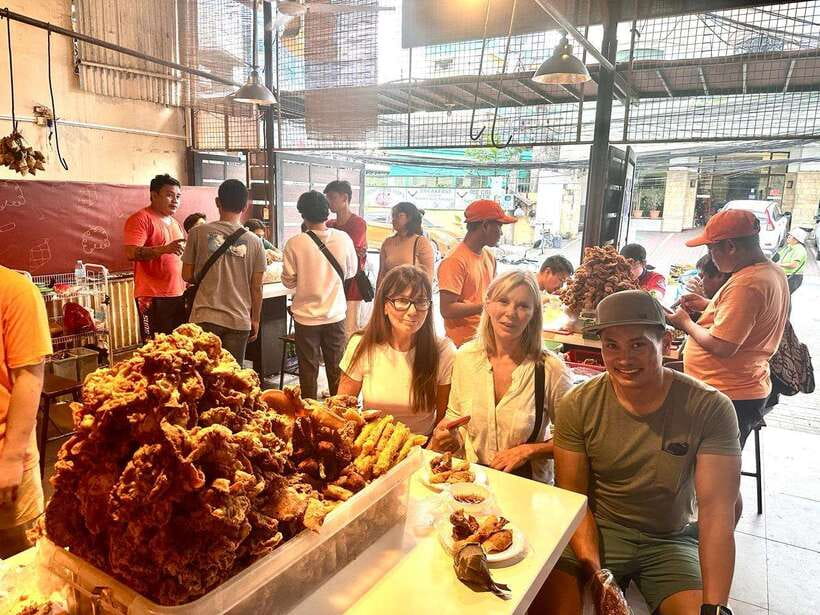
The food is not meant to be a full restaurant meal. Think of it as a series of tastes built into a walking tour. The selections include street food and local delicacies, with balut as the best-known challenge for many visitors.
Balut is a boiled duck egg traditionally eaten with salt. You can expect the guide to explain how it is eaten and why it is such a familiar Filipino food. It is a very direct cultural encounter: inexpensive, widely recognized, and not designed to flatter cautious eaters.
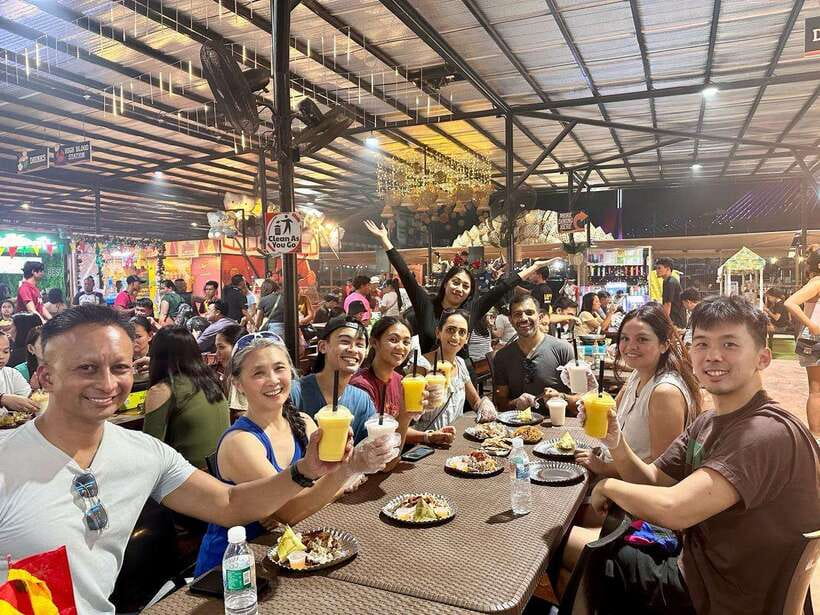
The tour also includes other street food and drinks. One useful point from the experience is that food and drinks can be provided generously, though the exact selection may vary. Carry cash for anything additional and for personal purchases at the markets.
The Heritage of Cebu Monument in metal and stone
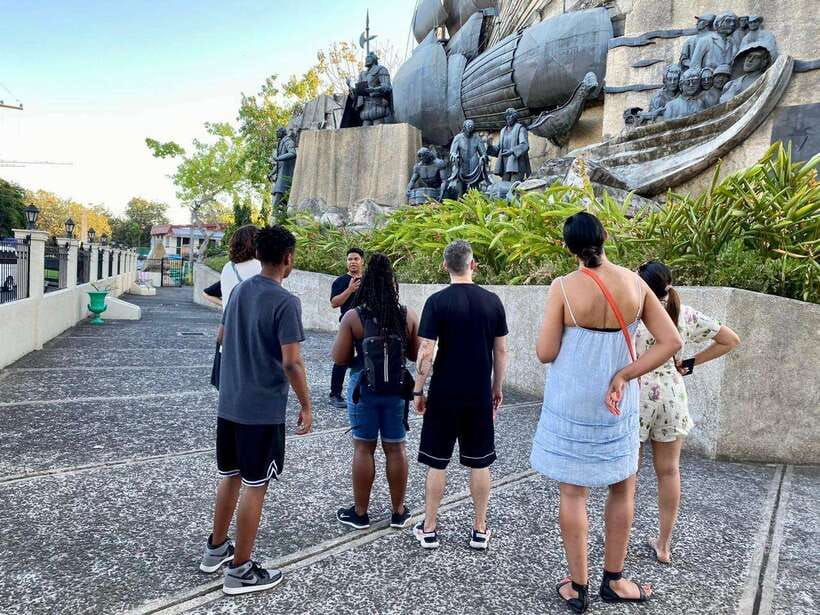
One of the early historical stops is the Heritage of Cebu Monument. Its metal sculptures present key scenes and figures connected with Cebu’s past, giving you a visual introduction before the tour moves to older buildings.
This is a good place to ask questions. The monument compresses a lot of information into one public artwork, and a guide helps you understand what the scenes represent. Without context, you may simply see a group of dramatic metal figures. With an explanation, it becomes a quick map of Cebu’s religious, colonial, and local story.
Do not expect a long museum visit here. The value is in the guide’s interpretation and in seeing how Cebu presents its own past in a public space. The stop also breaks up the food and church visits, keeping the three-hour route varied.
Inside the 1680 Yap Sandiego Ancestral House
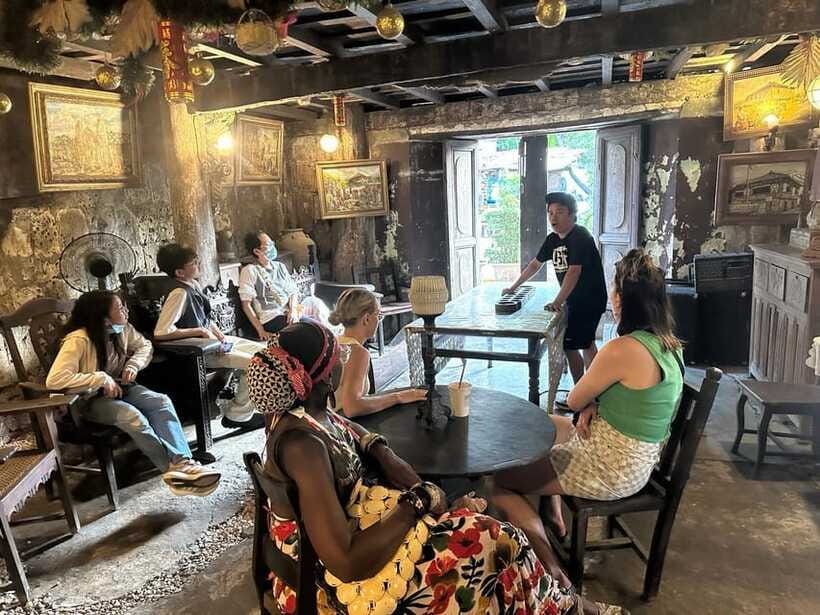
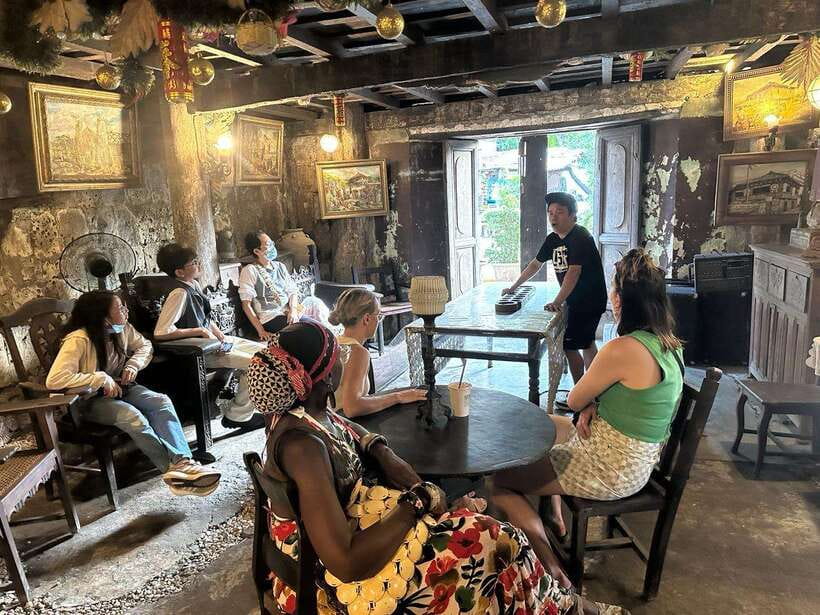
The Yap Sandiego Ancestral House is one of the most appealing stops on the route. Built from coral stone in 1680, it shows a different side of Cebu from the grand churches. The house reflects Chinese and Spanish architectural influences, an important reminder that Cebu’s history was never only a Spanish story.
You’ll see an old domestic building rather than a monumental public landmark. That makes the visit valuable. Churches and government buildings tell you how institutions wanted to be seen. An ancestral house gives you a sense of how older families lived and how different cultural traditions met inside a home.
The coral-stone construction is especially worth noting. It connects the building to local materials and older building methods, while the Chinese and Spanish details point to Cebu’s long trading and colonial connections.
The stop may be brief because the whole walking route lasts only three hours. Still, this is the kind of place that benefits from a guide who can point out details you might otherwise walk past. If old homes and architecture interest you, this could be your favorite stop.
More food tours in Cebu:
- Cebu Steet food, historical and mountain tour
★ 5.0 · 15 reviews - The Ultimate Cebu Food Tour: Local Tastes & Cultural Journey
★ 4.5 · 10 reviews - Food, Historical and Mountain Tour in Cebu City
★ 4.5 · 8 reviews - Manila Food Tour: Introduction to Philippine Street Food
★ 5.0 · 417 reviews
Basilica Minore del Sto. Niño and Cebu’s Catholic identity
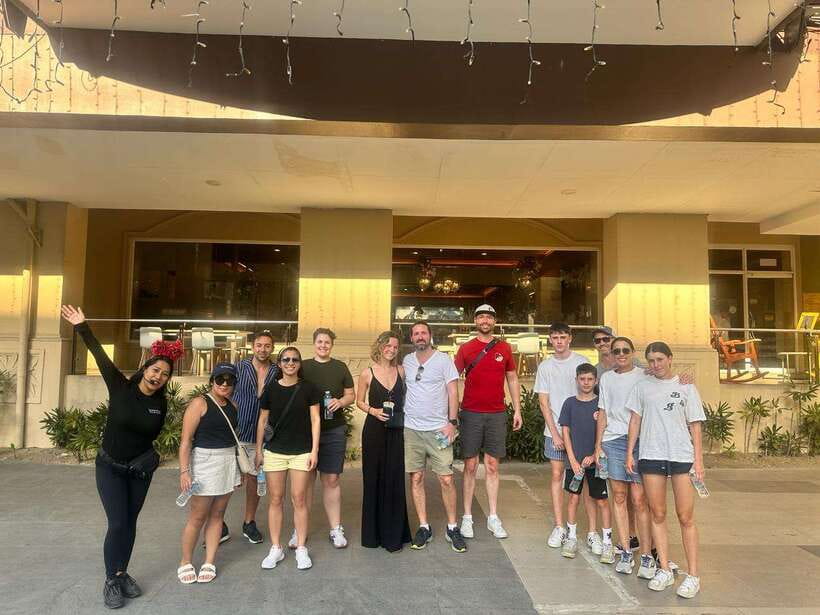
Next comes Basilica Minore del Sto. Niño de Cebu, identified as the oldest Roman Catholic church in the Philippines. The church dates to 1565, the year Spanish colonial rule began to take firm shape in Cebu.
This site matters for more than its age. It is tied to the spread of Christianity in the Philippines and to the city’s role as the first Spanish settlement and capital. Your guide can place the church within that larger story, helping you understand why Cebu remains such an important religious center.
The experience is primarily a guided visit and exterior observation, so the pace may depend on conditions at the church. Religious sites can also be active places of worship, not just attractions. Dress comfortably and respectfully, and follow any instructions given at the site.
If you enjoy history, this is one of the strongest parts of the route. If churches are not a major interest, the sequence may begin to feel repetitive later, since several religious landmarks appear within a short period. The advantage is that each one has a different connection to Cebu’s past.
Carbon Market and the city’s working side
The route continues to Carbon Market, whose name comes from the Spanish word for coal. It was once a coal depot, and the name preserves that earlier use even as the market became part of modern Cebu’s daily life.
This stop gives the tour a useful change of mood. The ancestral house and basilica are formal historical sites. Carbon Market is more practical and immediate. You see a place shaped by trade, supplies, food, and ordinary shopping rather than by official monuments.
The market can be busy and noisy, so keep your belongings secure and stay close to the guide. The tour information specifically recommends leaving jewelry at home. That is sensible for a walking route through active markets and crowded streets.
For many people, Carbon Market will be more revealing than another polished landmark. You see the city as a place where people work and shop, not simply as a collection of historical buildings. Still, if you prefer a calm route, this part may feel demanding.
Magellan’s Cross and the 1521 landing story
Magellan’s Cross marks the place where a Christian cross was left in 1521 by Spanish explorers led by Ferdinand Magellan. It is one of Cebu’s most recognized historic symbols and a direct link to the first Spanish expedition.
The date is important, but so is the way the site fits into the wider story. The cross represents the beginning of a major religious and colonial change, while the surrounding city shows what happened in the centuries afterward. Seeing the site after the market and earlier church visits gives the landmark more context.
You will likely spend less time here than at a museum. It is a compact site, and the strength comes from the guide’s explanation rather than from a long visit. Ask about the connection between Magellan’s arrival, the Santo Niño tradition, and the later Spanish settlement if those subjects interest you.
This is also a good moment to remember that Cebu’s story includes more than the arrival of Europeans. The Chinese influences in the ancestral house and the life of the markets show a broader local and regional past.
Cebu Metropolitan Cathedral and wartime rebuilding
The final major landmark is Cebu Metropolitan Cathedral. The church was destroyed during the Second World War and rebuilt in the 1950s.
That detail adds a more recent layer to the tour. Cebu’s old buildings are not all survivors from the colonial period. Some were lost, damaged, or rebuilt, and the cathedral helps explain how the city’s religious landmarks changed through the twentieth century.
The stop rounds out the route nicely. You begin with early food culture and local markets, move through Spanish-era sites, and finish with a building shaped by war and reconstruction. Three hours is enough time to touch these periods without turning the tour into a full-day commitment.
You should not expect every stop to receive a long, detailed visit. The route covers a lot of ground, so the guide has to keep moving. The benefit is variety. The compromise is that anyone wanting extended time inside each church or house will need to return independently.
What the $90 price really buys you
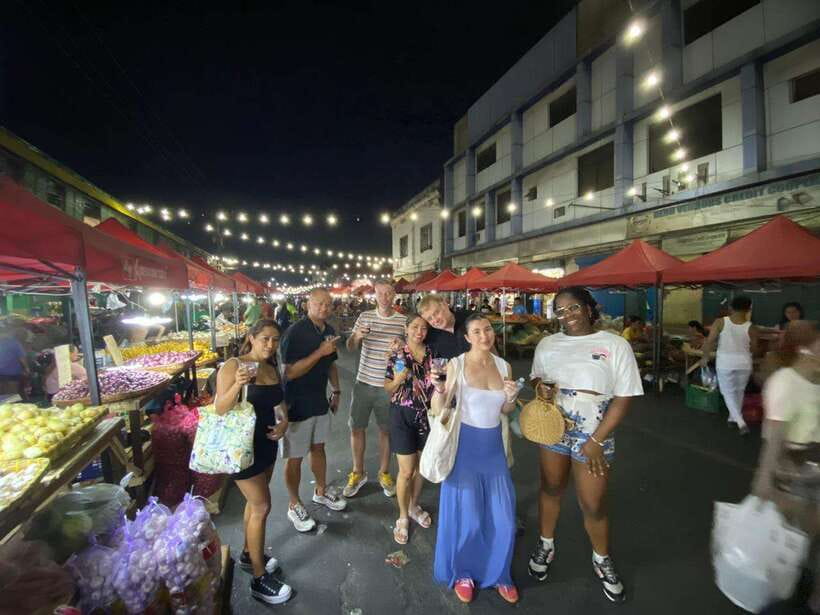
At $90 per person, this is not a bargain-priced city walk. You could visit several landmarks on your own and spend far less on food. One participant found the food only average and felt the tour could be done independently, which is a fair criticism.
The price makes more sense if you value structure, local explanation, and support in places such as Carbon Market and Colon Street. It also includes a guide, the guided experience, street food, and drinks. The small-group limit matters here. A group of no more than 10 allows more questions than a large coach tour, and a solo participant may receive especially close attention.
The guides are the strongest reason to consider paying the premium. Philip has been praised for looking after a solo participant and helping with a safe taxi departure. Nacien has been described as friendly, helpful, and fun, while Kyle has been singled out for excellent guiding. The exact guide depends on the date, but the experience is built around a live English-speaking host rather than an audio guide.
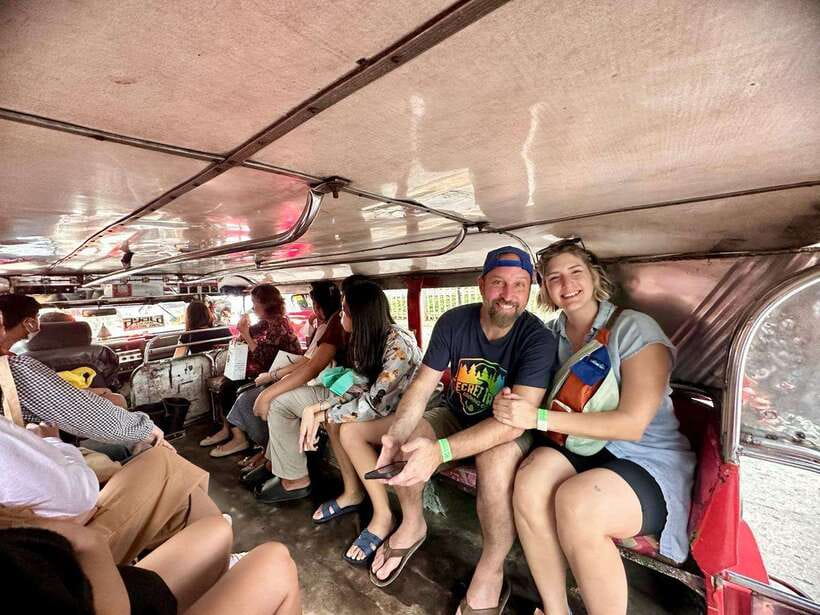
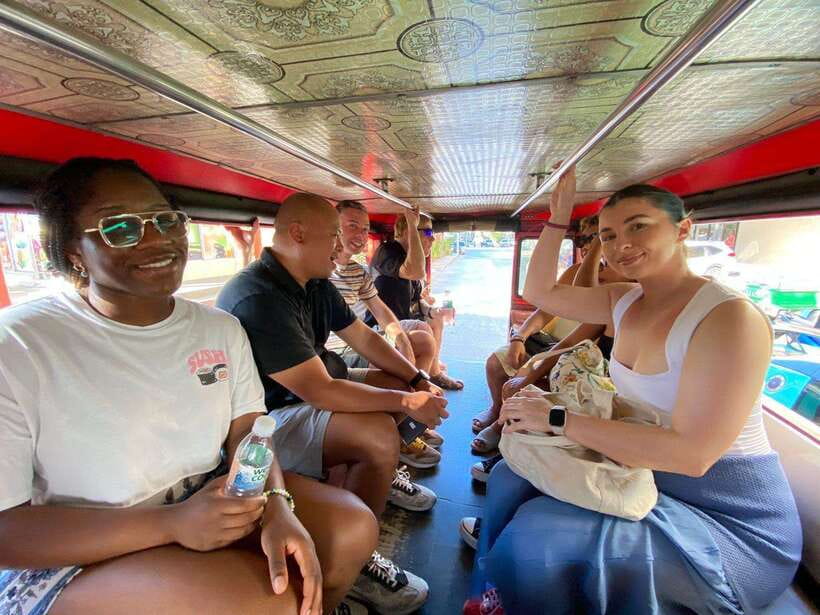
Some groups also ride local buses. That adds an authentic city detail and can make the route feel less like a sealed sightseeing bubble. It also means you should expect a little unpredictability and keep your belongings close.
I would book at $90 if this is your first visit to Cebu, you want a guide to explain the historical links, and you would rather not work out the route yourself. If you already feel comfortable using local transport and researching the landmarks, the price is harder to justify.
Who will enjoy this walk most
This tour suits you if you want a quick introduction to Cebu before heading to the beaches or other islands. It is also a strong choice for solo visitors who value company and a guide’s help in an unfamiliar city.
Food-curious visitors will enjoy the chance to try balut and other street food in context. You do not need to love every dish. The point is to taste something connected to local life and learn how it fits into Filipino culture.
History and architecture fans will appreciate the sequence of sites, especially the 1680 ancestral house, the 1565 basilica, and the 1521 cross. The tour is less suitable if you want a slow architectural study, since the route has many stops and finishes within three hours.
Wear comfortable shoes and light, comfortable clothes. Bring a camera, cash, and weather-ready gear. The tour runs rain or shine, so a wet forecast should not be a surprise. Jewelry is not allowed, and leaving valuables behind also makes sense for a market walk.
The final call: book it for the guide, not just the food
I would recommend this Cebu tour to first-time visitors who want a compact, guided introduction to the city’s oldest streets and major historical sites. The food makes the route more personal, while the guide ties together dates that can otherwise feel like a list.
I would hesitate if your main goal is a large meal or the lowest possible price. At $90, the food alone does not justify the cost, and you can visit many landmarks independently. Book it for the combination of explanation, company, local transport, and a carefully linked route.
The strongest version of this experience is a small group with a lively guide such as Philip, Nacien, or Kyle. With that setup, you get a practical introduction to Cebu, a few bold food tastes, and a clearer sense of how Spanish, Chinese, Filipino, religious, and modern influences meet in the city.
FAQ
How long does the Cebu City Historical Street and Food Tour last?
The tour lasts three hours.
What language is the tour conducted in?
The live tour guide speaks English.
What food will I try?
You will sample Filipino street food and local delicacies, including balut, a boiled salted duck egg traditionally eaten with salt. Food and drinks are included during the tour, though the exact selection is not specified.
Which historic sites are included?
The route includes the Heritage of Cebu Monument, Yap Sandiego Ancestral House, Basilica Minore del Sto. Niño de Cebu, Carbon Market, Magellan’s Cross, and Cebu Metropolitan Cathedral.
Is hotel pickup included?
Hotel transfer is not included. You should wait at the designated meeting area, where the guide will hold a paper with your name.
How many people can join the tour?
It is a small-group experience limited to 10 participants.
What should I bring?
Bring comfortable shoes, comfortable clothes, a camera, and cash. The tour takes place rain or shine, and jewelry is not allowed.
Just added around Cebu
- Trekking to see the beautiful view of Cebu City★ 3.3 · 4 reviews
- Kalanggaman Island Day Tour Package from Cebu City or Mactan★ 3.0 · 6 reviews
- Kawasan Falls and Mantayupan Falls in One Day from Cebu★ 5.0 · 5 reviews
- Kawasan Canyoneering Adventure Package from Cebu★ 5.0 · 11 reviews
- Discover Scuba Diving★ 5.0 · 18 reviews
- Half day tour with Snorkel at Sancturary and Sulpa island★ 5.0 · 3 reviews
- Snorkeling at San Vicente with speed boat★ 5.0 · 8 reviews
- Twin Island Snorkeling Adventure at Hiltungan and Nalsuan★ 5.0 · 5 reviews
Food & Drink, compared.
Manila Food Tour: Introduction to Philippine Street Food
Read our review →
Manila Food Tour: Explore World’s Oldest Chinatown
Read our review →
Street Food and Drinks Walking Tour with Tastings
Read our review →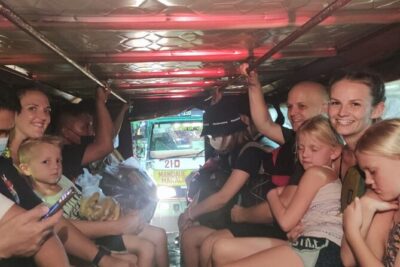
The Original Cebu City Historical and Food Walking Tour
Read our review →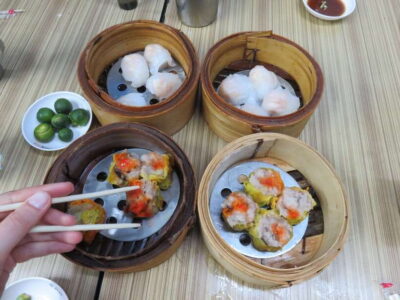
Manila’s Culinary Expedition: The Ultimate Food and Market Tour
Read our review →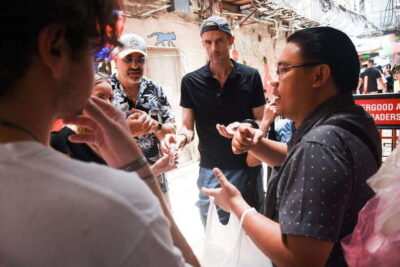
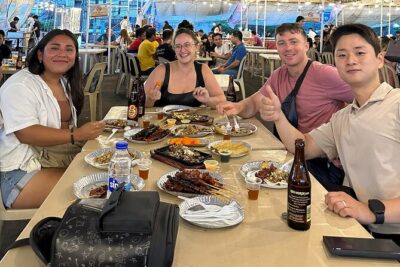
Makati Street Food Experience end with a Rooftop Bar
Read our review →Browse the lists this tour appears in