
Reviewed · FOOD & DRINK
The Original Cebu City Historical and Food Walking Tour
Cebu’s best introduction may begin away from the beach. This four-hour walk moves from Ayala Terraces into the old city, where you’ll see the Heritage of Cebu Monument, an ancestral home from around 1680, Santo Niño Basilica, Magellan’s Cross, the cathedral, and Carbon Market. Along the way, you may ride a jeepney and try local food such as lechon, tuslob buwa, balut, or other street snacks.
I like the blend of major historic sights and ordinary city life, especially the jeepney ride and Carbon Market visit. I also like having guides such as Kyle, Lorelie, Phillip, and Necian explain the food before you try it. The main caution is value: at $69.99, this is expensive for Cebu, especially since the tour uses public transport and you must arrange your own ride home.
Key things to know before booking
- The route ends at Carbon Market: You finish at Freedom Park, not back at Ayala Terraces or your hotel.
- Food is part of the sightseeing: Expect several snack or meal stops, but the exact dishes can vary.
- A jeepney ride may be included: This is public transportation, not a private tour vehicle.
- The old city sights are the real anchor: The food adds local flavor, but this often feels more like a history walk with tastings.
- The 4 pm start works well: You avoid the hottest part of the day and reach the market in the evening.
- The price rewards convenience, not luxury: Entrances, guiding, and food are included, but the tour is not a private car-based outing.
Why this Cebu walk is more than a food tour
Many people use Cebu City as a jumping-off point for beaches and island trips. That is understandable, but it leaves out the city’s central story. This walk gives you a quick route through Cebu’s Spanish colonial, Chinese-Filipino, Catholic, and working-market traditions.
I would describe it as a history tour with food stops, rather than a dedicated food crawl. You spend about 30 minutes at each named sight, then move between them on foot or by local transport. The exact timing depends on the group, traffic, food stops, and walking speed. Some people finish in about three and a half hours, while the advertised duration is approximately four hours.
The tour begins at 4 pm at Ayala Terraces on Biliran Road. That start point is convenient if you are staying near Cebu’s main shopping and hotel district. The route finishes at Freedom Park in Carbon, giving you a useful introduction to the old city but leaving you to arrange your own return by taxi, ride-hailing service, or public transport.
More Historical Tours in Cebu
- Cebu: Exploring Cebu City’s rich history and Uphill Tour
★ 4.5 · 68 reviews - Cebu City: Historical Street and Food Tour
★ 4.9 · 31 reviews - CEBU: Cebu City Heritage and Uphill Guided Tour
★ 4.2 · 31 reviews
The Heritage of Cebu Monument sets the tone
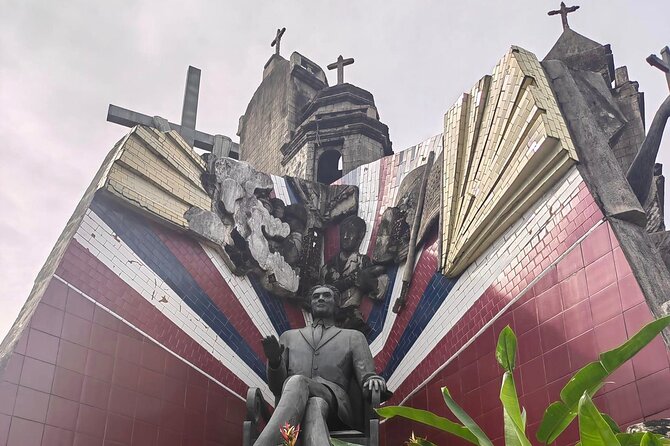
The first major stop is the Heritage of Cebu Monument, a large tableau showing episodes from Cebu and Philippine history. It includes the Battle of Mactan, the inauguration of Sergio Osmeña as president, and the canonization of Pedro Calungsod.
You get a visual overview here before entering the older parts of the city. The monument is especially useful if you do not yet know how Cebu fits into Philippine history. It gives your guide several points to explain, rather than leaving you to stare at unfamiliar figures and scenes.
Plan for roughly 30 minutes. The stop is more about orientation and storytelling than a long museum visit. If you want detailed historical study, you will need extra time elsewhere. If you want a clear starting point, this works well.
Yap-Sandiego Ancestral House brings history indoors
The Yap-Sandiego Ancestral House is one of the most distinctive stops. Built around 1680 from wood and coral stone, it combines Spanish and Chinese design influences. Its age and domestic setting make it different from the churches and public monuments later on the route.
I like this stop because it shows how history lived inside a home. You are not just looking at a formal landmark. You are seeing the kind of structure that links Cebu’s Chinese-Filipino heritage with the Spanish colonial period.
Admission is included. The visit lasts about 30 minutes, which gives you enough time to appreciate the rooms without turning the tour into a house museum marathon. One practical point: the house can feel more rewarding if your guide explains the people and customs connected with it. This is one of the places where a strong guide makes a real difference.
Santo Niño Basilica connects Cebu to Catholic tradition
The Basilica Minore del Santo Niño de Cebu, usually called Santo Niño Basilica, dates to the Spanish period and was founded in 1565 by Fray Andrés de Urdaneta. It is one of Cebu’s central religious sites and an important part of the city’s identity.
You should expect the basilica to be active rather than staged for sightseeing. Services, crowds, and religious events can affect how much time you spend inside. One person on the tour did not enter the two cathedrals, possibly because it was Sunday and the buildings were packed, so treat interior access as dependent on conditions.
The church is still worthwhile from the outside and in its wider setting. It also helps explain why Magellan’s Cross is nearby and why Cebu remains such an important Catholic center in the Philippines.
More food tours in Cebu:
- Cebu Steet food, historical and mountain tour
★ 5.0 · 15 reviews - The Ultimate Cebu Food Tour: Local Tastes & Cultural Journey
★ 4.5 · 10 reviews - Food, Historical and Mountain Tour in Cebu City
★ 4.5 · 8 reviews - Manila Food Tour: Introduction to Philippine Street Food
★ 5.0 · 417 reviews
Magellan’s Cross is brief but essential
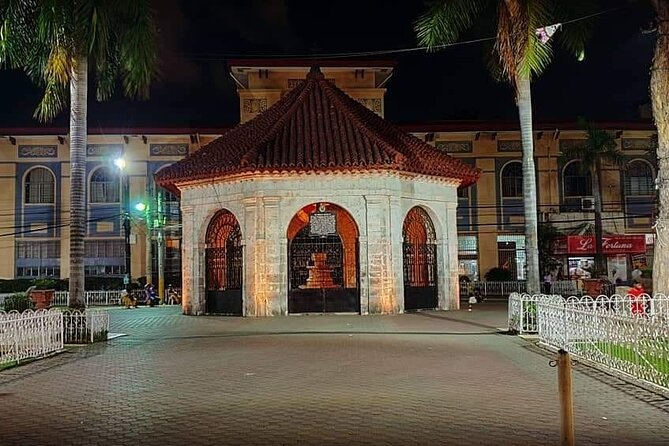
Magellan’s Cross sits in a stone pavilion beside Santo Niño Basilica at Plaza Sugbo. The cross is associated with the arrival of the Spanish expedition and the introduction of Christianity to Cebu.
This is a short stop, but it carries a lot of historical weight. Your guide can help separate the symbolic story from the physical object, since the pavilion itself is small and the visit may not take long. Expect around 30 minutes in the overall schedule, though the actual time at the cross may be shorter.
I would not book this tour only for Magellan’s Cross. It is one piece of a larger route. Its value comes from seeing it alongside the basilica, cathedral, ancestral house, and monument.
Cebu Metropolitan Cathedral adds another layer
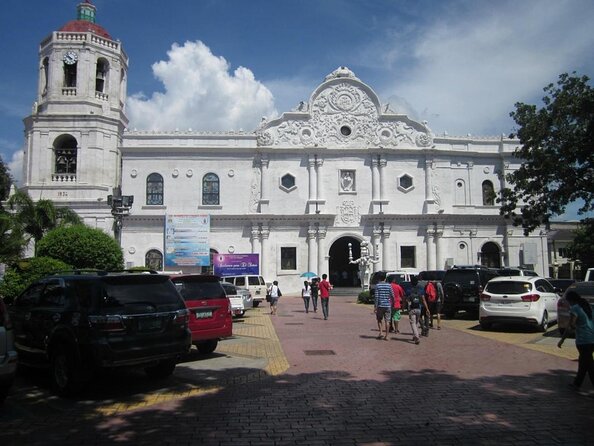
The Cebu Metropolitan Cathedral, officially the Metropolitan Cathedral and Parish of Saint Vitalis and of the Immaculate Conception, is another major religious site. Much of the building was destroyed during World War II and later rebuilt.
This stop gives you a chance to compare the cathedral with Santo Niño Basilica. The two churches are close together, but they do not tell exactly the same story. The cathedral’s wartime damage adds a modern chapter to the older colonial narrative.
As with the basilica, access may depend on services or crowd levels. The tour includes entrance coverage according to the provided details, but that does not guarantee an interior visit at every time of day. Ask your guide early if seeing inside is important to you.
Carbon Market is where the tour becomes most local
The final area is Cebu Carbon Market, ending near Freedom Park. The name comes from carbón, the Spanish word for coal. The market was associated with a coal depot serving the old Cebu Railway in the 19th century.
This is likely the most revealing part of the route for anyone who wants to see daily Cebu rather than only formal landmarks. You may encounter food stalls, local shoppers, public transport, and a less polished side of the city. I would allow some mental space for noise, crowds, heat, and unfamiliar smells. That is part of the experience, not a flaw, but it may surprise you if you expect a calm heritage walk.
The market is also where the food focus makes the most sense. Some people wanted more time here, and I agree that the market can easily absorb an hour on its own. The schedule may not allow lingering because the group still has to cover the historic stops.
Market conditions can change. On a holiday, some stalls or areas may be closed, so you should not assume that every food item listed in a general description will be available.
Expect food stops, but not a fixed tasting menu
The operator describes three food stops, while some versions of the experience have included food at four places. The exact selection is not fixed in the information provided, and this is important when deciding if the tour suits you.
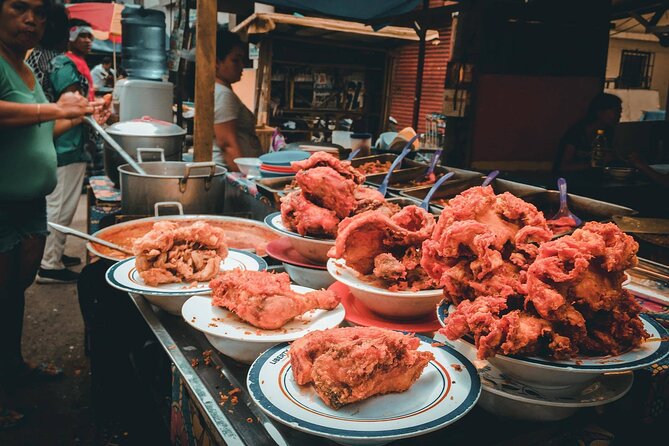
Possible foods and experiences mentioned include lechon, tuslob buwa, balut, local drinks, street snacks, and market food. One guide asked people to try unfamiliar dishes before explaining what they were eating. That can be a fun way to avoid overthinking every bite, but it also means adventurous eating is part of the deal.
The food is intended to show what locals eat, not to provide a polished restaurant meal. One person found the lechon especially good but thought other items were ordinary. Another enjoyed the food and felt the choices were authentic. Your reaction will depend on your taste and comfort level.
If you are vegetarian, you should ask before booking because the food examples lean heavily toward meat and unusual local dishes. The supplied details do not confirm a vegetarian menu or substitutions.
A jeepney ride gives the tour its local edge
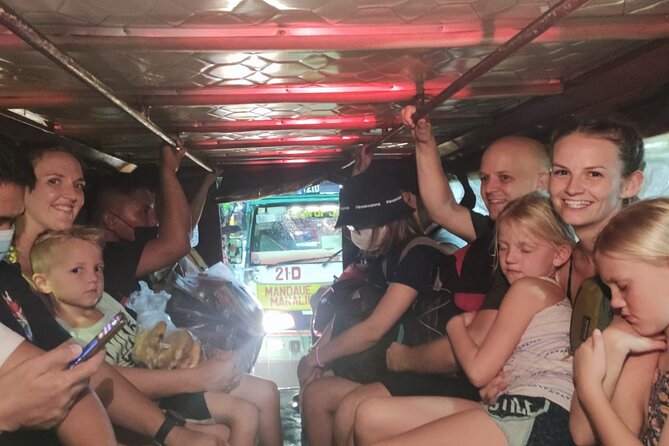
Several versions of the experience included a jeepney ride. For a first visit to Cebu, this can be one of the most useful parts of the evening. You get a short lesson in how locals move around the city instead of seeing everything through a private vehicle window.
The tradeoff is comfort and control. You are using public transportation, so delays and crowding are possible. One dissatisfied customer expected private transportation, while other people specifically enjoyed riding a jeepney. The difference comes down to expectations.
You should book this tour if a jeepney ride sounds interesting. You should not book it if you want door-to-door transport, air-conditioning, or a quiet vehicle between every stop.
The guides shape the whole experience
Guide quality appears to be one of the strongest reasons this tour works. Kyle is described as friendly, patient, helpful, and easy to understand in English. Lorelie, also referred to as Lor or Lorilie, is associated with a strong interest in Cebu street food and a welcoming style. Phillip, Philip, and Necian are also named as guides who made the walk conversational and informative.
Names are not a guarantee that you will receive a particular guide, but you can request one when booking if the operator allows it. The best guides on this route do more than recite dates. They explain jeepneys, food customs, religious sites, and the places you would likely miss on your own.
The group maximum is 20 people. That is small enough for questions, but it is not a private experience. A large group can slow down at food stalls and make it harder to hear in a market. If you want constant one-on-one attention, choose a private tour instead.
Is $69.99 fair for four hours?
At $69.99 per person, this is not a bargain by Cebu standards. The price includes the guide, listed entrance tickets, and food stops, but not your ride back to your hotel. You are also using public transport rather than a private van.
I see the price as payment for planning and confidence. Someone else builds the route, handles the sequence of old-city stops, introduces unfamiliar food, and helps you move through places you might avoid alone. That can be worthwhile if you have only one evening in Cebu.
The value is weaker if you are comfortable using maps, jeepneys, markets, and local eateries on your own. You could spend less by visiting the historic sites independently, though you would lose the guide’s explanations and the ready-made food route.
Arrive on time. One person who arrived an hour late missed the museum portion and felt the tour was overpriced. The operator also notes that the walk can finish early if the group moves quickly between stops, so the four-hour length is approximate rather than guaranteed.
Who should book this Cebu experience?
I would choose this tour for a first evening in Cebu City, especially if you want a quick introduction before heading to other parts of the island. It suits solo visitors who prefer a guide in busy areas and people who want to try local food without choosing every stall themselves.
It is also a good match for adventurous eaters who are open to balut, tuslob buwa, lechon, and other dishes that may not appear on a standard restaurant menu. The social format can work well for solo visitors because the walk includes time to talk with the guide and the group.
I would hesitate if you want a refined food tour, private transportation, a slow museum visit, or a guaranteed list of every dish. The tour may also disappoint you if you expect a full four hours of walking and tasting without any changes caused by weather, crowds, services, or market closures.
The experience requires good weather and a minimum number of participants. If the operator cancels for either reason, you are offered another date or a full refund. Your own cancellation is different: the booking is non-refundable and cannot be changed.
Should you book the Original Cebu City Historical and Food Walking Tour?
Book it if you want Cebu explained through churches, markets, public transport, and local food, and you value having someone guide you through the city’s older core. The strongest parts are the ancestral house, the historic cluster around Santo Niño Basilica and Magellan’s Cross, the Carbon Market visit, and the chance to try food you might not order alone.
Skip it if $69.99 feels high for a walking tour or if you need private transport and a fixed tasting menu. Before paying, confirm the meeting point, ask which food stops are planned that day, and arrange your ride from Freedom Park in advance. With those expectations clear, this is a lively, useful first look at Cebu City rather than a luxury food excursion.
FAQ
How long does the tour last?
The stated duration is approximately four hours. The actual length can vary depending on walking speed, food stops, traffic, and time spent at each site.
Where does the tour begin?
The meeting point is Ayala Terraces, 8W94+H97, Biliran Road, Cebu City.
What time does the tour start?
The scheduled start time is 4 pm.
Where does the tour end?
The tour ends at Freedom Park in the Carbon area of Cebu City.
Is transportation included?
The experience may include a jeepney ride or other public transportation, but it does not include a private vehicle or transportation back to your hotel.
Are entrance tickets included?
The provided details state that entrance tickets for the listed stops are included.
What historic sites are visited?
The route includes the Heritage of Cebu Monument, Yap-Sandiego Ancestral House, Santo Niño Basilica, Magellan’s Cross, and Cebu Metropolitan Cathedral.
What food will I try?
Food selections can vary, but examples connected with the experience include lechon, tuslob buwa, balut, local drinks, and other street food. The exact menu is not guaranteed.
How many people can join the tour?
The maximum group size is 20 people.
Can I cancel for a refund?
Your booking is non-refundable and cannot be changed for any reason. If the operator cancels because of poor weather or because the minimum number of participants is not met, you are offered another date or a full refund.
More Walking Tours in Cebu
- Cebu City: Walking Tour
★ 5.0 · 6 reviews - Manila: Street Food and Drinks Walking Tour with Tastings
★ 4.8 · 114 reviews - Viva Old Manila: Intramuros Walking Tour
★ 4.9 · 104 reviews - Manila’s Walled City: Intramuros Walking Tour
★ 5.0 · 82 reviews
Just added around Cebu
- Trekking to see the beautiful view of Cebu City★ 3.3 · 4 reviews
- Kalanggaman Island Day Tour Package from Cebu City or Mactan★ 3.0 · 6 reviews
- Kawasan Falls and Mantayupan Falls in One Day from Cebu★ 5.0 · 5 reviews
- Kawasan Canyoneering Adventure Package from Cebu★ 5.0 · 11 reviews
- Discover Scuba Diving★ 5.0 · 18 reviews
- Half day tour with Snorkel at Sancturary and Sulpa island★ 5.0 · 3 reviews
- Snorkeling at San Vicente with speed boat★ 5.0 · 8 reviews
- Twin Island Snorkeling Adventure at Hiltungan and Nalsuan★ 5.0 · 5 reviews
Food & Drink, compared.
Manila Food Tour: Introduction to Philippine Street Food
Read our review →
Manila Food Tour: Explore World’s Oldest Chinatown
Read our review →
Street Food and Drinks Walking Tour with Tastings
Read our review →
Manila’s Culinary Expedition: The Ultimate Food and Market Tour
Read our review →
Makati Street Food Experience end with a Rooftop Bar
Read our review →
Intramuros & Chinatown Manila Tour – Walking, Food & Culture
Read our review →Browse the lists this tour appears in