

Reviewed · INTRAMUROS WALKING TOURS
Manila Intramuros Walking tour with Local Tour Guide
Intramuros is not just a collection of old buildings. It is where Manila’s Spanish colonial past, wartime destruction, Filipino resistance, and modern identity all meet. This two-to-three-hour walking tour gives you a clear route through that story, with stops at Manila Cathedral, Fort Santiago, San Agustin Church, and Casa Manila.
I like the small group size, capped at 10, and the way guides such as Mari and Victor bring context to places that can otherwise look like simple old walls. I also like the mix of grand churches, military history, a wartime dungeon, and a furnished colonial house. The main drawback is the weather: much of the experience takes place outdoors, and Monday visits lose access to San Agustin Church and Casa Manila.
Key points to know before booking
- Fort Santiago brings the darkest stories: Expect attention on World War II, the Battle of Manila, and the dungeon within the fort.
- Casa Manila adds daily-life detail: The replica Spanish colonial mansion shows how the Filipino elite lived during the colonial period.
- Mari and Victor are named guides: Mari is especially noted for her lively explanations, while Victor is described as attentive and informative.
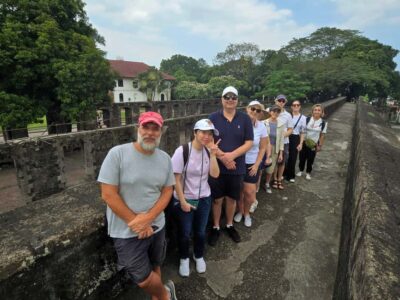
- The group stays small: A maximum of 10 people makes it easier to ask questions and keep up with the guide.
- Mondays have two closures: San Agustin Church and Casa Manila Museum are closed every Monday.
- The Lamborghini bike is optional fun: This is a short three-wheeled pedal-bike ride, with someone else able to do the pedaling for you.
Why Intramuros makes a strong first history tour
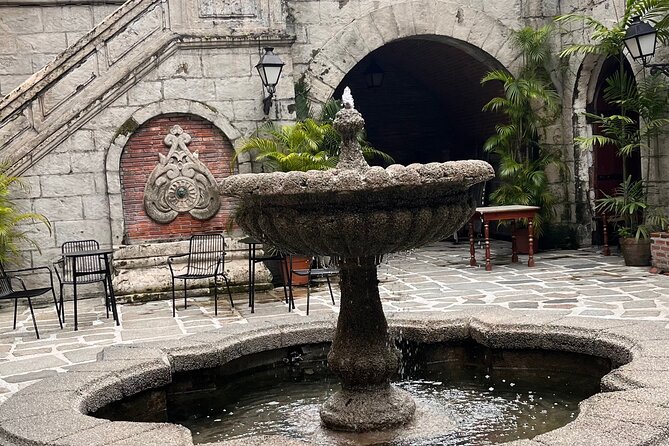
Intramuros means within the walls, and the name tells you what makes the district useful for a first look at Manila. In a compact area, you can see the church power of Spanish rule, the military role of the walled city, the lifestyle of the colonial upper class, and the damage caused during World War II.
Without a guide, it is easy to admire the stonework and miss the larger story. This tour begins with a short introduction to Philippine history before the walk itself. That opening matters because Intramuros covers a long stretch of time, roughly a 700-year story according to the tour description, and the buildings make more sense once you know how Manila changed.
I would not expect an academic lecture. The format is a practical introduction, designed to connect each place to the next. Mari is praised for being funny and enthusiastic, and one description notes that she can condense centuries of Philippine history into about 15 minutes before the walking portion. That is useful if you want the big picture without spending half a day in a museum.
The tour also leaves room for questions. That can be especially helpful if you are visiting from outside the Philippines and need basic context about Spanish rule, Filipino identity, and the events of the Battle of Manila.
More Intramuros tours:
- Manila Old and New: Sightseeing Tour Including Intramuros and Fort Santiago
★ 4.5 · 377 reviews - Manila’s Walled City: Intramuros Walking Tour
★ 5.0 · 82 reviews - Express Bamboo Bike Tour inside Intramuros
★ 4.5 · 66 reviews
Manila Cathedral and Plaza de Roma
The walk starts at Figaro Coffee in the FEMII Building on Soriano Avenue. From there, the first major stop is Manila Cathedral, with about 35 minutes set aside for the area.
The cathedral gives you an immediate sense of the religious importance of Intramuros. It is not only a photo stop. Your guide can explain how Catholic institutions fit into the Spanish colonial city and how the church connects to the wider story of Manila.
Plaza de Roma is also part of the planned route, even though the detailed stop list gives more time to the cathedral itself. The plaza helps you understand how the walled city was organized around major civic and religious spaces. I like having this kind of open public area early in the tour because it gives you room to get your bearings before moving into the fort and enclosed buildings.
The cathedral portion may suit visitors who want architecture and cultural background, but it is not the strongest part for anyone focused only on military history. To get the most from it, listen for how religious, political, and social power overlapped in colonial Manila.
Dress matters here. The advice is to wear comfortable clothing and something modest inside the church. Manila can be hot, and this is a walking tour, so light, practical attire and comfortable shoes are sensible choices.
San Agustin Church, one of Intramuros’ essential stops
San Agustin Church receives about 35 minutes on the route. It is one of the oldest stone churches in the Philippines and is important for both its architecture and its place in the story of Spanish Manila.
This is where the tour moves beyond fortifications and government buildings. You get a look at how religious life shaped the city. The church also gives the walk a change of pace, with an interior setting after time spent outside in the streets and plazas.
A guide is particularly useful here because the significance may not be obvious from the exterior. Victor is praised for explaining cultural and historical details that are easy to miss when exploring Intramuros alone. That kind of help is one reason I see value in booking a guided visit rather than simply walking the walls with a phone map.
San Agustin Church is closed every Monday. That is not a small detail. If you book for Monday, the route cannot give you the same church visit described for other days. The tour still includes other major sites, but I would choose another day if this church is important to you.
Fort Santiago and the Battle of Manila
Fort Santiago is the emotional center of the walk, with about 45 minutes planned here. This is where the tour turns toward war, imprisonment, and the destruction of Manila during World War II.
The guide’s focus on the past and present helps connect the fort’s older military role with the Battle of Manila. You will hear about what took place within Intramuros during the battle and the grim events that followed. The route also includes the Dr. Jose Rizal Shrine, a White Cross, and a dungeon.
For me, this is the part that gives the tour its weight. Churches and colonial houses can show how the city looked, but Fort Santiago helps explain what people endured. The dungeon is not a light attraction, and the wartime section may feel sobering. That is appropriate to the subject, but it is worth knowing if you prefer a purely architectural walk.
The fort also links Philippine national identity to Intramuros. Dr. Jose Rizal is a central figure in the country’s story, and the shrine gives the guide a clear point from which to discuss his role. I would pay attention here rather than rushing through for photographs.
Fort Santiago may be the best stop for anyone who wants more than a surface-level tour. It gives the walk a human side, especially when the guide explains how Intramuros changed from a colonial stronghold into a place marked by wartime loss.
More walking tours in Luzon:
- Intramuros & Chinatown Manila Tour – Walking, Food & Culture
★ 4.5 · 32 reviews - Manila: Binondo Walking Tour ( Oldest Chinatown )
★ 5.0 · 30 reviews - Manila Old & New City Walking Tour With A Guide
★ 4.0 · 9 reviews - Manila Private Walking Tour With A Local Guide (Private Tour)
★ 4.5 · 7 reviews
Casa Manila and the colonial home
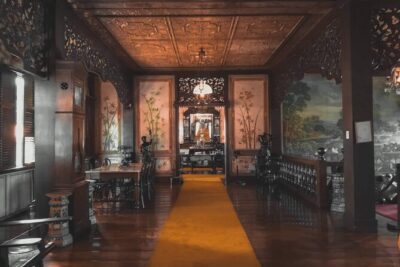
Casa Manila is planned for about 35 minutes and offers a different view of the past. It is a replica of a Spanish colonial mansion, furnished to show the lifestyle of the Filipino elite during the Spanish colonial period.
I like this stop because it moves the tour from public buildings and battle sites into domestic life. A cathedral can tell you about religion, and a fort can tell you about power and conflict. Casa Manila helps you picture how status, space, decoration, and household life worked for wealthy families.
The intricate interior details are a particular reason to save time for this stop. It is easy to focus only on the fort when visiting Intramuros, but the house gives you a more grounded look at social class and colonial culture.
Casa Manila is closed every Monday, along with San Agustin Church. On other days, admission is included in the tour price. The museum portion may be less appealing if you dislike indoor house museums, but it is valuable for anyone trying to understand daily life rather than only major political events.
The visit also rounds out the route. By this point, you have seen religious authority, military control, wartime suffering, and elite domestic life. That range is the tour’s strongest feature.
The small extras: water, umbrellas, and the Lamborghini bike
The tour includes a bottle of water and a welcome drink. That sounds minor, but it matters in Manila, where walking outdoors can be tiring. One guide also provided umbrellas when rain began, though I would treat that as a thoughtful possibility rather than a guaranteed feature.
The tour description also mentions a short ride on a Lamborghini bike. The name may sound grander than the activity itself. In plain terms, it is a three-wheeled pedal bike, and you do not have to pedal because someone can do it for you.
This is not a major part of the historical program. Think of it as a brief, playful break during a serious walking tour. It may be fun for families or anyone who wants a small local touch, but do not book this experience expecting a long bike ride.
How much value do you get for $55?
At $55 per person, this is not the cheapest way to see Intramuros. The value depends on what you want from the visit.
If you only want to photograph the cathedral, fort, and old streets, you can explore on your own for less. But the price includes a local guide, admission fees, bottled water, and a planned route through several different parts of Intramuros. You are paying mainly for the explanation and organization.
The small maximum of 10 people improves that value. A guide can usually answer more questions in a small group, and you are less likely to lose the thread of the story while moving between stops. The experience is also easier for a first-time visitor because the meeting point, route, and return to the starting point are clear.
I would consider the tour especially worthwhile if you are new to Manila, visiting from outside the Philippines, or unsure how the sites fit together. The guides are praised for being kind, accommodating, and able to give a useful summary of each landmark. Mari is described as both funny and well prepared, while Victor is noted for his attentive explanations.
The price is less compelling if you have already studied Philippine history or prefer to set your own pace. The tour gives you a broad introduction rather than hours at each site. Its strength is the connected story, not exhaustive museum time.
Timing, walking comfort, and practical planning
The experience lasts about two to three hours. The listed stops add up to roughly 150 minutes, before counting the opening introduction, walking between sites, questions, and any short bike experience. Plan for a steady outing rather than a quick photo circuit.
You meet at Figaro Coffee in the FEMII Building at 1002 Soriano Avenue, Intramuros, and return to the same meeting point. The starting area is near public transportation, which helps if you are coming from another part of Manila.
Comfortable footwear is the most important practical choice. You will move between outdoor streets, plazas, and historic buildings, and weather can affect the experience. The tour requires good weather, and if poor conditions cause cancellation, you can receive a full refund or choose another date.
Free cancellation is available up to 24 hours before the start time. After that point, the amount paid is not refunded, and changes are not accepted. I would keep that deadline in mind before booking around a tight Manila schedule.
The route is suitable for most people according to the activity information, but it is still a walking tour. Anyone who finds extended outdoor walking difficult should consider the two-to-three-hour duration and the weather before booking.
Who will enjoy this Intramuros walk?
I would recommend this experience to first-time visitors who want a clear introduction to Manila’s past without committing to a full-day museum program. It also suits anyone who prefers stories and explanation over simply taking photographs.
History-minded families may enjoy the variety. The fort, dungeon, shrine, church, colonial house, and short bike ride give the outing several different points of interest. The serious wartime material is worth explaining to children in advance, since Fort Santiago is not presented as a light sightseeing stop.
The tour also suits visitors who have already seen Intramuros but want more meaning from familiar places. One strong feature is the ability to point out details you might otherwise walk past, especially at Casa Manila and the religious sites.
I would be less likely to choose it if I wanted a quiet, private visit with no fixed route, or if I were visiting on a Monday and cared most about San Agustin Church and Casa Manila. Monday does not cancel the whole experience, but it does remove two of its four main stops.
Should you book it?
Book this tour if you want the main Intramuros sights tied together by a local guide, especially if the Battle of Manila, Fort Santiago, and Filipino history are important to you. The small group, included admission, water, and named guides such as Mari and Victor make the $55 price easier to justify than a simple self-guided walk.
Choose another day than Monday, wear modest and comfortable clothing, and allow enough time for heat or rain. If you want a compact, serious introduction to Manila’s walled city, this tour offers a useful balance of architecture, personal stories, colonial life, and wartime memory.
FAQ
How long does the Intramuros walking tour last?
The tour lasts approximately two to three hours, including the planned visits and time spent walking between the main sites.
Where does the tour start and end?
It starts at Figaro Coffee in the FEMII Building at 1002 Soriano Avenue, Intramuros, Manila. The activity ends back at the same meeting point.
Which places are included on the route?
The route includes Manila Cathedral, Plaza de Roma, Fort Santiago, the Dr. Jose Rizal Shrine, the White Cross, the dungeon, San Agustin Church, and Casa Manila Museum. The detailed itinerary gives specific visit time to Manila Cathedral, San Agustin Church, Fort Santiago, and Casa Manila.
Are San Agustin Church and Casa Manila open every day?
No. San Agustin Church and Casa Manila Museum are closed every Monday.
Is admission included in the tour price?
Yes. Admission fees are included, along with a local tour guide, a welcome drink, and bottled water.
How many people can join the tour?
The tour has a maximum group size of 10 people. Group discounts are also available.
Can I cancel for a full refund?
Yes, if you cancel at least 24 hours before the experience start time. Cancellations made less than 24 hours in advance are not refunded. If poor weather causes the tour to be canceled, you are offered another date or a full refund.
Just added around Luzon
- Skip the Line: Villa Escudero Plantation & Resort Day Pass Ticket★ 4.5 · 11 reviews
- Villa Escudero Coconut Plantation Day Trip from Manila★ 3.5 · 9 reviews
- Villa Escudero Tour with Lunch From Manila (SHARED)★ 5.0 · 5 reviews
- The Jeepney & Tuk Tuk Adventure ride with Local Guide★ 4.5 · 4 reviews
- VILLA ESCUDERO DAY TOUR with Carabao Cart Ride and Bamboo from Manila★ 4.0 · 6 reviews
- Private Filipino Cooking Class in the Heart of Manila,Makati City★ 5.0 · 5 reviews
- Manila ATV Mountain Trail Adventure(with Transfers***)★ 4.5 · 19 reviews
- Pagsanjan Falls Adventure with Lunch and Rapids Experience★ 4.5 · 3 reviews
Intramuros Walking Tours, compared.
Intramuros, Manila: Historical Bamboo Bike Tour
Read our review →
Experience Intramuros with Bamboo Bicycle – Ecotours
Read our review →
Intramuros, Chinatown, and Old Manila Half-Day Tour
Read our review →
Manila Old and New: Sightseeing Tour Including Intramuros and Fort Santiago
Read our review →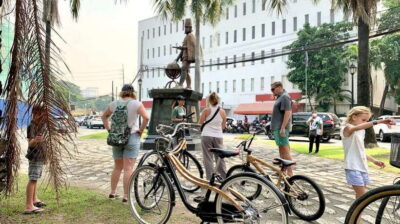
Explore Intramuros: Introduction to Philippine History
Read our review →Browse the lists this tour appears in