
Reviewed · INTRAMUROS WALKING TOURS
A Step Back in Time: Intramuros Walking Tour
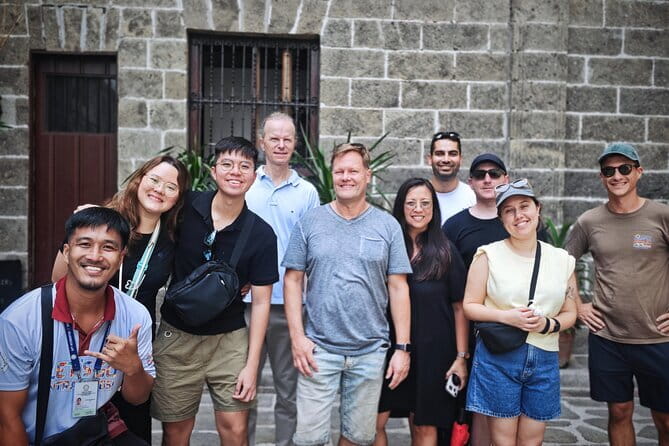
Intramuros is more than a walled district with a few old churches. It is where Manila’s Spanish colonial past, the life of José Rizal, World War II, and the city’s enduring spirit meet on the same walk. Russell Leyco’s storytelling gives those places a human thread, while included admission to Fort Santiago and Casa Manila keeps the day simple.
I like the clear route and the mix of major sights: Fort Santiago and the Rizal Shrine provide the strongest history, while San Agustin Church and Casa Manila show how people worshiped and lived. The main consideration is pace. Three hours of walking, six stops, and a group of up to 30 people can leave little time for lingering.
Key points to know before booking
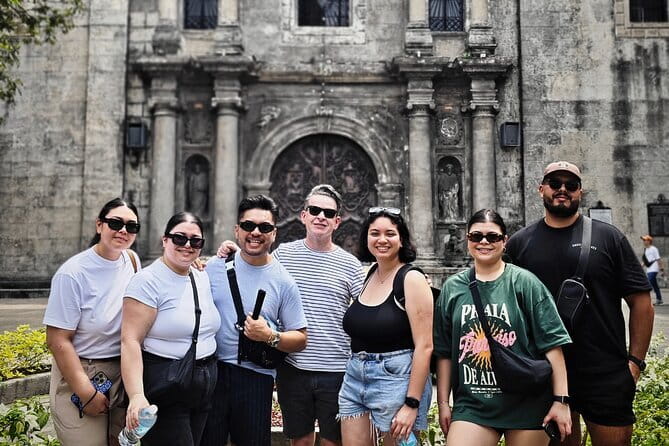
- Russell Leyco leads the experience, bringing stories, humor, and practical tips about Manila.
- Fort Santiago takes the largest share of time, including its dungeon, Lego museum, and the Rizal Shrine.
- Casa Manila is the finishing stop, giving the tour a look at colonial-era domestic life.
- Admission fees are included for the paid sites, with a Department of Tourism accredited guide.
- The tour starts at 9:00 am at United Philippine Lines beside Fort Santiago and ends at Casa Manila.
- The group may reach 30 people, so this is a shared walking tour rather than a private historical walk.
Why this Intramuros walk works
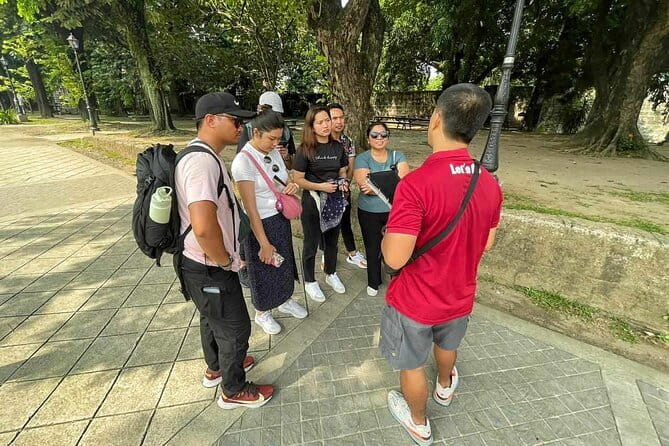
I like tours that explain a city in layers instead of treating monuments as isolated photo stops. This one moves through Fort Santiago, churches, a war memorial, and a period house, so you get several ways to read Intramuros. You are not simply looking at old walls. You are following the forces that shaped Manila.
Russell Leyco is identified as the Manila storyteller behind the experience. The strongest descriptions of his guiding style point to lively delivery, empathy, humor, and an ability to keep a three-hour walk moving. One account also refers to a guide called Sir Rasa, so the exact person leading the walk may be worth confirming when you book.
The route is especially useful if you know little about Philippine history. It introduces Dr. José Rizal, the country’s national hero, explains the importance of Manila Cathedral and San Agustin Church, and addresses the Japanese invasion and Manila Massacre at Memorare Manila. If you already live in the Philippines, the walk can still add fresh context to a district you may have visited without a guide.
There is a practical tradeoff. You will cover six stops in about three hours, and the largest group size is 30. That is good value for a broad introduction, but it is not designed for long, quiet visits at every site or a highly personal conversation with the guide.
More Intramuros tours:
- Manila Old and New: Sightseeing Tour Including Intramuros and Fort Santiago
★ 4.5 · 377 reviews - Manila’s Walled City: Intramuros Walking Tour
★ 5.0 · 82 reviews - Express Bamboo Bike Tour inside Intramuros
★ 4.5 · 66 reviews
Starting at Fort Santiago at 9:00 am
The meeting point is United Philippine Lines, One Fort Santiago 1 on Santa Clara Street, inside Intramuros. The tour begins at 9:00 am, and a mobile ticket makes the arrival process straightforward. The starting point is near public transportation, but hotel pickup and drop-off are not included, so you must make your own way there.
Beginning at Fort Santiago is a smart choice. It gives the tour a strong physical setting right away: a fortified historic site with enough space for the guide to explain how Intramuros functioned. You will spend about one hour here, making it the most substantial stop on the route.
The fort visit includes the dungeon, a Lego museum, and other attractions within the site. The unusual Lego museum adds a lighter, family-friendly note to a place otherwise tied to military power, imprisonment, and wartime memory. That mix may appeal to families or mixed-age groups, though serious history fans should expect the hour to cover several elements rather than one subject in great depth.
Your Department of Tourism accredited guide is included in the price. That matters at Fort Santiago because the value comes not only from entering the grounds, but from learning how the site fits into Philippine history. Russell’s approach, based on the information available about his guiding, leans toward stories and interpretation rather than a dry list of dates.
The Rizal Shrine and the final days of a national hero
Inside Fort Santiago, the Rizal Shrine gives the tour its clearest personal focus. The museum is dedicated to Dr. José Rizal and contains personal items, photographs, and artwork connected with his life and writing.
You will spend about 20 minutes here. That is enough for an introduction to Rizal’s importance, his role in the country’s fight for independence, and his time at the fort before his execution. His death helped inspire the Philippine revolution, so this stop links one person’s life to the wider movement for independence.
I would pay close attention here, even if you have only a passing interest in politics or literature. Rizal helps explain why Fort Santiago is not just a military monument. The site also carries the memory of a writer and national figure whose work became part of the country’s identity.
The short time limit is the main drawback. You may want to read every display or study each object, but the group must continue. If Rizal is your main reason for visiting, you may prefer to return later for a slower museum visit.
Manila Cathedral and the religious center of Intramuros
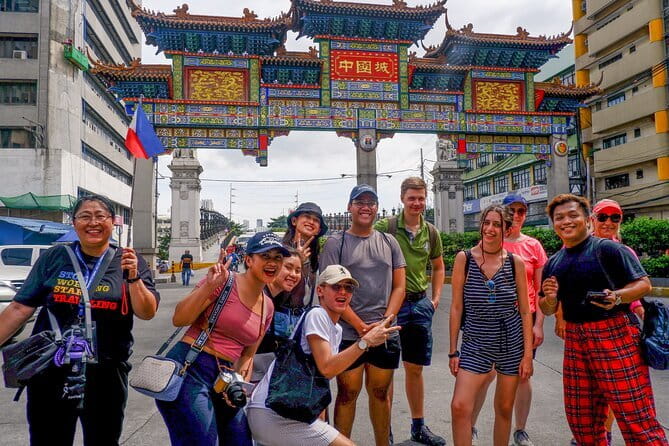
The next stop is Manila Cathedral, officially described here as the Philippines’ mother church. The tour allows about 20 minutes, with admission listed as free.
This is a useful shift in subject. After Fort Santiago’s military and political associations, the cathedral shows the religious role of Intramuros. The guide’s explanation helps place the building within the story of Manila rather than treating it as an isolated church façade.
Do not expect a long service visit or a detailed architectural study in 20 minutes. The stop is best understood as an orientation: you learn why the cathedral matters, see the setting, and then move on. If the church is open for its own schedule, conditions inside may affect how much time can be spent talking.
More walking tours in Luzon:
- Manila Intramuros Walking tour with Local Tour Guide
★ 5.0 · 33 reviews - Intramuros & Chinatown Manila Tour – Walking, Food & Culture
★ 4.5 · 32 reviews - Manila: Binondo Walking Tour ( Oldest Chinatown )
★ 5.0 · 30 reviews - Manila Old & New City Walking Tour With A Guide
★ 4.0 · 9 reviews
Memorare Manila and the wartime story
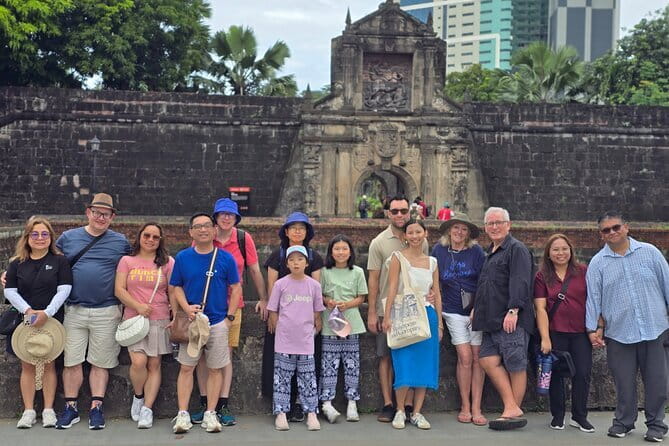
Memorare Manila is a brief stop, about 15 minutes, but its subject is heavy. Here, the guide discusses the Japanese invasion and the Manila Massacre.
The monument gives the walk a needed wartime perspective. Intramuros is often presented through Spanish colonial buildings and church architecture, but Manila’s modern history also includes terrible destruction and loss. This stop makes sure the tour does not soften the city’s past into a purely picturesque story.
Because only 15 minutes are set aside, expect a focused explanation rather than a full military history. The subject may also change the tone of the walk. Russell’s reported style is empathetic and spirited, but this is a place where careful listening matters more than entertainment.
I consider this one of the most important stops because it reminds you that the buildings around you have survived more than one era of political change. It gives emotional weight to the rest of the route.
San Agustin Church and Manila’s baroque heritage
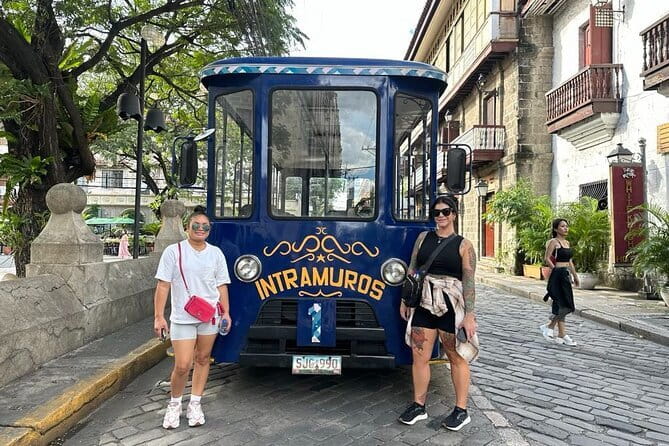
The tour then visits San Agustin Church, also known as the Immaculate Conception Parish. The church is a UNESCO World Heritage baroque building, and the visit lasts about 20 minutes. Admission is listed as free.
For many people, this will be one of the visual highlights. San Agustin offers a direct look at the religious architecture preserved within Intramuros. The UNESCO designation also gives you a useful point of reference: this is not simply an old church on a sightseeing route, but a place recognized for its cultural and architectural importance.
Again, the schedule is brisk. You will get an explanation and a chance to see the church, but you may not have time to examine every detail. I would resist trying to photograph everything while the guide is speaking. The building makes more sense once you connect its design and purpose to the larger story of Intramuros.
The stop also works well for people with different interests. History fans get architectural and religious context, while casual sightseers get a memorable historic interior and one of the district’s best-known landmarks.
Casa Manila, where the walk ends

The final stop is Casa Manila, reached at the Plaza San Luis Complex on General Luna Street. The tour ends here after about 20 minutes, and admission is included.
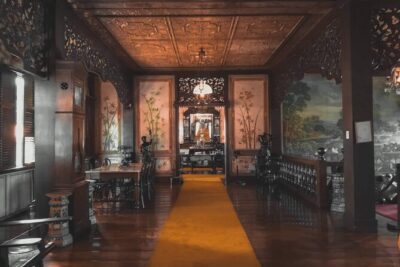
Casa Manila is a museum arranged around domestic life. Instead of concentrating on forts, churches, and public monuments, it shows how an upper-class colonial home might have looked. That change in scale is valuable. You move from national events and public institutions to rooms, furnishings, and daily habits.
The short visit gives you a sample rather than a full museum afternoon. Still, it is a fitting conclusion because it makes the past feel more ordinary and tangible. After hearing about military occupation, revolution, religion, and war, you get a look at the way social life was organized behind a front door.
Ending at Casa Manila is also practical. You are not returned to the starting point, so plan your next stop from this part of Intramuros. The tour does not include private transportation, food, or drinks. A restaurant such as Barbara’s was suggested as a possible lunch choice in one piece of tour feedback, but it is not part of the booked experience.
What the $25 price really covers

At $25 per person, this is a moderate price for a three-hour guided walk with admission fees included at Fort Santiago and Casa Manila. You are paying mainly for structure and interpretation. The guide connects six stops that would otherwise be easy to visit as disconnected buildings.
The included Department of Tourism accredited guide adds practical value. A self-guided visit might cost less, but you would need to research the history, plan the route, and manage the timing yourself. If you are new to Philippine history, the explanation is likely the main reason to book.
The price does not cover food, drinks, hotel transportation, or private transfers. Those exclusions are normal for a walking tour, but they matter if you are trying to keep the morning completely organized through one booking. You should also remember that the group can contain up to 30 people. The cost is attractive for a shared introduction, less so if you expect the attention of a private guide.
The experience is booked by mobile ticket and is generally suitable for most participants according to the provided details. Since it is a three-hour walking tour, I would still choose comfortable clothing and plan around the physical demands of staying on foot, without assuming that the operator provides transport between stops.
Who will get the most from this tour
I would recommend this experience to first-time visitors who want a clear introduction to Intramuros without spending a full day studying every building. It also suits families, curious residents, and anyone who wants a guide to explain why the district matters.
History enthusiasts will appreciate the combination of Rizal, wartime Manila, Spanish colonial religion, and domestic life. The schedule may feel too short if you want extended museum time or detailed architectural discussion at every stop.
The tour also suits people who prefer stories to lectures. Russell is repeatedly described as lively, considerate, and good at using humor and personal interpretation. That style can make difficult subjects easier to follow, though anyone seeking a strictly academic treatment may want to supplement the walk with independent reading.
The morning start is another plus. At 9:00 am, you have the rest of the day available after reaching Casa Manila. Since the tour does not include lunch, drinks, or onward transport, use the ending point as a base for planning the next part of your day.
Should you book A Step Back in Time?
Book it if you want a well-priced, story-led introduction to Intramuros and prefer having the key admissions handled for you. The route covers the district’s strongest themes in three hours, and Russell Leyco’s style appears best suited to people who value humor, empathy, and clear explanations.
Think twice if you want a private experience, long museum visits, or plenty of time for photography. A group of up to 30 and the brisk schedule mean you will be getting an overview, not an exhaustive study.
For most first-time visitors, I think the balance is good. You get Fort Santiago, the Rizal Shrine, Manila Cathedral, Memorare Manila, San Agustin Church, and Casa Manila for $25, with a Department of Tourism accredited guide and site admissions included. That is a sensible way to meet Intramuros before deciding which places deserve a second, slower visit.
FAQ
How long does the Intramuros walking tour last?
The tour lasts approximately three hours.
What time does the tour start?
It starts at 9:00 am.
Where does the tour begin?
The meeting point is United Philippine Lines, One Fort Santiago 1, Santa Clara Street, Intramuros, Manila.
Where does the tour end?
The tour ends at Casa Manila Museum in the Plaza San Luis Complex on General Luna Street, Intramuros.
What attractions are included?
The route includes Fort Santiago, the Rizal Shrine, Manila Cathedral, Memorare Manila Monument, San Agustin Church, and Casa Manila.
Are admission fees included?
Yes. Admission fees to the sites are included, including Fort Santiago and Casa Manila.
Is hotel pickup included?
No. Hotel pickup and drop-off, private transportation, food, and drinks are not included.
Just added around Luzon
- Skip the Line: Villa Escudero Plantation & Resort Day Pass Ticket★ 4.5 · 11 reviews
- Villa Escudero Coconut Plantation Day Trip from Manila★ 3.5 · 9 reviews
- Villa Escudero Tour with Lunch From Manila (SHARED)★ 5.0 · 5 reviews
- VILLA ESCUDERO DAY TOUR with Carabao Cart Ride and Bamboo from Manila★ 4.0 · 6 reviews
- Private Filipino Cooking Class in the Heart of Manila,Makati City★ 5.0 · 5 reviews
- The Jeepney & Tuk Tuk Adventure ride with Local Guide★ 4.5 · 4 reviews
- Manila ATV Mountain Trail Adventure(with Transfers***)★ 4.5 · 19 reviews
- Pagsanjan Falls Adventure with Lunch and Rapids Experience★ 4.5 · 3 reviews
Intramuros Walking Tours, compared.
Intramuros, Manila: Historical Bamboo Bike Tour
Read our review →
Experience Intramuros with Bamboo Bicycle – Ecotours
Read our review →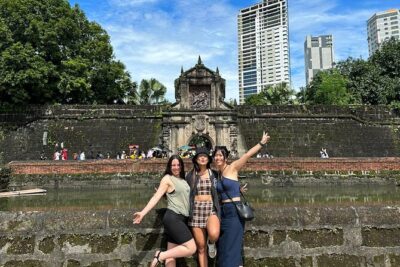
Intramuros, Chinatown, and Old Manila Half-Day Tour
Read our review →
Manila Old and New: Sightseeing Tour Including Intramuros and Fort Santiago
Read our review →
Explore Intramuros: Introduction to Philippine History
Read our review →Browse the lists this tour appears in