
Reviewed · MANILA TOURS
Revolutionary Tour of Manila
Manila’s revolutionary story is written into the stone walls of Fort Santiago, where Dr. Jose Rizal spent his final hours and civilian prisoners died during the Japanese occupation. This three-hour walk through Intramuros links Spanish rule, reform, revolution, the Philippine-American War, and the road to independence.
I like the focus on unsung patriots, not just famous names. I also like the compact route: Fort Santiago, Manila Cathedral, San Agustin Church, and Calle Real give you a useful first look at the old city without requiring a full day.
The main caution is timing. If Mass prevents entry into either church, the tour can become much shorter than planned. Come prepared for heat, bring sunscreen or mosquito repellent, and confirm the church visits when you meet your guide.
Key points before you book
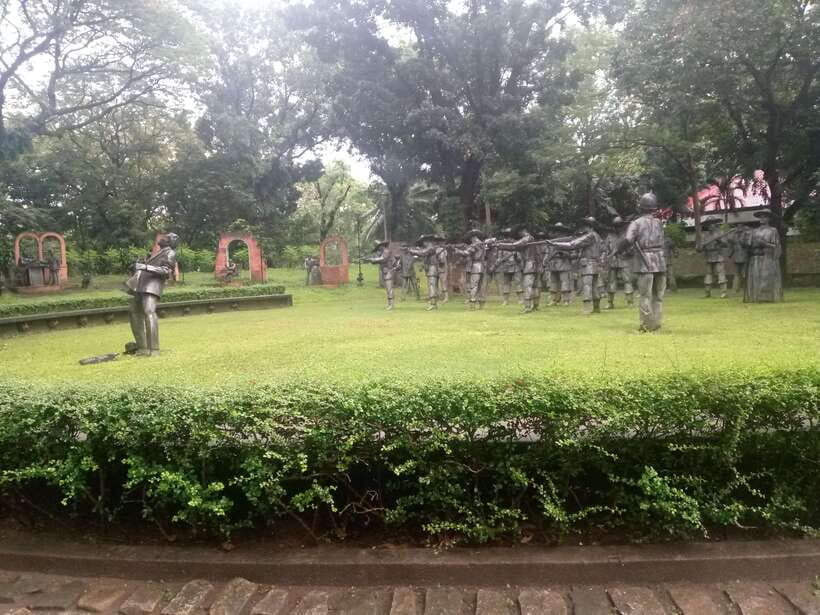
- Fort Santiago provides the strongest historical focus, with Rizal’s last prison cell, wartime dungeons, and a mass grave for roughly 600 Filipino and American civilian prisoners of war.
- The tour connects several periods, from the pre-Hispanic era through Spanish and American rule to the Japanese occupation.
- Manila Cathedral shows the clash between church and government, adding political context to the walk.
- San Agustin Church offers a story of survival, with attention to the building’s endurance through major periods of Philippine history.
- The route finishes at Calle Real, once Intramuros’ downtown center and now a place to consider how much the district has changed.
- Jerome is a named guide on this experience, speaking English and German. Transportation and entrance fees are included.
Why Fort Santiago is the right place to begin
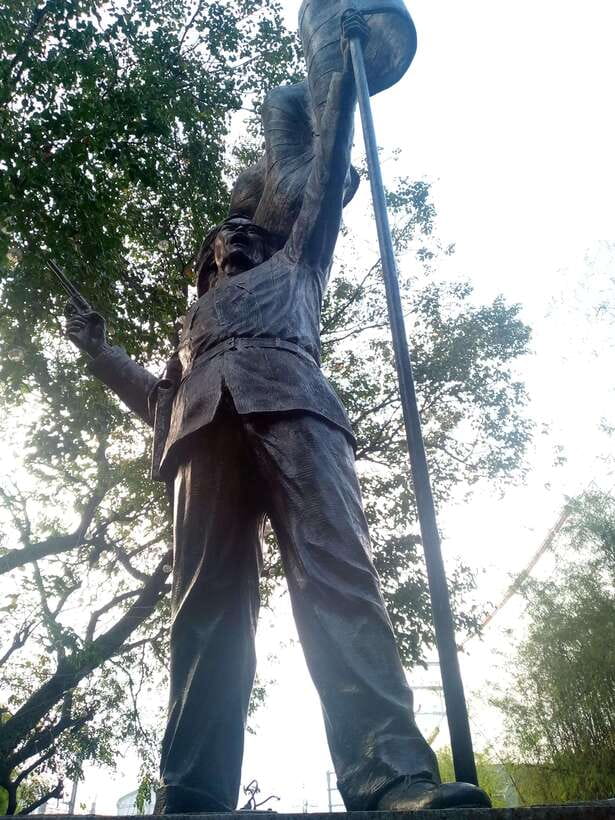
Fort Santiago gives this tour its backbone. Rather than starting with a general city introduction, you begin inside one of Intramuros’ most important defensive sites. The fort lets your guide explain how Manila grew, who controlled it, and how resistance took shape over time.
The tour covers the Philippines from the pre-Hispanic era through Spanish rule, American rule, and the Japanese occupation. That broad span matters because Philippine independence did not come from one single uprising. You are following a long argument over power, identity, religion, and self-rule.
Dr. Jose Rizal is central to the opening visit. You see the last prison cell where he was detained before his execution, a compact space that helps turn a national story into something personal. His role in reform and the revolution gives the tour a clear human focus, even as the guide also points toward lesser-known patriots.
I like that balance. A tour centered only on Rizal can become a biography lesson. Here, his cell is one part of a larger story about reformism, revolt, and the difficult path toward a Philippine nation.
Allow about one hour at Fort Santiago. That is the longest single stop, and it needs the time. The fort is not just a quick photo stop. You move through spaces connected to political detention and wartime suffering, while the guide explains why these places still matter.
A few more Manila days worth weighing up
- Intramuros, Manila: Historical Bamboo Bike Tour
★ 4.8 · 583 reviews - Experience Intramuros with Bamboo Bicycle – Ecotours
★ 5.0 · 508 reviews - Manila: Intramuros, Chinatown, and Old Manila Half-Day Tour
★ 4.8 · 475 reviews
The dungeons and the cost of war
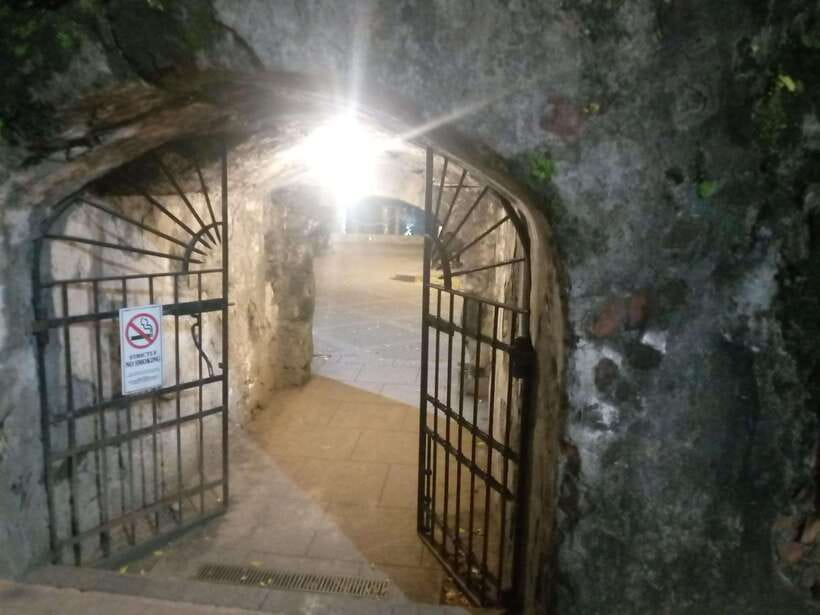
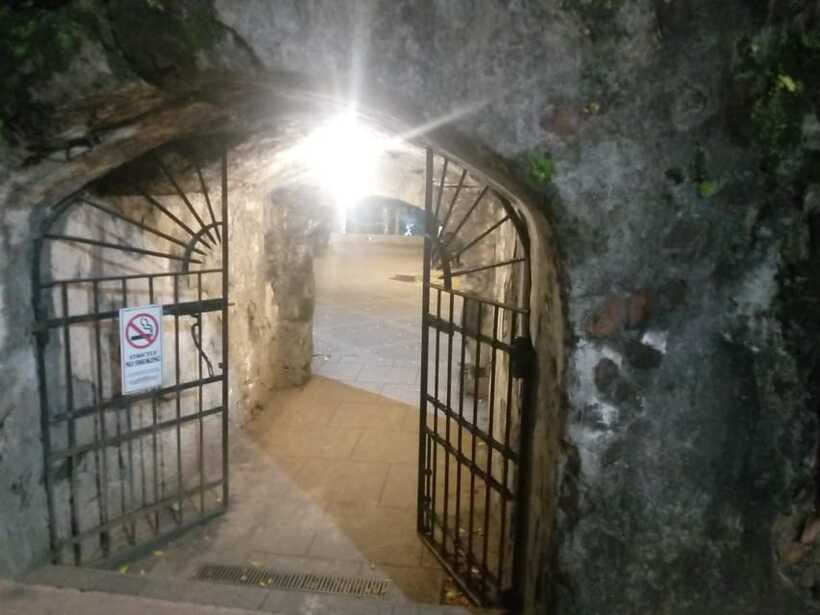
The most sobering part of the tour comes underground. The dungeons had a very limited air supply, and the physical setting makes it easier to grasp the cruelty of confinement. You are not simply hearing that prisoners suffered. You are standing in the chambers where that suffering took place.
The tour also addresses the deaths of about 600 Filipino and American civilian prisoners of war. Their mass grave receives specific attention, giving the stop a memorial purpose rather than treating the fort as an old military attraction.
This is where the experience may feel heavy. That is appropriate, but you should know the tone is not light sightseeing. The guide asks you to remember people whose names may not be familiar and to consider how war affected civilians, not only soldiers and political leaders.
I would allow yourself a little quiet time here. Fort Santiago can be busy, and the history is dense. A good guide will help you connect the rooms, prison cell, and grave to the wider story without rushing from one point to the next.
Manila Cathedral and the church-state struggle
From Fort Santiago, the tour continues to Manila Cathedral for a 30-minute guided visit. This stop shifts the focus from prisons and military force to the relationship between religion and government.
Your guide explains the power struggle between the church and the state. That subject is essential to understanding Spanish Manila, where religious authority shaped public life and political control. The cathedral is therefore more than a beautiful church. It represents the institutions that helped organize colonial society.
The short visit works well as a change of pace after Fort Santiago. You get a chance to look up, slow down, and consider how faith and government operated together. At the same time, 30 minutes is not enough for a long architectural or religious study. The value here is the historical explanation, not an exhaustive church tour.
There is one practical concern. Mass can limit or prevent entry. If that happens, your guide may explain the site from outside, but you may lose much of the planned time. One poor experience resulted in a shorter tour for exactly this reason, so it is sensible to ask at the start how church access looks that day.
Walking General Luna Street and the American period
The route along General Luna Street adds the Philippine-American War to the story. This is useful because many short Intramuros walks focus mainly on Spanish colonial buildings and stop there.
Here, you hear about Filipino courage and sacrifice during the conflict with the United States. The walk helps show that the struggle for freedom did not end when Spanish rule ended. A new foreign power brought a new political order, and Filipinos continued to fight over what independence should mean.
The street itself gives the story a physical setting. You are moving through the old fortified district rather than hearing a lecture in a museum room. That makes the shift from Spanish control to American rule easier to follow.
Keep in mind that this is a guided history walk, not a long neighborhood exploration. The tour does not promise extended free time on General Luna Street. The guide’s stories are the main reason to pay attention here.
Same islands, a completely different kind of day:
- Manila: Old & New 4-Hour City Tour
★ 4.5 · 458 reviews - Manila Food Tour: Introduction to Philippine Street Food
★ 5.0 · 417 reviews - Manila Old and New: Sightseeing Tour Including Intramuros and Fort Santiago
★ 4.5 · 377 reviews - Makati Nightlife: VIP Access to Clubs, Rooftops & Go-Go Bars
★ 4.9 · 278 reviews
San Agustin Church and survival through changing times
San Agustin Church receives another 30-minute guided visit. Its importance lies in endurance. The guide explains how the church survived through different periods of Philippine history, giving you a counterpoint to the destruction, imprisonment, and political conflict seen earlier.
The stop also broadens the tour beyond revolution in the narrow sense. Buildings can reveal what governments, wars, and communities valued enough to preserve. San Agustin’s story helps you think about continuity in a city that has repeatedly been damaged and reshaped.
As with Manila Cathedral, access may depend on church activity. If Mass is taking place, you may not be able to enter. That is the clearest weakness in the schedule, since two planned 30-minute visits depend on conditions the tour cannot fully control.
If you do enter, use the time to listen rather than simply photograph the interior. The guide’s historical explanation is what makes this stop useful. Without that context, San Agustin can become another old building on a crowded sightseeing list.
Calle Real and the changing face of Intramuros
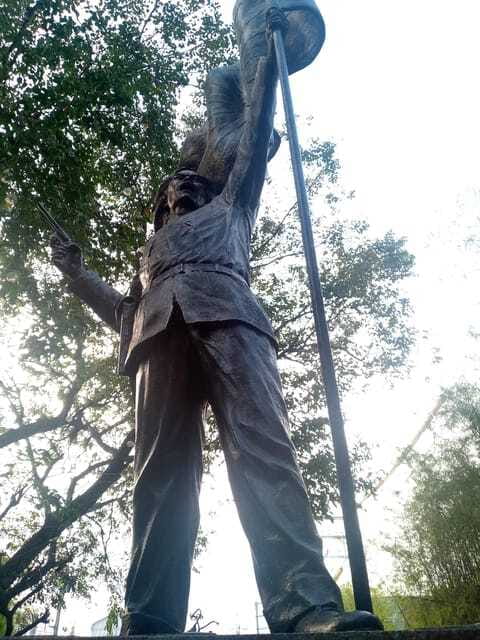
The tour ends at Calle Real, the former downtown center of Intramuros. This final stop is a smart choice because it moves the story into the present.
Calle Real once served as the district’s main commercial area. The tour asks you to notice how far it has changed from that earlier role. The contrast gives the experience a final question: what happens to a historic center after war, colonial rule, rebuilding, and modern development?
I like ending here instead of returning immediately to the first fort. You leave with a sense that Intramuros is not a frozen museum. It is a place shaped by loss, preservation, and changing use.
The finish also gives you a natural chance to continue exploring on your own, though the official drop-off options return you to 18 Sta. Clara Street at Fort Santiago. Exact free time at Calle Real is not specified, so do not assume you will have a long independent visit built into the three hours.
What the three-hour schedule feels like
The advertised duration is three hours. Fort Santiago takes about one hour, and Manila Cathedral and San Agustin Church each receive about 30 minutes. The remaining time covers walking, explanations, and transportation between points.
That makes the schedule efficient but fairly tight. You will get a strong introduction to Intramuros, but you should not expect long pauses at every site. The route works best if you want a guided overview with serious historical content.
The transportation included in the price is a practical benefit, especially in Manila’s heat. The exact type of transport is not specified, so I would treat it as a way to move between tour points rather than a separate sightseeing feature. One participant described the transport as fun, but your main value still comes from the guide and the included admissions.
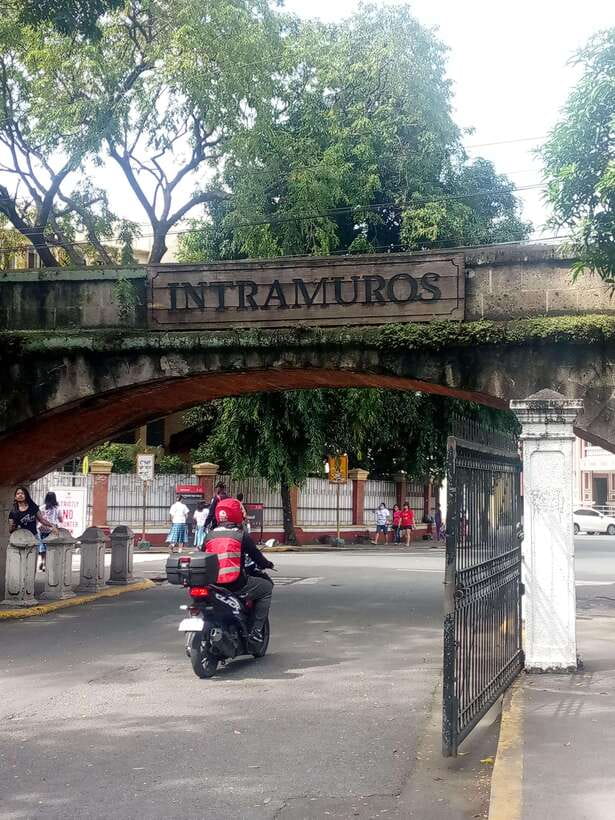
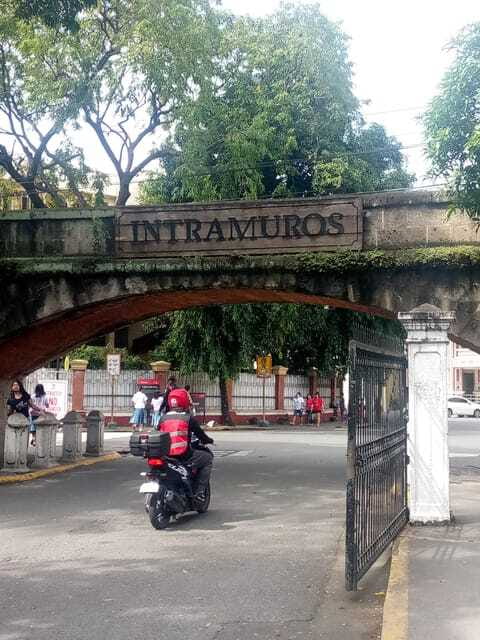
The meeting point is the Fort Santiago Gate at 18 Sta. Clara Street. Look for the guide holding the tour poster. Since this is a busy historic area, arrive with enough time to find the gate without hurrying.
The activity is wheelchair accessible, and a separate entrance is available to help you skip the regular line. Wear shoes suitable for walking and avoid going barefoot. Alcohol and drugs are not allowed.
The guide makes the history work
This tour depends heavily on the guide. The material covers several centuries, multiple colonial powers, religious politics, war, and national heroes. A flat presentation would make the route feel like a list of buildings.
Jerome is a named guide connected with the experience and speaks English and German. That is useful if you want the tour in either language. The guide’s ability to explain the material clearly matters more here than a long list of stops.
The best part of the format is its attention to people who are often left out of standard sightseeing stories. You hear about patriots beyond the most famous figures, and you are asked to remember civilian prisoners whose deaths are tied to the fort.
The experience has a strong educational purpose, but it should not feel like a school lecture if the guide uses the sites well. Fort Santiago’s cell and dungeons, the cathedral’s church-state story, and Calle Real’s changed role give the history a clear sequence.
Is $60 a fair price?
At $60 per person, this is not the cheapest way to see Intramuros. You are paying for a professional guide, entrance fees, transportation, and a three-hour structure rather than simply walking between public streets.
I think the price can be fair if you value interpretation. The route covers four major stops and several periods of Philippine history. Admission fees and transport are already included, so the comparison should be with other guided experiences, not with a free walk around the district.
The price is less attractive if you mainly want photographs or a quick look at the churches. In that case, the fixed schedule may feel expensive, especially if Mass prevents entry and cuts the tour short.
Meals and drinks are not included. Three hours is manageable without a meal break, but bring water and protect yourself from the sun. Sunscreen or mosquito repellent is specifically recommended, and both are sensible in Manila’s outdoor conditions.
The booking terms add flexibility. You can cancel up to 24 hours in advance for a full refund, and you can reserve now and pay later. Starting times depend on availability, so check the schedule before you build the rest of your day around it.
Who will get the most from this tour?
I would choose this experience if you want historical context more than independent wandering. It suits first-time visitors to Intramuros, people interested in Philippine independence, and anyone who wants the colonial period placed alongside the American and Japanese occupations.
It is also a good fit if you want to understand why Rizal matters without spending a full day on a museum program. The prison cell provides a strong entry point, while the other stops keep the story from becoming a single-hero biography.
You may want a different plan if you dislike solemn sites or prefer a relaxed photo walk. The dungeons and mass grave are emotionally serious, and the schedule may feel hurried when church access is limited.
Families can use the route as a clear introduction to Philippine history, though younger children may find the prison and wartime sections difficult. The walking, heat, and historical detail also call for sensible clothing and sun protection.
My verdict on the Revolutionary Tour of Manila
Book this tour if you want Intramuros explained as a place of resistance, sacrifice, and political change, not just a collection of old walls. Fort Santiago is the strongest part, especially the prison cell, dungeons, and memorial to civilian prisoners.
The churches add important context, but access is the key uncertainty. Ask about Mass when you meet your guide, and understand that the tour may finish early if both interiors are closed.
At $60, the experience earns its value through the guide, transport, admissions, and connected historical story. I would recommend it to history-minded visitors who want a serious three-hour introduction, with the reservation that church closures can affect the schedule.
FAQ
Where does the tour begin?
The meeting point is the Fort Santiago Gate at 18 Sta. Clara Street. The guide will have the tour poster.
How long does the tour last?
The scheduled duration is three hours.
What places does the tour visit?
The route includes Fort Santiago, Manila Cathedral, San Agustin Church, General Luna Street, and Calle Real.
How much time is spent at Fort Santiago?
The planned visit to Fort Santiago lasts about one hour.
Is transportation included?
Yes. Transportation is included in the activity.
Are entrance fees included?
Yes. Entrance fees are included.
What languages are available?
The live tour guide is available in English and German.
Can I cancel the booking?
Yes. You can cancel up to 24 hours in advance for a full refund. You can also reserve now and pay later.
Just added around Manila
- 3 Days Private Tour in Banaue Ifugao visiting Batad Rice Terraces★ 3.5 · 3 reviews
- Unforgettable Manila Fishing Village Day Excursion 2024★ 5.0 · 4 reviews
- indigenous Forest experience Manila 2023★ 5.0 · 4 reviews
- Cultural Dinner and Show in Manila★ 5.0 · 4 reviews
- Shared Old Manila Tour★ 5.0 · 5 reviews
- Shared Cruise Shore Excursion of Manila Old and New City Tour★ 4.0 · 10 reviews
- 5 Days Sagada Banaue Batad Discovery (PRIVATE GROUP TOUR Max 6 Travellers)★ 5.0 · 16 reviews
- Private Departure Airport Transfer in Manila Bay and Makati Area★ 5.0 · 3 reviews
Manila Tours, compared.
Intramuros, Manila: Historical Bamboo Bike Tour
Read our review →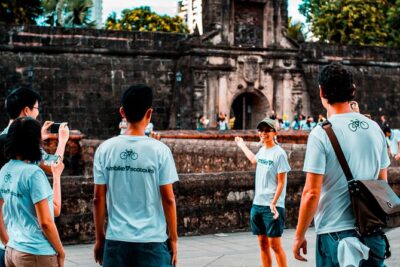
Experience Intramuros with Bamboo Bicycle – Ecotours
Read our review →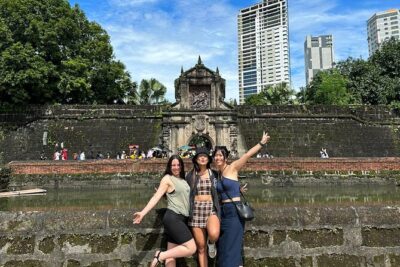
Intramuros, Chinatown, and Old Manila Half-Day Tour
Read our review →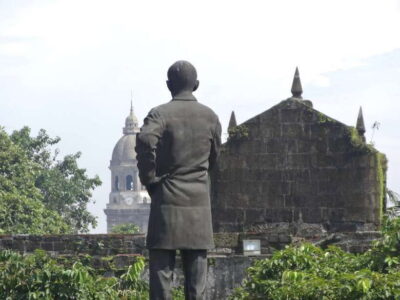

Manila Food Tour: Introduction to Philippine Street Food
Read our review →
Manila Old and New: Sightseeing Tour Including Intramuros and Fort Santiago
Read our review →
Makati Nightlife: VIP Access to Clubs, Rooftops & Go-Go Bars
Read our review →
Manila Food Tour: Explore World’s Oldest Chinatown
Read our review →Browse the lists this tour appears in