
Reviewed · INTRAMUROS WALKING TOURS
Manila’s Walled City: Intramuros Walking Tour
Intramuros is where Manila’s long story becomes easy to see. Inside its old walls, you move from Fort Santiago and José Rizal’s prison cell to Spanish churches, wartime memorials, and grand colonial rooms. The guide-led format helps connect these separate places into one clear story.
I like the mix of major sights and small comforts, especially the included kalesa or Tranvia ride, snacks, and bottled water in Manila’s heat. I also like the guides’ lively style. Andre and Ann are repeatedly praised for making difficult history easy to follow, with humor, visual aids, and plenty of time for questions.
The main drawback is the heat and the amount of walking. Three and a half hours can feel long in tropical weather, and dress rules may catch you out if you arrive in sleeveless clothing or very short shorts. Still, for $35, this is a well-priced way to make sense of old Manila.
Key points to know before you book
- Fort Santiago anchors the tour: You get about an hour at Intramuros’ main citadel, with admission included.
- José Rizal’s final days are part of the story: The Rizal Shrine explains why the national hero remains central to Philippine identity.
- The ride breaks up the walking: A kalesa or Tranvia ride gives you a slower look at the walled city.
- San Agustin Church adds real architectural weight: The 1607 church is part of a UNESCO World Heritage Site.
- The guides make the difference: Andre, Ann, and Anne are noted for clear English, humor, energy, and strong command of the subject.
- Plan for tropical conditions: Wear light, comfortable clothing, carry sun protection, and follow church and museum dress rules.
Why Intramuros makes such a good first history lesson
Intramuros means within the walls, and the name tells you what makes this district useful to explore on foot. It is a contained historic quarter rather than a scattered collection of sights. You can walk from a military fort to a cathedral, then on to a church, a war memorial, and a reconstructed colonial home without losing the thread.
That thread matters. The tour covers pre-colonization communities and the Malay roots of the Philippines before moving through Spanish rule, the American period, and the Japanese occupation. It also addresses the Battle of Manila in 1945, when much of the city was devastated during the fight to remove Japanese forces.
I like this broad approach because Intramuros can otherwise feel like a set of attractive old buildings with no clear connection. A good guide shows you how religion, military power, national identity, colonial rule, and wartime destruction all meet inside the walls.
The tour is conducted in English, and the guide is the key to its success. Andre is frequently described as funny, energetic, easy to understand, and well prepared. Ann, also listed as Anne in one account, receives similar praise for her warmth and command of the subject. Your guide may vary, but the experience is designed around a local person explaining the district rather than leaving you to read plaques alone.
More Intramuros tours:
- Manila Old and New: Sightseeing Tour Including Intramuros and Fort Santiago
★ 4.5 · 377 reviews - Express Bamboo Bike Tour inside Intramuros
★ 4.5 · 66 reviews - Manila: Intramuros, Chinatown, and Old Manila Half-Day Tour
★ 5.0 · 37 reviews
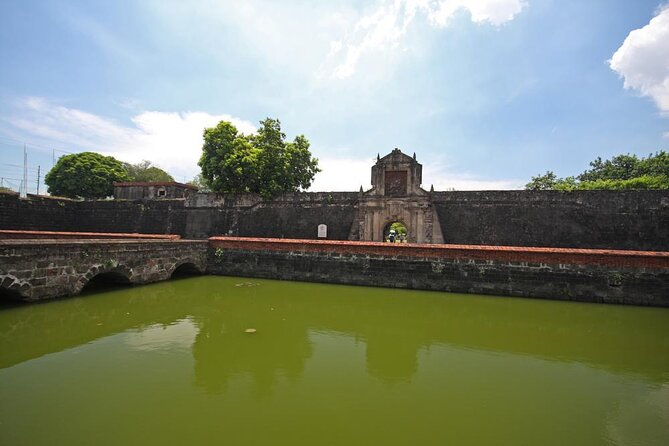
Fort Santiago: one hour at Intramuros’ military heart
The first major stop is Fort Santiago, the citadel built for the Spanish city of Manila. You spend about an hour here, making it the longest stop and the clearest chance to slow down at the start.
Fort Santiago gives the tour a strong opening because it explains why Intramuros was built as a walled city in the first place. Its walls, gates, and defensive setting point to Manila’s role as a Spanish colonial center and military base. The fort is not only about architecture. It also frames the political control that shaped the city.
The site is connected closely to José Rizal, the Philippine national hero, and to the final days of Spanish rule. You can expect time for photographs and for the guide to explain how the fort fits into the wider story of Manila.
This is also where the pace may feel best for visitors who want context. Instead of rushing through several buildings, you have enough time for the guide to explain what you are seeing. One practical point: the tour involves moderate walking, but Fort Santiago itself still requires time on your feet, often in warm conditions.
The Rizal Shrine and the story of a national hero
The Rizal Shrine occupies about 30 minutes and focuses on José Rizal, who was imprisoned at Fort Santiago before his execution in 1896. The museum displays memorabilia connected with him, giving the historical account a personal center.
Rizal is not a minor footnote in Philippine history. His life and writings are tied to the growth of Filipino national identity, so this stop helps explain why he is honored across the country. The guide can give the dates and events meaning instead of leaving you with a name carved into a monument.
Families may find this part especially useful. One family account describes a child of six and a teenager keeping up with the tour, while another notes that Filipino-Canadian children found the explanation of Manila’s past especially engaging. The guide’s humor and visual aid booklet can help younger visitors stay with the story.
If your interest is mainly in grand buildings, this stop is quieter and more museum-focused. But it is important. Intramuros is not only about Spanish walls and churches. It is also about the people who challenged colonial rule and helped shape the modern Philippines.
Manila Cathedral and the layers of faith
The Manila Cathedral receives about 20 minutes. Officially known as the Minor Basilica and Metropolitan Cathedral of the Immaculate Conception, it is the cathedral of Manila and sits in the heart of Intramuros.
This is a shorter stop, so you should expect an overview rather than a long architectural lecture. The cathedral helps show how central Catholicism became to the Spanish colonial city. It also gives you a useful contrast with Fort Santiago: one building represents military control, the other religious authority.
Admission is listed as free, but the cathedral is a working place of worship. Dress respectfully and follow any rules in effect when you visit. The tour information specifically warns against mini-shorts and sleeveless tops for churches and selected museums. A casual outfit is fine, but casual does not mean beachwear.
More walking tours in Luzon:
- Manila Intramuros Walking tour with Local Tour Guide
★ 5.0 · 33 reviews - Intramuros & Chinatown Manila Tour – Walking, Food & Culture
★ 4.5 · 32 reviews - Manila: Binondo Walking Tour ( Oldest Chinatown )
★ 5.0 · 30 reviews - Manila Old & New City Walking Tour With A Guide
★ 4.0 · 9 reviews
A kalesa or Tranvia ride through the walled city
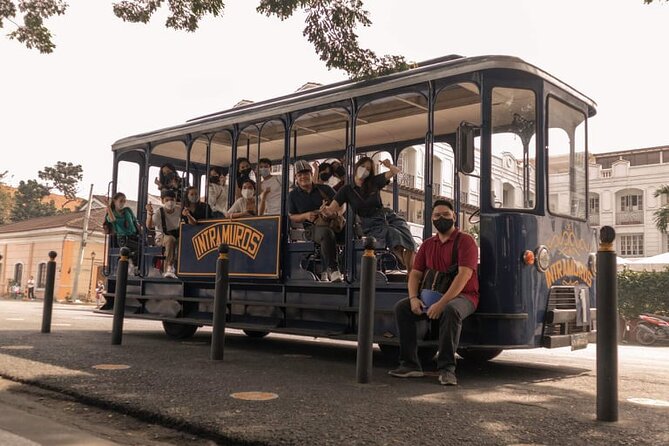
The itinerary includes a ride around Intramuros by kalesa, a horse-drawn carriage, or Tranvia, a tram. The exact vehicle can depend on the day and operating arrangements, so treat this as a planned part of the experience rather than a promise of both.
I like this break in the walking route. A ride lets you see the walls and streets as a whole, rather than only as a series of close-up stops. It also gives your feet a rest after Fort Santiago, the Rizal Shrine, and the cathedral.
The horse-drawn carriage is a particularly old-fashioned way to view the district, while the Tranvia offers a different kind of city tour feel. Either way, the point is not speed. It is a change of pace and a chance to take photographs while the guide continues to explain what you are passing.
Do not book this tour expecting a long independent ride or a private carriage experience. It is one section of a guided half-day walk. Its value comes from breaking up the route and helping you understand the shape of Intramuros.
Memorare Manila 1945 and the cost of war
The Memorare Manila 1945 Monument takes about 20 minutes. It commemorates the people who died during the Battle of Manila, fought from February 3, 1945, as Filipino and American forces battled Japanese troops for control of the city.
This stop gives the tour a needed modern frame. Much of Intramuros’ earlier story concerns Spanish Manila, but the district also carries the scars of the Second World War. The monument reminds you that the old city was not simply preserved intact. It endured destruction, loss, and later rebuilding.
I find this a valuable part of the route because it prevents the tour from turning colonial architecture into a postcard scene. The walls and churches are attractive, but the city’s past includes violence and ordinary people caught in it. Twenty minutes is enough for an explanation and reflection without making the visit feel too heavy.
San Agustin Church, completed in 1607
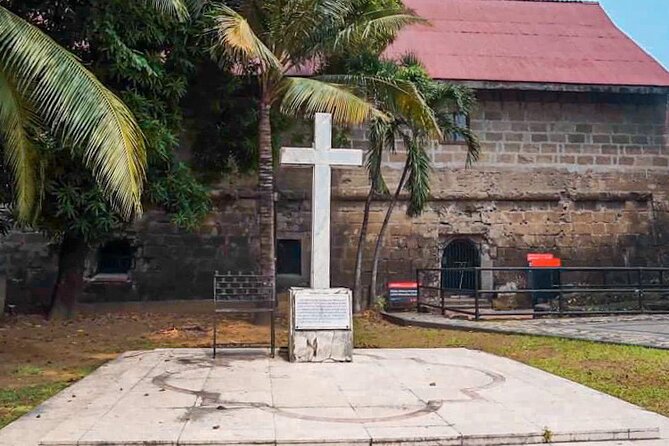
San Agustin Church is one of the tour’s most important buildings. Completed in 1607, it was one of the major churches built during the Spanish colonial period and is part of the UNESCO-listed Baroque Churches of the Philippines.
The scheduled stop is about 15 minutes, with no admission fee listed. That is not a lot of time for a building with this much historical and architectural importance, so expect a focused visit rather than a full museum tour. The guide can point out why the church matters and place it within the Spanish period.
The short stop is also practical. A church visit can be affected by services or local rules, and the schedule leaves room for the rest of Casa Manila and the other sites. If church architecture is your main interest, you may want extra time in Intramuros beyond this tour.
Dress is important here. Sleeveless tops and mini-shorts may lead to refused entry at places of worship and selected museums. Pack a light cover-up if your Manila sightseeing outfit is built for the heat.
Casa Manila: seeing colonial life indoors
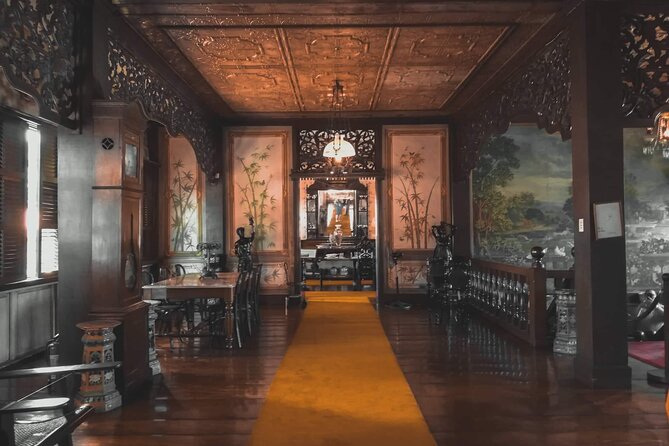
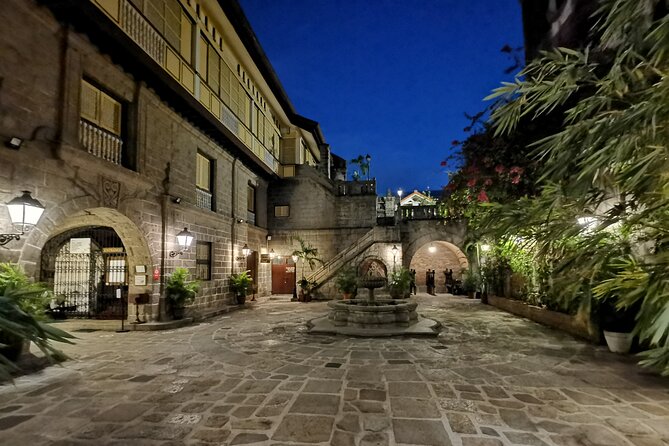
Casa Manila is the final major stop and the end point at Plaza San Luis Complex. You spend about 30 minutes inside this museum, which presents colonial life during Spanish rule.
The building is an imposing stone-and-wood structure dating from about 1850 and represents the grand homes associated with the colonial period. This stop changes the focus from public power to domestic life. Fort Santiago shows defense, the cathedral shows religion, and Casa Manila suggests how wealth and status shaped daily life.
That contrast makes Casa Manila a strong ending. You have already heard about institutions and national events. Here, rooms and furnishings help you picture how elite households lived. The museum is not a substitute for a full study of Filipino life, since it presents a particular social class, but that limitation is worth understanding.
The tour ends here, at Casa Manila in the Plaza San Luis Complex. There is no hotel pick-up or drop-off, so you need to arrange your own way to the starting point and onward plans after the tour.
What $35 gets you, and where the value lies
At $35 per person, this tour is priced sensibly for a three-and-a-half-hour guided experience. The fee includes an English-speaking local guide, bottled water, snacks, and admission to Fort Santiago, the Rizal Shrine, and Casa Manila. Manila Cathedral, the Memorare Manila Monument, and San Agustin Church are listed with no admission fee.
The real value is the guide’s interpretation. You can walk around Intramuros independently for less, but you may miss the links between Malay roots, Spanish rule, Rizal, the American period, Japanese occupation, and the Battle of Manila. The tour gives you a ready-made route and a person who can answer questions.
The snacks and water are useful rather than luxurious. In the tropical heat, a drink makes the walk easier, and the simple local snacks add a small taste of everyday Manila. One description specifically refers to taho and ice cream from street vendors, though the exact snack selection can vary.
The maximum group size is 30 people. That is not an intimate private tour, but it is still manageable for a historic district when the guide speaks clearly and keeps the group together. If you want a quiet, private experience with long stops at every church, this is not the right format.
Who will get the most from this walking tour
This is a strong choice for a first visit to Manila, especially if you want the city’s past explained in plain language. It also suits families, since the pace has worked for children and teenagers and the guides use humor alongside facts.
You should book it if you enjoy:
- A guided route with major sights already organized
- Philippine political and colonial history
- Short visits to several different types of places
- A mix of walking and a carriage or tram ride
- Clear English explanations and time for questions
- A half-day activity that leaves part of your day free
You may want another plan if heat makes walking difficult, if you need an entirely private tour, or if you prefer to spend an hour or more inside each museum. The tour includes moderate walking, so comfortable clothes and shoes matter.
Morning and afternoon departures are available, which helps you fit Intramuros around other Manila plans. Choose the cooler or more convenient time for your schedule, but remember that the experience still takes about three and a half hours.
Practical details before you go
The meeting point is 1 Sta. Clara Street in Intramuros. The tour ends at Casa Manila, Plaza San Luis Complex, on General Luna Street. Both the starting area and route are near public transportation, but hotel transfers are not included.
Confirmation normally arrives at booking. If you book within nine hours of departure, confirmation may take longer and remains subject to availability. Children must be accompanied by an adult, and the child rate applies only when sharing with two paying adults.
You can cancel for a full refund up to 24 hours before the start time. Changes or cancellations inside that window are not accepted for a refund. The experience requires good weather and a minimum number of participants. If the operator cancels for either reason, you are offered another date or a full refund.
Should you book the Intramuros Walking Tour?
Yes, if you want an efficient first look at old Manila with a guide who can connect the sites into one understandable story. The combination of Fort Santiago, the Rizal Shrine, San Agustin Church, Casa Manila, the 1945 memorial, and a kalesa or Tranvia ride gives you a broad view without requiring a full day.
I would book it early in a Manila visit, then return to Intramuros later if a church, museum, or photograph catches your attention. At $35, the admissions, snacks, water, and three-and-a-half hours of guiding make it good value.
Skip it only if you strongly dislike group walks, cannot manage moderate walking in tropical heat, or want a slow architectural study of one building. For most people looking for a clear, lively introduction to Manila’s past, this tour earns its 4.9 rating and 96 percent recommendation rate.
FAQ
How long does the Intramuros Walking Tour last?
The tour lasts approximately three hours and 30 minutes.
How much does the tour cost?
The listed price is $35 per person. Group discounts are available.
Is the tour offered in the morning and afternoon?
Yes. You can choose between morning and afternoon departures.
What is included in the tour?
The tour includes an English-speaking local guide, bottled water, snacks, and admission to Fort Santiago, the Rizal Shrine, and Casa Manila.
Is hotel pick-up and drop-off included?
No. You need to make your own way to the meeting point and arrange your own transport after the tour.
Where does the tour start and finish?
It starts at 1 Sta. Clara Street in Intramuros and ends at Casa Manila in the Plaza San Luis Complex on General Luna Street.
Is there a dress code?
Yes. Casual clothing is recommended, but places of worship and selected museums require appropriate dress. Mini-shorts and sleeveless tops may result in refused entry.
What happens if bad weather cancels the tour?
If poor weather causes a cancellation, you are offered a different date or a full refund.
Just added around Luzon
- Skip the Line: Villa Escudero Plantation & Resort Day Pass Ticket★ 4.5 · 11 reviews
- Villa Escudero Coconut Plantation Day Trip from Manila★ 3.5 · 9 reviews
- Villa Escudero Tour with Lunch From Manila (SHARED)★ 5.0 · 5 reviews
- The Jeepney & Tuk Tuk Adventure ride with Local Guide★ 4.5 · 4 reviews
- VILLA ESCUDERO DAY TOUR with Carabao Cart Ride and Bamboo from Manila★ 4.0 · 6 reviews
- Private Filipino Cooking Class in the Heart of Manila,Makati City★ 5.0 · 5 reviews
- Manila ATV Mountain Trail Adventure(with Transfers***)★ 4.5 · 19 reviews
- Pagsanjan Falls Adventure with Lunch and Rapids Experience★ 4.5 · 3 reviews
Intramuros Walking Tours, compared.
Intramuros, Manila: Historical Bamboo Bike Tour
Read our review →
Experience Intramuros with Bamboo Bicycle – Ecotours
Read our review →
Intramuros, Chinatown, and Old Manila Half-Day Tour
Read our review →
Manila Old and New: Sightseeing Tour Including Intramuros and Fort Santiago
Read our review →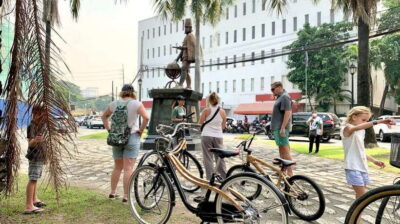
Explore Intramuros: Introduction to Philippine History
Read our review →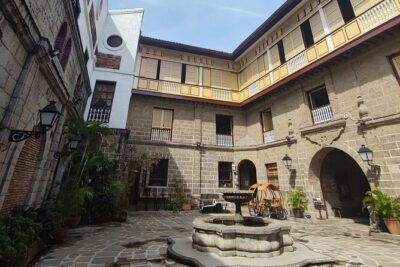
Experience Manila’s Heritage: Intramuros & More in Half a Day!
Read our review →Browse the lists this tour appears in