
Reviewed · INTRAMUROS WALKING TOURS
Manila Old and New: Sightseeing Tour Including Intramuros and Fort Santiago
Manila’s past and present sit surprisingly close together on this tour. You move from Makati’s office towers and Forbes Park to the walled streets of Intramuros, then into Fort Santiago, where José Rizal spent his final days. It is a useful first look at a city that can feel hard to read from a car window.
I like the clear historical arc, from the American Cemetery and World War II to Spanish rule and the Filipino independence movement. I also like the short walking sections, especially at San Agustin Church and Fort Santiago, which make this workable in Manila’s heat.
The catch is traffic. A tour advertised at four hours can run longer, sometimes five hours or more, and one afternoon departure stretched to seven hours. If you have a flight, dinner booking, or cruise departure, leave plenty of room.
Key points to know before you book
- Makati and Intramuros in one outing: You see the modern financial center and Manila’s oldest district without arranging separate transport.
- Fort Santiago carries the strongest story: The citadel connects Spanish rule, wartime suffering, and José Rizal’s final days.
- San Agustin Church is the architectural highlight: Its Baroque details and age give the Intramuros visit real weight.
- The American Cemetery adds a solemn pause: It commemorates US, Filipino, and Allied service members killed in World War II.
- Guides make a major difference: Nori, Richard, Frank, Stella, Fernando, and Marloo have led strong tours, but the quality can vary.
- Traffic shapes the day: Hotel pickup is convenient, but Manila roads can turn a four-hour plan into a much longer outing.
Manila in one half-day: what this tour is really trying to do
This is not a slow walking tour of one neighborhood. It is a broad introduction by air-conditioned vehicle, with several brief stops and one main historical area on foot.
That format works well if you have only a short stay in Manila, a free morning during a stopover, or limited energy for walking in humid weather. You get a working view of Makati, a look at the waterfront road, a memorial site, and the central colonial sights in Intramuros.
The tour costs about $103. That is not a bargain basement price, but the value depends on your situation. Hotel pickup and drop-off, transport, an English-speaking guide, and admission to San Agustin Church, Intramuros, and Fort Santiago are included. For a first visit, you are paying mainly for the route and the guide’s explanations, not just entry tickets.
The group can reach 30 people, though some departures are much smaller. A few tours had only one, three, or six people, while others used a small van. A small group makes the stops feel more personal. You may ask more questions and hear more local context. Still, the advertised maximum is large enough that you should not assume an intimate outing.
More Intramuros tours:
- Manila’s Walled City: Intramuros Walking Tour
★ 5.0 · 82 reviews - Express Bamboo Bike Tour inside Intramuros
★ 4.5 · 66 reviews - Manila: Intramuros, Chinatown, and Old Manila Half-Day Tour
★ 5.0 · 37 reviews
From Makati’s towers to Forbes Park
Pickup is offered from selected hotels, with the Fairmont Makati listed as the meeting point. The day begins in Makati, the heart of Metro Manila’s financial district, and the contrast with old Manila starts almost at once.
The vehicle follows Ayala Boulevard and passes Nielson Tower, connected with the Filipinas Heritage Library collection. The stop is brief, around the length of a photo break, so you should not expect a full library visit. Its value is as a marker of Makati’s older identity, before the district became known mainly for banks, offices, and shopping centers.
The route then passes Forbes Park, an exclusive residential area often called Millionaire’s Row. This is a drive-by look rather than a neighborhood walk. It gives you a quick sense of the sharp divisions within Metro Manila, where modern commercial districts and wealthy enclaves sit near older, denser communities.
Your guide’s commentary matters most here. Nori has been especially strong at filling the drive with facts about Manila’s streets, districts, and culture. Richard and Frank have also led tours with a strong focus on Philippine history. If the guide is quiet during the long pickup route, this part can feel like little more than transport.
The Manila American Cemetery and Memorial
The American Cemetery and Memorial in Fort Bonifacio is one of the most affecting stops. It holds the largest number of US military dead from World War II of any cemetery in the world, along with Filipino and other Allied personnel.
The visit lasts about 15 minutes and admission is free. That is not much time, so you will get an introduction rather than a full study of the memorial. Even so, the stop gives the later visit to Intramuros more context. Manila’s colonial story did not end with Spain. War, occupation, and the destruction of the city also shaped what you see today.
I would pay close attention here, even if military history is not your main interest. The grounds provide a quiet break from traffic, and the scale of the memorial helps you understand how heavily World War II affected the Philippines.
Some tours give this stop more explanation than others. Stella and Frank have been praised for connecting places with the wider story of the country. A less engaged guide may leave you to look around with little context, so this is one point where the guide can change the experience.
Roxas Boulevard and Rizal Park
The vehicle continues toward Old Manila along Roxas Boulevard, the waterfront road beside Manila Bay. The boulevard is known for sunsets and its line of coconut trees, though the tour does not promise a sunset stop. Think of it as a moving view of the city rather than a scenic promenade walk.
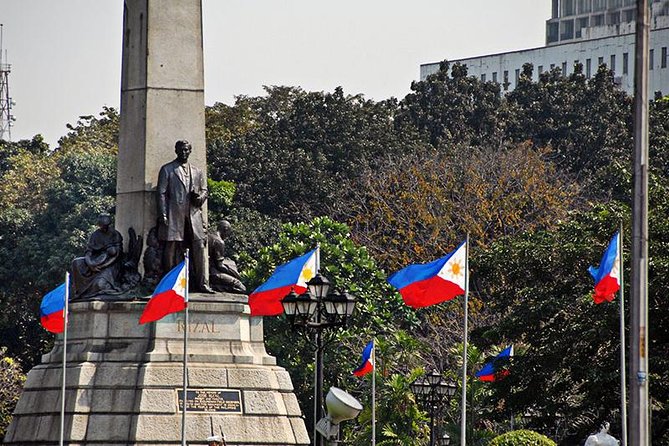
You pass through Rizal Park, also called Luneta Park, and stop for about 10 minutes. The park is one of Asia’s larger urban parks and contains the statue of Dr. José Rizal, the national hero whose name appears throughout Manila.
This short stop helps place Rizal in the center of the national story before you reach Fort Santiago. You will not have time for a long park stroll, so take your photos and listen for the guide’s explanation of Rizal’s importance.
The stop can feel rushed if traffic has already eaten into the schedule. Still, it is a worthwhile introduction to the figure who links several parts of the tour.
A few more Luzon days worth weighing up
- Manila Filipino Cooking Class: Meryenda Favorites
★ 5.0 · 80 reviews - PanoramicTagaytay Ridge Tour from Manila
★ 4.0 · 52 reviews - The Hidden Gems of Manila Guided Tour
★ 5.0 · 42 reviews - Pagsanjan Falls Adventure from Manila
★ 4.0 · 37 reviews
Walking into Intramuros
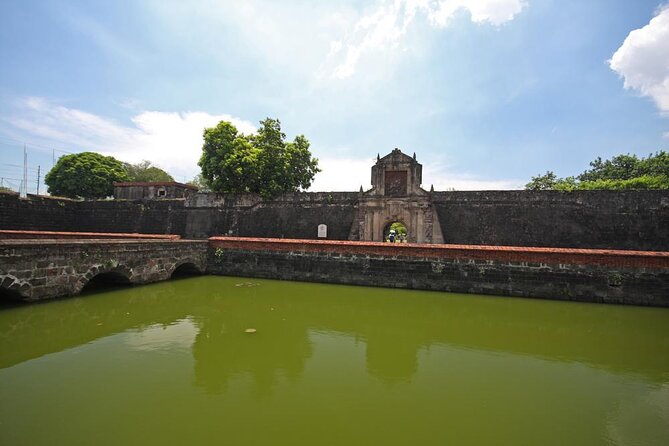
Intramuros means within the walls, and this district is Manila’s clearest reminder of Spanish colonial rule. The Spanish built it in the late 1500s as the walled center of Manila. The tour leaves the vehicle here for a short walk along cobblestone paths.
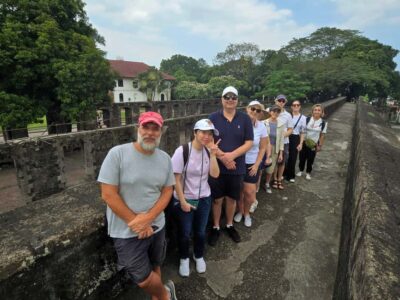
Expect old walls, church ruins, colonial-era remains, and the large stone entrance to Fort Santiago. The district is not a preserved film set. Some sections feel worn, and the surrounding modern city is never far away. That mix is part of the appeal. You are seeing a living part of Manila, not a sealed museum.
The walking portion is limited, usually around 30 minutes for Intramuros itself, followed by separate time at San Agustin Church and Fort Santiago. That makes the tour manageable in hot or wet weather, but it also means you will not explore every lane or landmark.
Wear comfortable walking shoes. Cobblestones can be uneven, and rain may make the footing less pleasant. The tour requires some walking, but it is not designed as a strenuous day on foot.
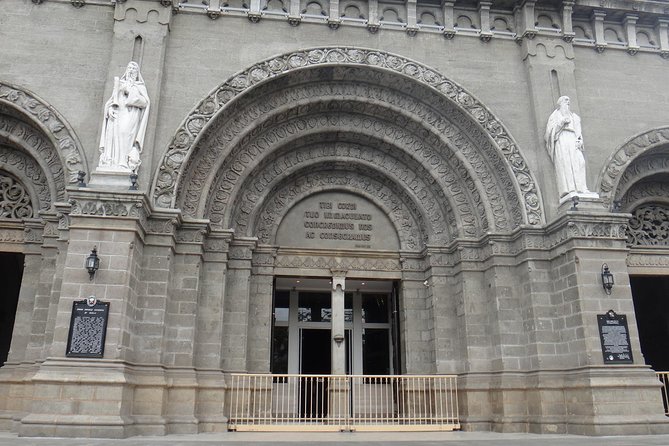
San Agustin Church and its Baroque details
San Agustin Church is one of the most important stops and one of the few places where the schedule gives you a direct look inside a major historic building. It is a UNESCO World Heritage site and one of the oldest churches in the Philippines.
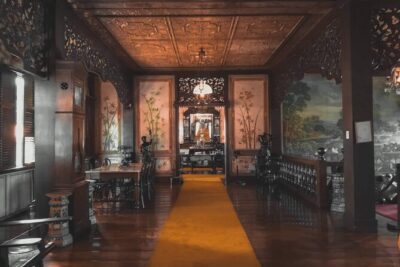
The church is known for its intricate Baroque design. Look up and around rather than simply stepping in for a quick photograph. Architectural details, religious decoration, and the sense of age make this a stronger stop than a short roadside landmark.
The planned visit lasts about 15 minutes, with admission included. That is enough for an introduction, but not enough for a slow architectural study. If church interiors matter to you, you may wish you had more time.
Sunday can bring a practical problem. Mass may limit where you can stand and whether you can take photographs. Rain can also affect the day, and Fort Santiago may close during heavy rain because of flooding. A dry weekday offers the best chance of seeing the stops without interruptions.
Fort Santiago and José Rizal’s final days
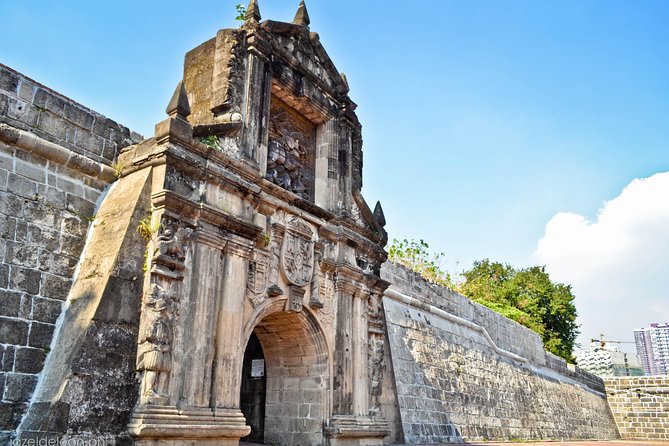
Fort Santiago is the emotional center of the tour. Built in 1593 by Spanish governor Miguel López de Legazpi, the citadel served as a defensive stronghold and later passed through the hands of different colonial powers.
The fort also contained a notorious prison. José Rizal was held here before the Spanish executed him in 1896. He wrote his farewell poem, My Last Farewell, during this final period. The tour uses the fort to connect physical space with the story of Philippine nationalism.
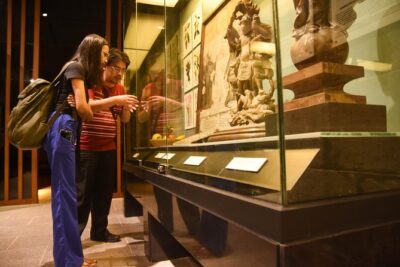
You spend about 20 minutes at Fort Santiago, though the entire Intramuros portion may take longer depending on the guide and the pace of the group. The large gate, walls, prison areas, and memorial displays give the visit more substance than a quick photo stop.
I would save your best questions for here. Ask about Rizal, the Spanish period, the successive colonial powers, and the effect of World War II on Manila. Guides such as Nori, Richard, Frank, and Stella have been particularly good at adding personal stories and wider context. The strongest guides turn Fort Santiago from an old stone fort into the place where several major chapters of Philippine history meet.
The guide can make or break the experience
The tour has no fixed guide personality, so you should treat the names mentioned here as examples rather than a guarantee. Nori has led tours with a lively stream of historical facts and answers. Richard has been praised for being friendly, safe, and easy to talk with. Frank has a strong command of Philippine and World War II history. Stella has been described as enthusiastic and clear, while Fernando has handled rainy conditions with care.
That range matters because much of the tour happens in the vehicle. A good guide uses the drive to explain Manila’s neighborhoods, colonial periods, national heroes, and daily life. A quiet guide leaves you watching traffic for long stretches.
There have also been departures where the guide offered little information and left people to explore on their own. That is acceptable at a simple viewpoint, but less satisfying at Intramuros and Fort Santiago, where context gives the buildings their meaning.
Timing, traffic, and the four-hour promise
The listed duration is about four hours, with morning and afternoon departure choices. In practice, the timing depends heavily on pickup locations and road conditions.
One reported afternoon pickup involved nearly an hour of collecting other people before the first major stop. Another tour returned about 90 minutes late, and one extended far beyond the planned schedule. A separate outing lasted roughly five hours. These delays are not hard to predict in Manila, where traffic can be slow-moving, especially later in the day.
I would not book this tour immediately before a flight, ferry, formal meal, or cruise departure. If you have a free half-day with no strict deadline, the delays are easier to accept. The driver is an important part of the experience, too. Oswald and Mark have been praised for navigating the city carefully, but even a skilled driver cannot make the roads move faster.
The air-conditioned vehicle is a major comfort in Manila’s heat and humidity. Van quality can vary, though, and one outing used a vehicle that felt only moderately comfortable. Food and drinks are not included, so bring water and consider eating before or after the tour.
Who gets the best value from the $103 price
I think the price makes the most sense for a first-time visitor who wants a guided introduction without arranging several taxis or private transfers. It also works well for people staying in Makati, especially if selected hotel pickup removes the need to cross the city before the tour begins.
You are paying for convenience, transport, access, and interpretation. The tour is less valuable if you already know Intramuros, prefer to spend hours inside museums, or want a slow photography walk. The short stop lengths will feel restrictive if you like to examine every room and monument.
The half-day format suits families and older visitors who want to limit walking. Children must be accompanied by an adult, and the minimum age is two. Most people can participate, but the cobblestones, heat, and occasional rain still call for sensible shoes and light clothing.
Group discounts are available, and mobile tickets make the booking side simple. Free cancellation is allowed up to 24 hours before the start time. If bad weather cancels the outing, you can choose another date or receive a full refund.
Should you book Manila Old and New?
Book it if you want a practical first look at Manila, especially the contrast between Makati and Intramuros. The American Cemetery, San Agustin Church, and Fort Santiago give the outing a solid historical backbone, while hotel transport saves you from solving Manila’s complicated roads on your own.
Skip it if your schedule cannot absorb delays or if you want an in-depth visit to one site. Before booking, ask yourself one simple question: can you give this tour more than four hours if traffic demands it? If yes, this is a useful and often very rewarding introduction. If no, choose a shorter private outing or visit Intramuros on its own.
FAQ
How long is the Manila Old and New tour?
The scheduled duration is approximately four hours, but traffic and hotel pickups can make the outing longer. Allow extra time, particularly for afternoon departures.
What places are included?
The route includes Makati, Nielson Tower, Forbes Park, the Manila American Cemetery and Memorial, Roxas Boulevard, Rizal Park, Intramuros, San Agustin Church, and Fort Santiago.
Is hotel pickup included?
Hotel pickup and drop-off are included from selected hotels. The listed meeting point is Fairmont Makati City.
Is transportation air-conditioned?
Yes. Transport is provided in an air-conditioned vehicle.
Are admission tickets included?
Admission to San Agustin Church, Intramuros, and Fort Santiago is included. Entry to Rizal Park and the Manila American Cemetery and Memorial is free.
Is food included?
No. Food and drinks are not included in the tour price.
Can I cancel for a full refund?
Yes, if you cancel at least 24 hours before the experience start time. Changes or cancellations made less than 24 hours before the start time are not accepted for a refund.
Just added around Luzon
- Skip the Line: Villa Escudero Plantation & Resort Day Pass Ticket★ 4.5 · 11 reviews
- Villa Escudero Coconut Plantation Day Trip from Manila★ 3.5 · 9 reviews
- Villa Escudero Tour with Lunch From Manila (SHARED)★ 5.0 · 5 reviews
- The Jeepney & Tuk Tuk Adventure ride with Local Guide★ 4.5 · 4 reviews
- VILLA ESCUDERO DAY TOUR with Carabao Cart Ride and Bamboo from Manila★ 4.0 · 6 reviews
- Private Filipino Cooking Class in the Heart of Manila,Makati City★ 5.0 · 5 reviews
- Manila ATV Mountain Trail Adventure(with Transfers***)★ 4.5 · 19 reviews
- Pagsanjan Falls Adventure with Lunch and Rapids Experience★ 4.5 · 3 reviews
Intramuros Walking Tours, compared.
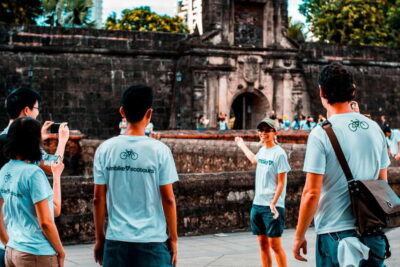
Intramuros, Manila: Historical Bamboo Bike Tour
Read our review →
Experience Intramuros with Bamboo Bicycle – Ecotours
Read our review →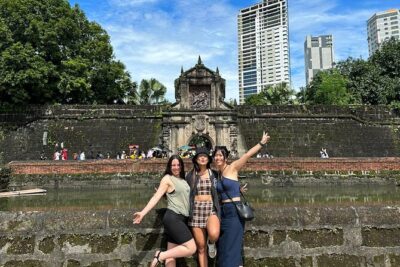
Intramuros, Chinatown, and Old Manila Half-Day Tour
Read our review →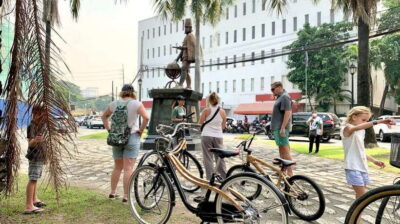
Explore Intramuros: Introduction to Philippine History
Read our review →
Experience Manila’s Heritage: Intramuros & More in Half a Day!
Read our review →Browse the lists this tour appears in