
Reviewed · INTRAMUROS WALKING TOURS
Intramuros & Chinatown Manila Tour – Walking, Food & Culture
Manila’s past and present come together on this five-hour tour. You’ll move from the noisy stalls of Quiapo Market to the Chinese-Filipino food scene in Binondo, then enter the old walls of Intramuros, where Spanish-era streets recall a city changed by war. It is not a polished sightseeing loop. That is the point.
I like the mix of street food and local transport, which gives you more than a standard walking tour. I also like the personal touch from guides such as Mike, Fred, George, Erick, Carmen, Eric, and Jen, who bring in food, family life, occupation, and daily Manila. The main caution is the food tasting: much of it is shared, and one past participant found some dishes only average. Come curious, not hungry for a restaurant crawl.
Key points to know before booking
- Three very different Manilas: Compare Quiapo’s market life, Binondo’s Chinese-Filipino food culture, and Intramuros’ old stone streets in one morning.
- Food is part of the lesson: Snacks and tastings help explain how Manila’s many cultural influences meet on the plate.
- Transport adds variety: The route may include a ferry or other boat, jeepney, bus, tricycle, tuk-tuk, and bicycle, depending on the day’s arrangements.
- Intramuros is explored by bike: A bike rental is included, making the old walled city easier to cover in its two-hour portion.
- A small group helps: The maximum is 18 people, useful in markets and narrow historic streets.
- Plan for heat and walking: Moderate fitness is recommended, and bottled water is not included.
A morning that crosses three very different Manilas
At $62 per person, this is priced above a simple city walk but includes a guide, food tastings, transport between the main areas, entrance fees, and bike rental. I see the value in the variety. You are not paying only for commentary at one monument. You are paying for a moving introduction to Manila, with several ways to see and taste the city.
The tour begins at 9:00 a.m. at Quinta Market in Quiapo and finishes at Casa Manila in the Plaza San Luis complex in Intramuros. That one-way design is practical. You finish in one of Manila’s main historic areas instead of returning to the starting point.
The maximum group size is 18. That is not a private tour, but it is small enough for a guide to keep the group together in crowded market lanes. Group discounts are available, which can make the price more appealing if you are booking with family or friends.
More Food Tours in Manila
- Makati Street Food Experience end with a Rooftop Bar
★ 5.0 · 33 reviews - Manila Chinatown Food Tour Experience
★ 5.0 · 20 reviews - Makati Street Food tour Experience
★ 5.0 · 16 reviews
Quiapo Market: Manila before the guidebook version
The first hour at Quiapo Market is designed to wake up your senses. You’ll see old and new goods beside one another, with common items and harder-to-find products sharing the same crowded commercial space. The appeal is not a single famous sight. It is the chance to watch ordinary Manila life unfold at close range.
This is also where the food theme begins. You can taste local dishes and learn how food connects to the different people who have passed through the Philippines. The city’s cooking reflects its long contact with Asian neighbors, Spain, the United States, and other outside influences, though the tour presents that story through actual food rather than a lecture alone.
Quiapo can feel intense. Expect activity, noise, crowds, and plenty to look at. Wear shoes you can walk in and keep your belongings secure. The tour calls for moderate physical fitness, and this first stop sets the pace for the rest of the morning.
You might also find that Quiapo is the least controlled part of the day. A market is not arranged for easy sightseeing. That makes it more authentic, but it can be tiring if you prefer quiet streets and carefully timed visits.
Binondo: two hours of food and neighborhood culture
The tour then spends about two hours in Binondo, Manila’s Chinatown. This is one of the strongest parts of the experience for anyone who wants to connect food with the city’s social story.
Binondo is described as sitting among Catholic, Chinese, and Muslim communities. That makes the area useful for understanding Manila as a meeting place, not a city with one single identity. The guide helps you read the streets through the food, businesses, buildings, and community life around you.
The tastings are meant to be shared. That is common in the Philippines and across East Asia, and it lets the group sample a wider range of dishes. It also means you may not get a full meal of your own. If you have a strong appetite, food restrictions, or a narrow comfort zone, ask about the tasting arrangements before booking.
The food quality may vary from dish to dish. One participant rated the tour section highly but found much of the food only average, while enjoying the fruit more. That is a useful warning. This is a cultural food walk, not a carefully staged tasting menu. The value is in trying several things, hearing the context, and seeing where people eat, not in expecting every bite to be a favorite.
Guides such as Fred and Eric have been especially useful for this kind of route, explaining ingredients, fruits, Filipino customs, and the city’s past while keeping the pace social. You may also receive suggestions for the rest of your Manila stay. Fred, for example, recommended Barbara’s Heritage Dinner and Show and drinks at the Bayleaf Hotel penthouse bar. Those extras are not part of the tour, but they can help you plan an evening in Intramuros.
Transportation is part of the Manila lesson
The movement between neighborhoods is not treated as dead time. Transportation is one of the reasons this tour feels more like a city introduction than a standard history walk.
Depending on the day’s route, you may ride a ferry or another boat, a jeepney, bus, tricycle, tuk-tuk, or bicycle. The exact combination is not fixed in the information provided, so you should not book expecting every mode on every departure. Still, the experience has included several forms of Manila transport, and that variety is a real strength.
A jeepney gives you a look at one of the Philippines’ best-known forms of shared transport. A tricycle or tuk-tuk shows a smaller, more local way to move through busy areas. A ferry lets you see the city from the water. The bike portion slows things down again, giving you more control once you reach Intramuros.
For a first day in Manila, these changes help you understand the city’s scale and rhythm. You are not sealed inside a private vehicle watching neighborhoods pass by. You are closer to street level, with the tradeoff that transport can be less predictable and less comfortable than a dedicated van.
More Intramuros tours:
- Manila Old and New: Sightseeing Tour Including Intramuros and Fort Santiago
★ 4.5 · 377 reviews - Manila’s Walled City: Intramuros Walking Tour
★ 5.0 · 82 reviews - Express Bamboo Bike Tour inside Intramuros
★ 4.5 · 66 reviews - Manila: Intramuros, Chinatown, and Old Manila Half-Day Tour
★ 5.0 · 37 reviews
Intramuros by bicycle: Manila’s walled old city
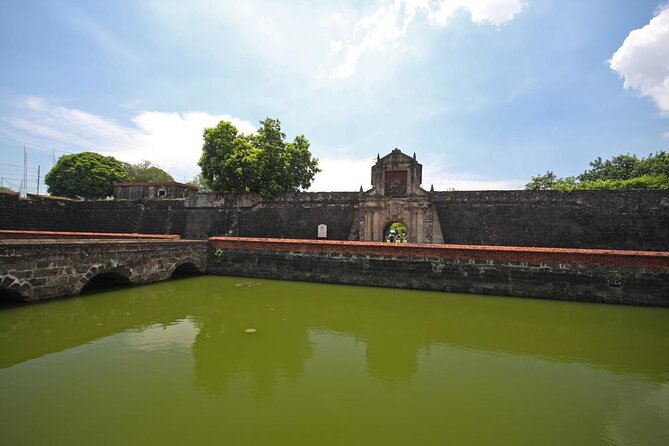
The final two hours take place in Intramuros, Manila’s fortified old city. This is where the tour shifts from present-day street life to the long arc of Philippine history, from the 9th century through 1946.
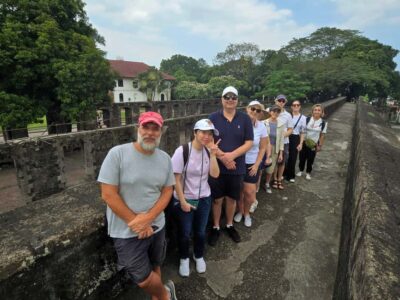
The old streets and walls offer a sharp contrast to Quiapo and Binondo. Instead of market stalls and food counters, you’ll see a historic district shaped by colonial rule, religion, defense, and war. The tour explains how the area changed over time and how its appearance today is linked to the destruction it suffered during World War Two.
The damage matters to the way you see Intramuros. You are not walking through a perfectly preserved old town. You are seeing a place that endured severe loss and still retains enough of its character to make the past visible. That tension gives the final part of the tour more weight than a simple photo stop.
A bike rental is included, and cycling is a smart way to cover more of the district within two hours. You can move between sights without spending the whole visit on foot, though you should still expect walking, stopping, and listening. Jen has been praised for making the bike ride and food tasting enjoyable while adding stories about Manila’s past.
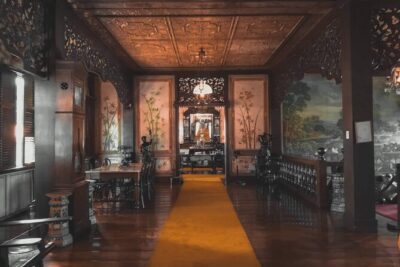
The tour ends at Casa Manila in the Plaza San Luis complex on General Luna Street. That location puts you in a useful part of Intramuros, with the historic district around you and several options for continuing your day.
Guides make the difference on a mixed route
This tour asks the guide to do several jobs. The person leading you must handle a market, explain food, manage transport, describe Filipino culture, and tell a long story about Manila without losing the group.
The strongest guide experiences here have come from people such as Mike, Fred, George, Erick, Carmen, Eric, and Jen. Mike has been praised for explaining history around Intramuros while pointing out good places to eat. George and his colleagues have helped connect Philippine occupation and cuisine to personal stories. Erick and Carmen have guided routes that included transport many people would not try alone.
That range matters because the route has no single theme. If you only want architecture, parts of the morning may feel unfocused. If you want to understand how food, movement, religion, migration, colonial rule, and modern city life fit together, the mix works well.
Guide quality can vary from one departure to another, as it does on any group tour. Still, the repeated emphasis on clear explanations, humor, and local recommendations suggests that the human side is a major part of what you are buying.
What the price includes, and what it does not
The $62 price includes snacks and food tastings, transportation to the sites, a tour guide, entrance fees, and bike rental. That is a fair package for a five-hour experience covering three districts and several types of activity.
The price is easier to justify if you are new to Manila or have only one free day. Organizing the same route yourself would require working out transport, finding food stops, understanding the historic district, and managing the timing. You might spend less by exploring one neighborhood independently, but you would also lose the connections between the places.
Drinks are not included. Bottled water, soda, coffee, tea, and alcohol all cost extra, so bring money for refreshments. Since the morning includes walking, market time, cycling, and outdoor transport, carrying water is sensible.
Group discounts may help families or friends. Solo visitors still get the advantage of a planned route and a guide, though a private tour would offer more control over food choices and pace. This experience is best value for someone who wants range rather than luxury.
Who should book this Manila tour?
I would recommend it to first-time visitors who want a fast but human introduction to the city. It suits you if you enjoy trying unfamiliar food, using local transport, asking questions, and moving between modern neighborhoods and historic streets.
It also works well for people who normally find history easier to remember when it is tied to places and daily life. You hear about occupation in Intramuros, then see how the city’s many cultural influences appear in its markets and cooking.
You may want a different experience if you dislike group tastings, have strict food needs, or prefer air-conditioned sightseeing. The food is not guaranteed to please every palate, and the route can be physically demanding in Manila’s heat. You should also avoid overplanning the rest of your day, since the five-hour schedule includes several transitions.
Free cancellation is available if you cancel at least 24 hours before the 9:00 a.m. start. Changes made within 24 hours are not accepted, and late cancellations are not refunded. Poor weather or an insufficient number of bookings can also lead to a change of date or a full refund.
Should you book it?
Book this tour if you want Manila explained through markets, shared food, local transport, and Intramuros, rather than through museums alone. Its best feature is the combination: Quiapo shows daily commerce, Binondo adds Chinese-Filipino food culture, and Intramuros gives the city’s past a physical setting.
Skip it if your priority is a quiet, polished meal or a private itinerary. For everyone else, especially first-time visitors with one open day, $62 is a sensible price for a broad introduction to Manila. Bring water money, wear comfortable shoes, and arrive ready for a few surprises on the plate.
FAQ
How long does the tour last?
The tour lasts approximately five hours.
What time does the tour start?
It starts at 9:00 a.m.
Where does the tour begin?
The meeting point is Quinta Market on Carlos Palanca in Quiapo, Manila.
Where does the tour end?
The tour ends at Casa Manila in the Plaza San Luis complex on General Luna Street in Intramuros.
What places are visited?
The route includes Quiapo Market, Binondo’s Chinatown, and Intramuros.
Is food included?
Yes. Snacks and food tastings are included.
Is transportation included?
Yes. Transportation to the sites is included, along with bike rental. The experience has included forms of transport such as boats, jeepneys, buses, tricycles, tuk-tuks, and bicycles.
How large is the group?
The maximum group size is 18 people.
Can I cancel for a refund?
You can cancel at least 24 hours before the start time for a full refund. Cancellations or changes made less than 24 hours before the start are not accepted for a refund. If poor weather or an insufficient number of bookings cancels the tour, you are offered another date or a full refund.
More Walking Tours in Luzon
- Manila Intramuros Walking tour with Local Tour Guide
★ 5.0 · 33 reviews - Manila: Binondo Walking Tour ( Oldest Chinatown )
★ 5.0 · 30 reviews - Manila Old & New City Walking Tour With A Guide
★ 4.0 · 9 reviews - Manila Private Walking Tour With A Local Guide (Private Tour)
★ 4.5 · 7 reviews
More Food Tours in Luzon
- Binondo Bites Manila Food Tour with 15+ Tastings
★ 5.0 · 5 reviews - Manila Food Tour Experience with Local Guide
★ 5.0 · 4 reviews - Manila Food Tour: Introduction to Philippine Street Food
★ 5.0 · 417 reviews - Boracay Sunset Cruise with Party DJ & Unlimited Food and Drinks
★ 5.0 · 211 reviews
Just added around Luzon
- Skip the Line: Villa Escudero Plantation & Resort Day Pass Ticket★ 4.5 · 11 reviews
- Villa Escudero Coconut Plantation Day Trip from Manila★ 3.5 · 9 reviews
- Villa Escudero Tour with Lunch From Manila (SHARED)★ 5.0 · 5 reviews
- Private Filipino Cooking Class in the Heart of Manila,Makati City★ 5.0 · 5 reviews
- The Jeepney & Tuk Tuk Adventure ride with Local Guide★ 4.5 · 4 reviews
- VILLA ESCUDERO DAY TOUR with Carabao Cart Ride and Bamboo from Manila★ 4.0 · 6 reviews
- Manila ATV Mountain Trail Adventure(with Transfers***)★ 4.5 · 19 reviews
- Pagsanjan Falls Adventure with Lunch and Rapids Experience★ 4.5 · 3 reviews
Intramuros Walking Tours, compared.
Intramuros, Manila: Historical Bamboo Bike Tour
Read our review →
Experience Intramuros with Bamboo Bicycle – Ecotours
Read our review →
Intramuros, Chinatown, and Old Manila Half-Day Tour
Read our review →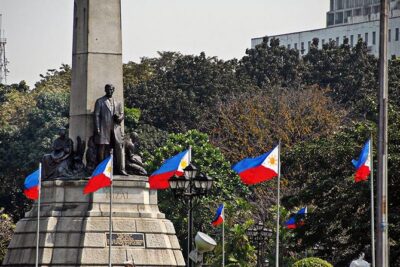
Manila Old and New: Sightseeing Tour Including Intramuros and Fort Santiago
Read our review →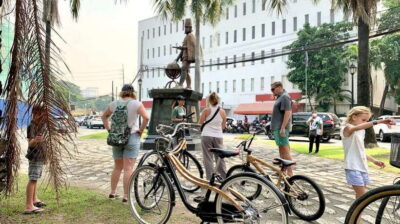
Explore Intramuros: Introduction to Philippine History
Read our review →Browse the lists this tour appears in