
Reviewed · MANILA TOURS
Manila: Taste and See Authenticity
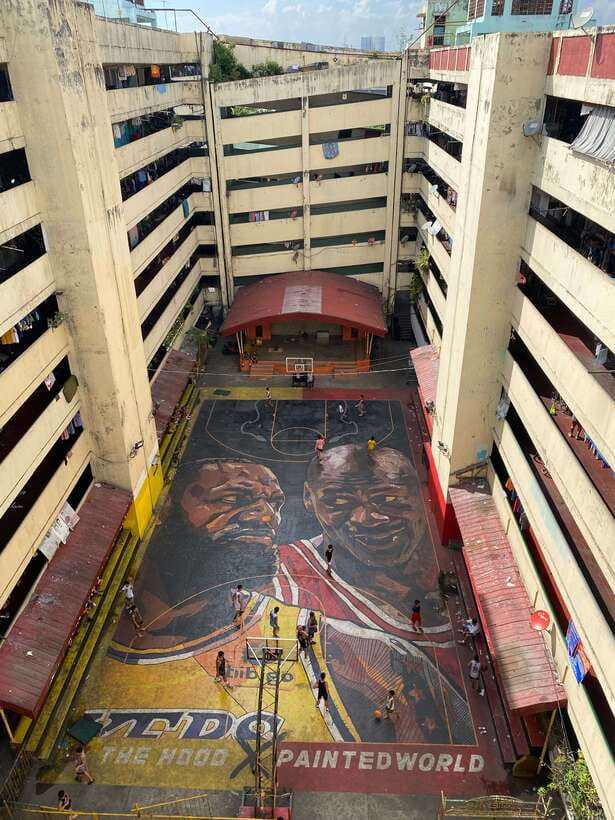
Santa Ana gives you a side of Manila that most visitors miss: old houses, a historic church, tight alleyways, local snacks, and ordinary family life unfolding close to the city’s major business districts. With guide Bernadette, you spend less time looking at Manila from the outside and more time seeing how a local community works day by day.
I like the small group limit of six, which makes it easier to ask questions and pause for photos. I also like the honest transport experience: you may ride a jeepney and other public vehicles instead of staying inside a private tour van.
The main caution is that this is a walking tour through a working neighborhood, not a polished sightseeing circuit. One past participant waited 30 minutes for the guide after the start had already been delayed, and also found that some promised refreshments were not available as expected. Bring water and patience, especially on a hot or rainy day.
Key things to know before you book
- Santa Ana Heritage District: See ancestral homes and older structures in one of Manila’s less visited historic areas.
- A local guide named Bernadette: Expect personal stories about her former neighborhood and explanations of daily life in the barangays.
- Public transport is part of the experience: The route includes a tuk tuk and, according to one participant, a jeepney ride.
- Street food and local snacks: Refreshments and food tasting help turn the walk into a sensory introduction to the community.
- Small group, about 2.5 hours: The maximum of six people suits visitors who want conversation rather than a large guided procession.
- Ends at Circuit Makati: You finish at a mall with restaurants, shops, and activities, but pickup from your hotel is not included.
Santa Ana shows you Manila beyond the business districts
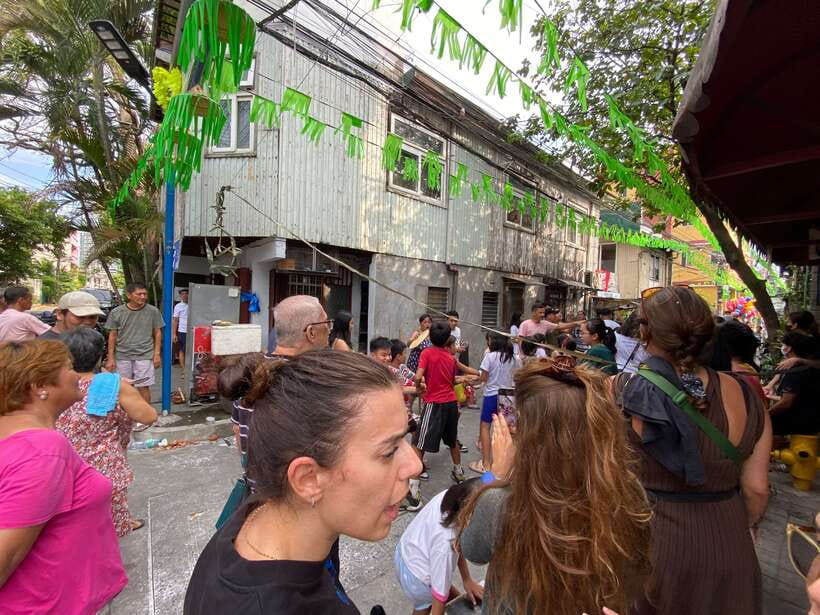
Santa Ana is close to Makati, Mandaluyong, and San Juan, yet it feels far removed from the office towers and shopping centers associated with those places. That contrast is the point. You are not being taken to a recreated village or a display of traditional life. You are walking through a real Manila community where people live, work, travel, and socialize every day.
For me, the value of this tour comes from that direct contrast. You can spend part of your Philippine trip in air-conditioned malls and formal attractions, then use this short outing to understand the city at street level. The experience is less about checking off famous sights and more about noticing how homes, transport, food, religion, and neighborhood life fit together.
The tour is conducted in English and Tagalog. A guide who knows the area can explain details that would be easy to miss on your own, such as why a particular house matters or how the different barangays function. Bernadette has been praised for making the experience personal and for helping visitors speak with locals and understand what they are seeing.
A few more Manila days worth weighing up
- Intramuros, Manila: Historical Bamboo Bike Tour
★ 4.8 · 583 reviews - Experience Intramuros with Bamboo Bicycle – Ecotours
★ 5.0 · 508 reviews - Manila: Intramuros, Chinatown, and Old Manila Half-Day Tour
★ 4.8 · 475 reviews
Starting at Plaza Hugo and entering the heritage district
You meet at Plaza Hugo, an outdoor basketball court beside a small stage and mini park. This is a practical meeting point, but it is not a grand monument or formal visitor center. Look for the court and adjacent park, and allow extra time to find the exact spot.
The opening walk takes about 20 minutes. The focus is Santa Ana’s heritage architecture, including old houses and ancestral structures. These buildings give you a useful starting point because they connect the neighborhood’s present-day life with its older identity.
Do not expect a long museum-style presentation or a large collection of restored mansions. The appeal is seeing historic structures among ordinary homes, streets, and local activity. That mixture can be more revealing than a carefully separated historic zone, but it also means the buildings may show wear and may not look perfectly preserved.
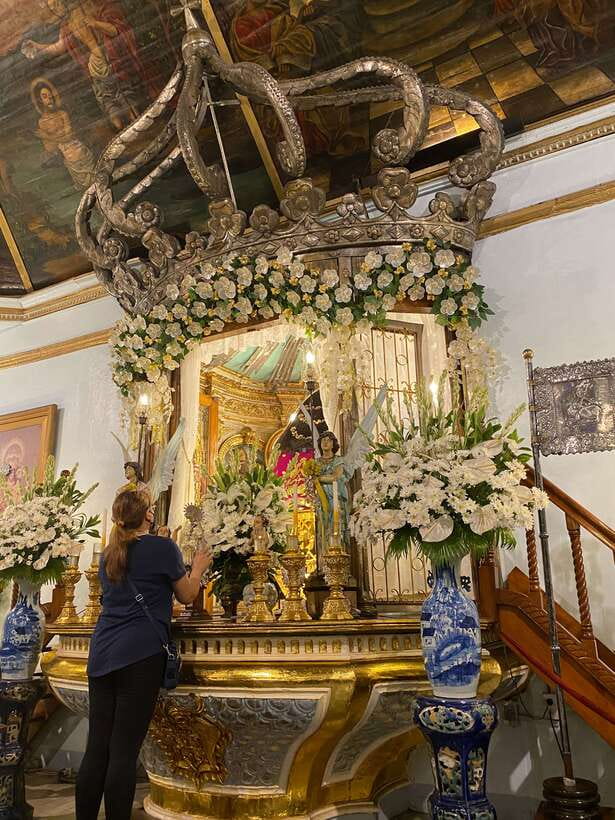
You will also visit the Our Lady of the Abandoned Church. This is one of the tour’s clearest cultural anchors. Even if you are not visiting churches for religious reasons, it helps explain the place of Catholic traditions in Filipino community life. The church visit also breaks up the walk and gives the guide a natural setting for discussing Santa Ana’s past.
Walking the barangays instead of following a tourist route
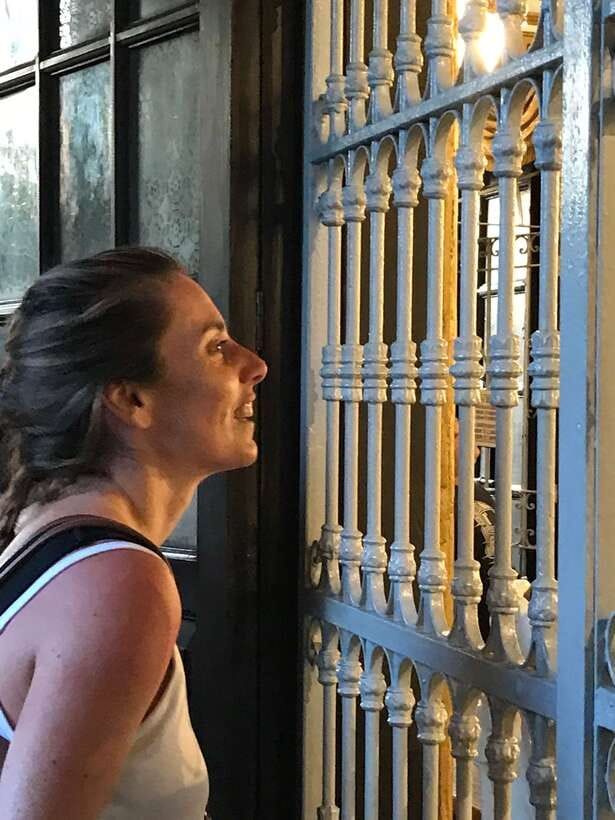
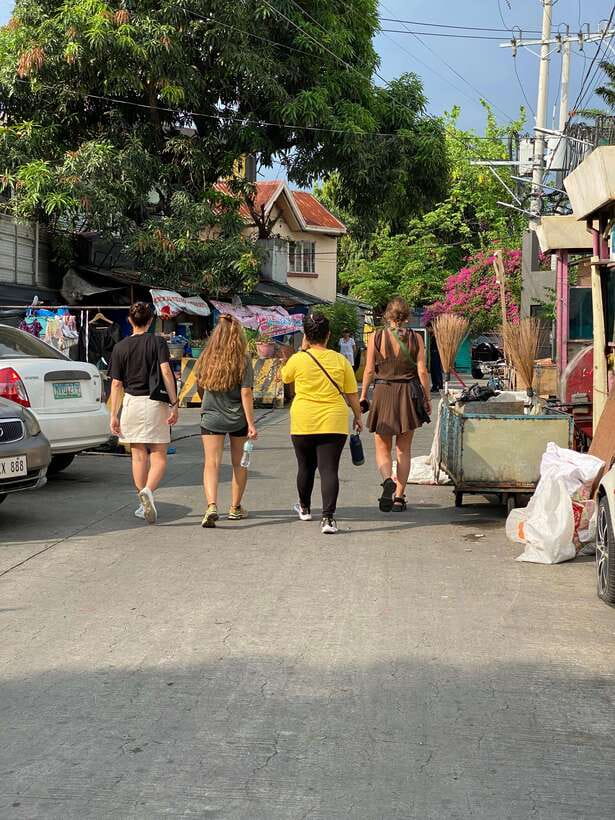
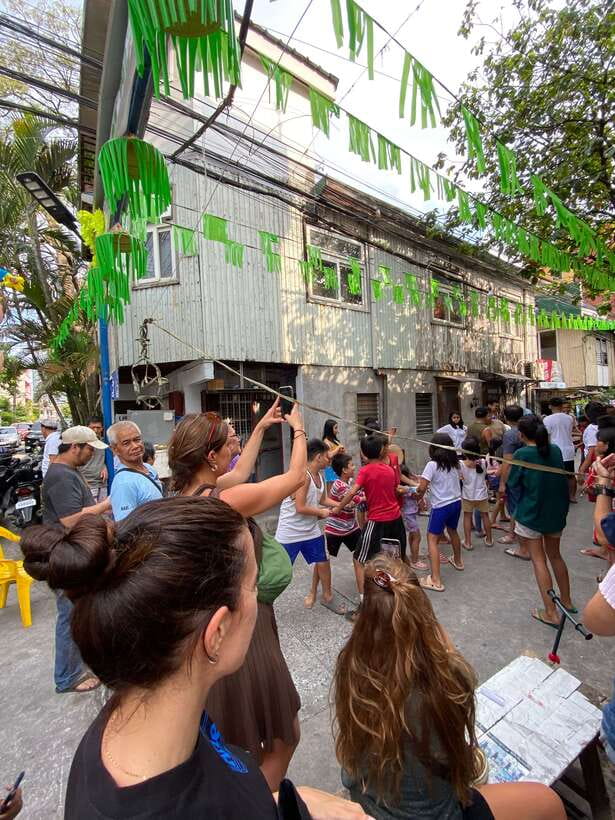
After the heritage introduction, the tour moves into the community itself. You walk through barangays, streets, and alleyways where local families live. The word barangay refers to a local administrative community, but here it also describes the social scale of the experience: small streets, familiar faces, neighborhood routines, and homes close together.
This is where the tour becomes more demanding and more interesting. You may see children, residents, shops, and families going about their normal routines. One participant described friendly locals, children offering high fives, and many chances to speak with people. That kind of welcome is not something a guide can promise at every moment, but the tour is designed around respectful contact rather than distant observation.
You should also understand the limits. This is not a comfortable stroll through a quiet heritage quarter. Narrow paths, heat, uneven walking conditions, and crowded local streets may be part of the day. One participant called the experience intense and said it was uncomfortable in several ways, while also finding it eye-opening. That is fair warning. Come ready to be attentive and polite, not to treat the neighborhood as a backdrop.
Ask before photographing people, particularly children and families. A camera phone is more practical than a professional camera, which is not allowed. Dress in comfortable, breathable clothes, wear good walking shoes, and carry only a small bag because large luggage is not permitted.
Tuk tuk, jeepney, and the value of ordinary transport
The route includes about 35 minutes in a tuk tuk, followed by other forms of public transportation. A participant specifically reported riding a jeepney, one of the most recognizable forms of transport in the Philippines. These vehicles are not added just for a thrill. They show how people move around Manila when a private car is not the normal choice.
For you, this part adds useful context. Traffic, short distances, and public transport shape daily life in Metro Manila. Riding with local commuters gives you a better feel for the city than passing through it in a sealed vehicle. It also makes the tour feel less like a standard walking excursion.
At the same time, public transport is less predictable than a private ride. You may need to wait, squeeze into a busy vehicle, or adjust to changing conditions. The tour description says the experience takes place rain or shine, so bring a compact rain jacket or other rain gear. A hat, sunscreen, and cash are also recommended.
The fares are included, which is helpful. You do not need to budget separately for each ride, though carrying a little extra cash is sensible for personal purchases or food beyond what is provided.
Same islands, a completely different kind of day:
- Manila: Old & New 4-Hour City Tour
★ 4.5 · 458 reviews - Manila Food Tour: Introduction to Philippine Street Food
★ 5.0 · 417 reviews - Manila Old and New: Sightseeing Tour Including Intramuros and Fort Santiago
★ 4.5 · 377 reviews - Makati Nightlife: VIP Access to Clubs, Rooftops & Go-Go Bars
★ 4.9 · 278 reviews
Street food, snacks, and a taste of local routine
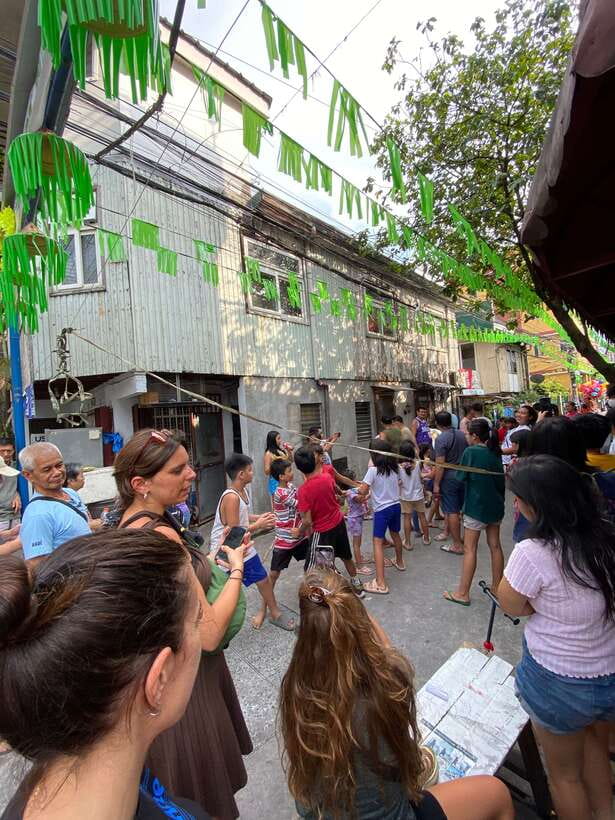
Food appears during the central part of the tour, which lasts about an hour and may include street food, a local market visit, food tasting, and snacks. The guide also provides drinks and a snack as part of the experience.
This is a good fit for visitors who learn through eating. A small snack from a local vendor can tell you more about everyday habits than a formal restaurant meal, especially when the guide explains what you are trying and why it is common. Bernadette has been praised for taking participants to a small snack stop early in the experience and for helping them understand local food and conversation.
Still, food availability can vary. One participant said the included refreshments were not fully provided and that a water stop had to be requested midway. I would carry your own water, particularly in warm weather. If you have allergies, dietary restrictions, or a sensitive stomach, tell the guide before the food tasting and bring backup food if needed. The supplied details do not specify a fixed menu or dietary arrangements.
The market and street-food portion is also a good time for photography, but ask first when photographing vendors or customers. The goal is to meet the neighborhood with respect, not to collect dramatic pictures of hardship.
Sunset, open time, and the final walk
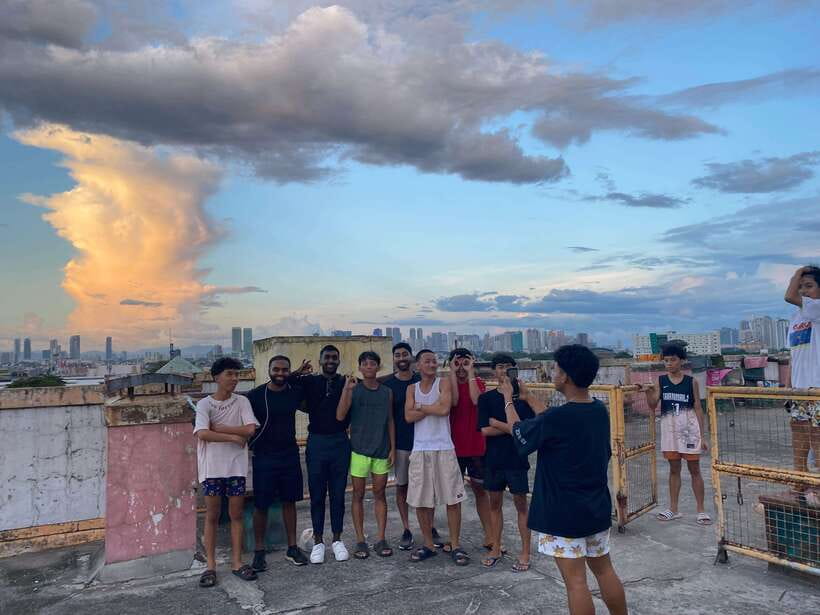
The later portion lasts about 35 minutes and includes guided walking, free time, and another opportunity to take in the area around sunset. The timing can make the streets feel different from the earlier part of the tour, with changing light and a slower pace after the food and transport sections.
Free time is useful because a tightly timed group tour can otherwise feel rushed. You may want to take photos, ask Bernadette about something you saw, or simply watch local activity for a few minutes. The guide has been praised for allowing time to talk with locals and take pictures rather than pushing the group from one point to the next.
The tour is mainly on foot, despite the transport sections. Two and a half hours may sound short, but the walking, heat, food stops, and public vehicles can make it feel full. If you have mobility concerns, ask before booking because the supplied information does not provide accessibility details.
Finishing at Circuit Makati
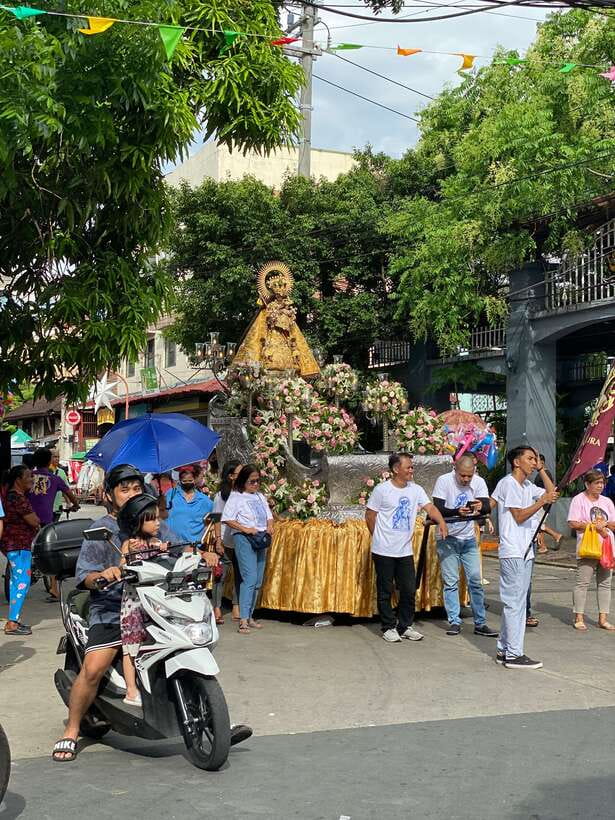
The official finish is Circuit Makati, an indoor and outdoor mall with shops, restaurants, and other activities. This is a useful endpoint if you want to continue your evening with a meal or shopping. It also places you closer to other parts of Metro Manila than the starting point in Santa Ana.
Do not treat the finish as hotel drop-off. Pickup and drop-off are not included. One participant found that the ending point differed from what was expected and had trouble finding comfortable transport back to the hotel, with Christmas traffic making matters worse. Confirm the final meeting and drop-off details before setting up a tight evening plan.
Circuit Makati is a sensible place to end because you can choose your next step rather than being left on a quiet street. Still, if you are visiting during a holiday or at a busy time, allow extra time for traffic and transport.
Is $63 good value for 2.5 hours?
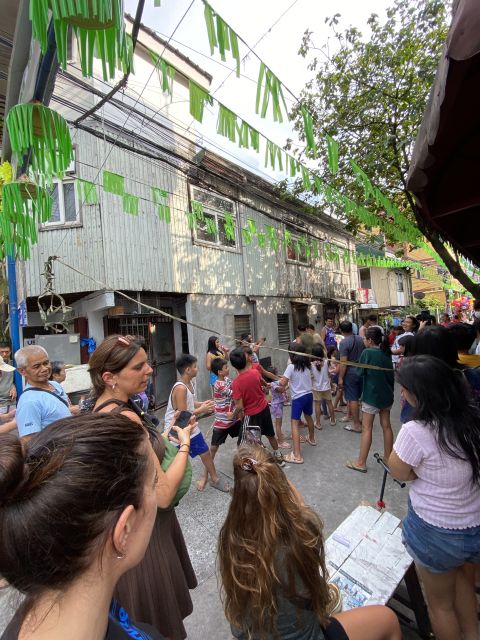
At $63 per person, this is not the cheapest way to walk around Manila. You are paying for a small group, a live English or Tagalog guide, local transport fares, drinks, a snack, food tasting, and a souvenir. The group cap of six matters because the route involves narrow streets and conversation with the guide.
The price makes the most sense if you value access and context more than the number of formal attractions visited. You are not paying for grand interiors or a long list of landmark admissions. You are paying for a guided look at a neighborhood that many independent visitors might pass through without understanding.
I would compare it with the cost of arranging your own local transport, finding Santa Ana’s heritage sites, and learning the context on the spot. Doing that alone may cost less, but it also comes with more uncertainty and fewer chances to ask a local guide direct questions. For a first visit to Manila, that guidance can be worth the difference.
The experience has a mixed overall score of 3.3 from seven ratings, so I would not book it expecting perfect timing or polished logistics. The strongest praise centers on Bernadette’s personal approach, local knowledge, food stops, friendly contact, and the chance to leave the usual sightseeing zone. The clearest concerns involve waiting, water, included items, and the final drop-off. Those are manageable if you confirm details and bring your own essentials.
Who should book this Santa Ana experience?
You should consider it if you:
- Want to see ordinary Manila life rather than focus only on major attractions.
- Enjoy walking, local snacks, and public transportation.
- Prefer a small group where you can ask questions.
- Are comfortable entering a working residential community with an open mind.
- Want a guide who can explain local customs and introduce you to the area.
- Have limited time but want something more personal than a standard city loop.
You may want a different activity if you need a private vehicle, a predictable schedule, a fully air-conditioned route, or a formal historical tour with polished buildings and fixed refreshments. This is also not the best choice if you dislike street food, crowded transport, heat, rain, or walking through narrow neighborhood lanes.
The location details deserve one practical check. The supplied location information names Nueva Vizcaya, while the route, meeting point, and finish all place the experience in Santa Ana, Manila, ending at Circuit Makati. Confirm the correct city and meeting instructions when booking so you do not arrive in the wrong part of the Philippines.
Should you book it?
Book this tour if your idea of a good Manila experience includes old houses, a church, local streets, a jeepney, snacks, and honest contact with daily life. Bernadette’s personal connection to Santa Ana appears to be the heart of the outing, and the small group gives the tour a more human feel.
Skip it if you want comfort and tight logistics above all else. Bring water, sunscreen, rain gear, cash, and comfortable shoes, and keep your schedule flexible at the end. With those precautions, this is a strong choice for an adventurous visitor who wants to understand Manila from the neighborhood level, not just from its malls and business districts.
FAQ
Where does the tour begin?
The meeting point is Plaza Hugo in Santa Ana, Manila. It is an outdoor basketball court with an adjacent stage and mini park.
Where does the tour finish?
The tour finishes at Circuit Makati in Makati, Metro Manila. Circuit Makati has indoor and outdoor areas, shops, restaurants, and other activities.
How long does the tour last?
The experience lasts about 2.5 hours. The timing includes walking, heritage sightseeing, public transportation, food-related stops, and free time.
Is transportation included?
Public transportation fares are included. The route includes a tuk tuk, and the experience also includes other public transport. Hotel pickup and drop-off are not included.
What is included in the price?
The price includes public transportation fares, drinks, a snack, and a souvenir. Food tasting and local snack stops are part of the experience, but a fixed food menu is not specified.
What should I bring?
Bring comfortable walking shoes, breathable clothing, a sun hat, sunscreen, rain gear, and cash. Large bags and luggage are not allowed, and professional cameras are not permitted.
Just added around Manila
- 3 Days Private Tour in Banaue Ifugao visiting Batad Rice Terraces★ 3.5 · 3 reviews
- Unforgettable Manila Fishing Village Day Excursion 2024★ 5.0 · 4 reviews
- indigenous Forest experience Manila 2023★ 5.0 · 4 reviews
- Cultural Dinner and Show in Manila★ 5.0 · 4 reviews
- Shared Old Manila Tour★ 5.0 · 5 reviews
- Shared Cruise Shore Excursion of Manila Old and New City Tour★ 4.0 · 10 reviews
- 5 Days Sagada Banaue Batad Discovery (PRIVATE GROUP TOUR Max 6 Travellers)★ 5.0 · 16 reviews
- Private Departure Airport Transfer in Manila Bay and Makati Area★ 5.0 · 3 reviews
Manila Tours, compared.
Intramuros, Manila: Historical Bamboo Bike Tour
Read our review →
Experience Intramuros with Bamboo Bicycle – Ecotours
Read our review →
Intramuros, Chinatown, and Old Manila Half-Day Tour
Read our review →
Manila Food Tour: Introduction to Philippine Street Food
Read our review →
Manila Old and New: Sightseeing Tour Including Intramuros and Fort Santiago
Read our review →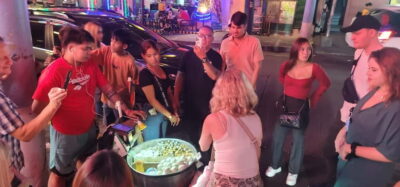
Makati Nightlife: VIP Access to Clubs, Rooftops & Go-Go Bars
Read our review →
Manila Food Tour: Explore World’s Oldest Chinatown
Read our review →Browse the lists this tour appears in