
Reviewed · INTRAMUROS WALKING TOURS
Manila: Intramuros and Chinatown Food Tour with Food Samples
Manila’s past and present meet neatly on this five-hour outing. You begin among the stone walls of Intramuros, then ride a tuktuk toward Binondo, where old Chinese Filipino food traditions take over. The change of mood is part of the appeal: solemn forts and churches first, crowded food streets later.
I like the small group of no more than eight, since it gives you a better chance to hear the guide and ask questions. I also like the mix of included sights and snacks: your $80 covers Fort Santiago, the tuktuk ride, seven food tastings, and an English or Tagalog speaking guide. The main consideration is the walking. Heat, uneven streets, and a long food stop may be tiring, and this tour is not suitable for wheelchair users or people with food allergies.
Key points to know before booking
- Fort Santiago begins the story: You explore the Intramuros site connected with José Rizal and the Philippines’ colonial past.
- Three major heritage stops come before lunch: Fort Santiago, Manila Cathedral, and San Agustin Church are covered on foot.
- The tuktuk ride adds local flavor: You travel from Intramuros to Binondo by a breezy, open-sided vehicle rather than a standard tour bus.
- Seven Chinatown tastings are included: Expect items such as fried siopao, pork siomai, lumpia, hopia, pansit, egg tart, and buchi, depending on availability.
- Jane is the guide name to look for: The strongest praise centers on Jane, also spelled Jayne in one account, for clear explanations, kindness, and help after the tour.
- The route links two sides of Manila: You finish at Binondo Church after moving from Spanish colonial sites to Chinese Filipino food culture.
Why this Manila route works so well
Many city tours force you to choose between old buildings and local food. This one gives you both, and the contrast makes each half more interesting. Intramuros shows Manila through stone gates, churches, and military ruins. Binondo shows how Chinese culture shaped the city’s cooking, commerce, and daily life.
The route is also easy to understand. You start at Fort Santiago, walk through the main heritage sights, take a 20-minute tuktuk ride, and spend about three hours on food tasting. You do not need to arrange a second trip across Manila to reach Chinatown.
The group limit matters here. In a group of eight or fewer, a guide can explain a church detail without holding up a large crowd. In Binondo, where food stops can be close together and streets can feel busy, a smaller party is easier to manage.
More Food Tours in Manila
- Manila Food Tour: Introduction to Philippine Street Food
★ 5.0 · 417 reviews - Manila Food Tour: Explore World’s Oldest Chinatown
★ 5.0 · 158 reviews - Manila: Street Food and Drinks Walking Tour with Tastings
★ 4.8 · 114 reviews
Fort Santiago: Manila’s serious opening chapter
The tour starts at the Fort Santiago Gate. Allow yourself to settle in before the walk begins, since this is the first place where the guide sets the political and colonial context for the day.
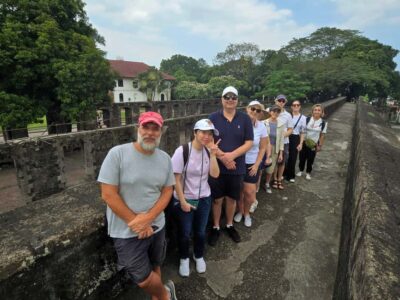
Fort Santiago is a preserved defensive site inside Intramuros. Its walls and ruins provide the most direct connection to José Rizal, the Philippine national hero. You will hear about his role and the fort’s place in the country’s colonial past as you move through the grounds.
This is also one of the better spots for photographs. Stone corridors, gates, and old masonry create strong backgrounds, and photography assistance is included. Bring a camera if you care about pictures, but remember that flash photography is not allowed.
The fort portion takes about an hour. That gives you enough time to look around without turning the visit into a rushed photo stop. Still, you will be walking and standing for much of it. Comfortable shoes are not optional advice here.
Manila Cathedral and San Agustin Church
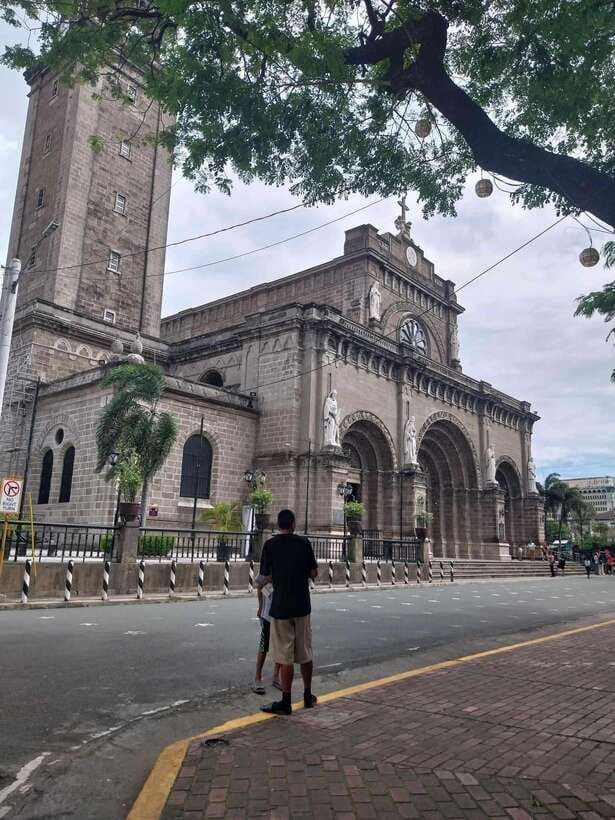
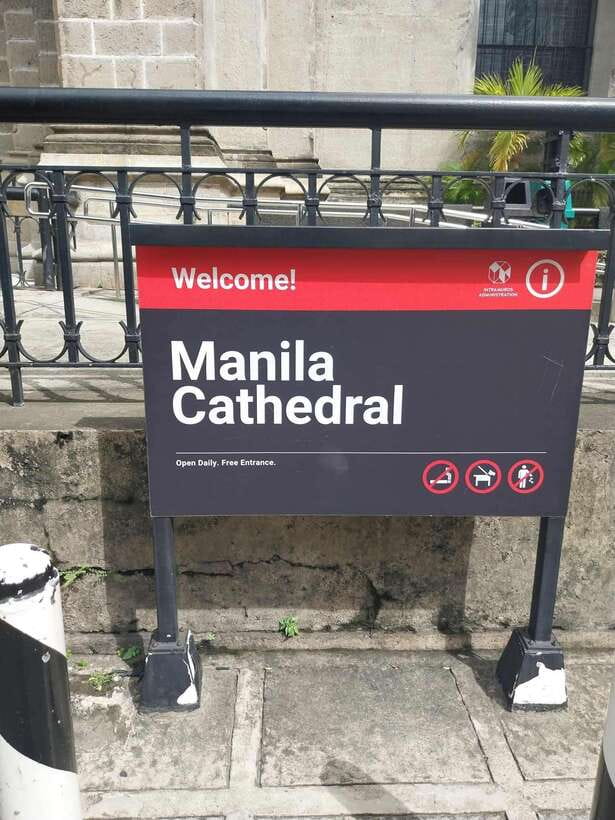
From Fort Santiago, you walk about 20 minutes to Manila Cathedral. The cathedral has endured natural disasters and repeated rebuilding, making it an important religious and civic landmark in Manila. Its appeal is not only visual. The guide can help you understand why this building matters to the city beyond its façade.
The next walk takes about another 20 minutes, bringing you to San Agustin Church. This is the oldest stone church in the Philippines and a UNESCO World Heritage Site. Its baroque design gives the second church stop a different feel from the cathedral.
I like this middle section because the sights are close enough to connect on foot. You are not spending half the morning in a vehicle, and the transitions let you see more of Intramuros than a quick stop at one monument would allow.
The drawback is the tropical weather. Sunscreen, water, and light clothing will make the route easier. If you dislike walking in heat, five hours may feel long even though the pace is described as accessible. The tour is not built around long breaks, so plan on staying engaged from the start.
A 20-minute tuktuk ride to Binondo
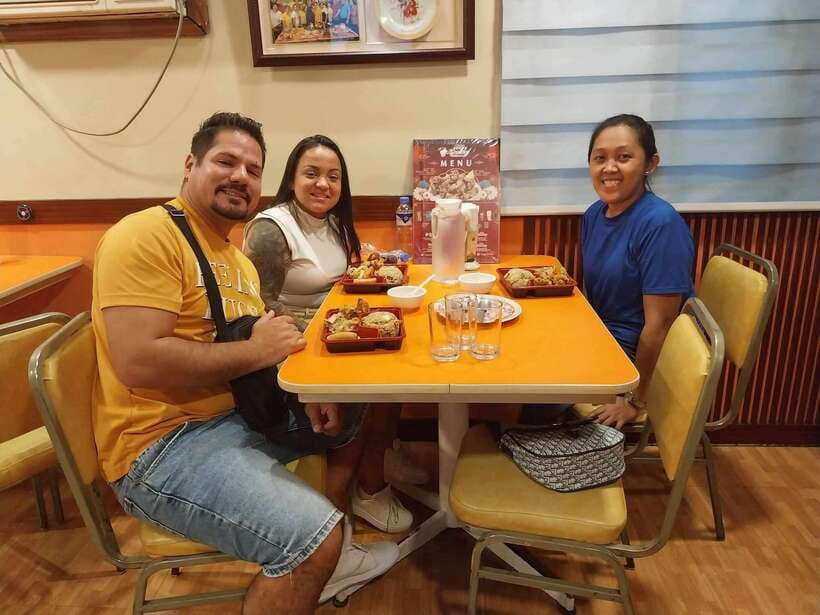
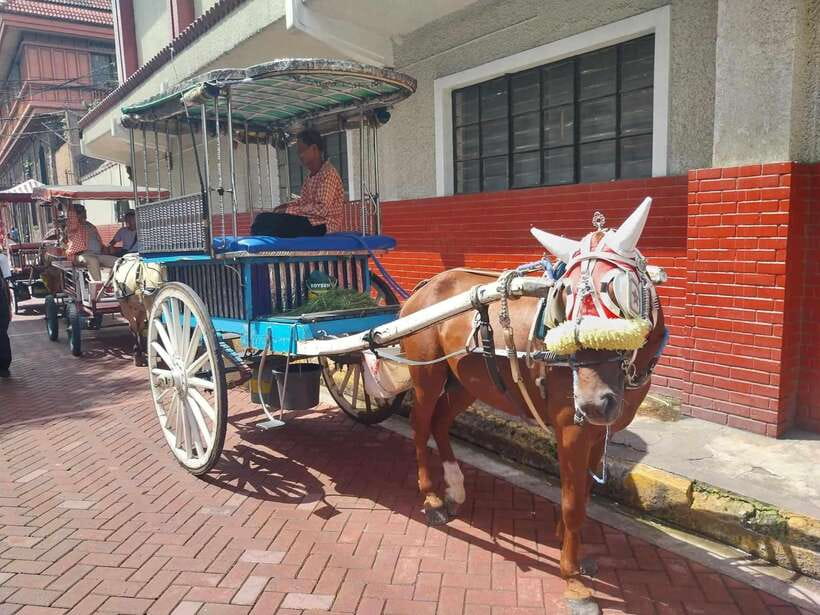
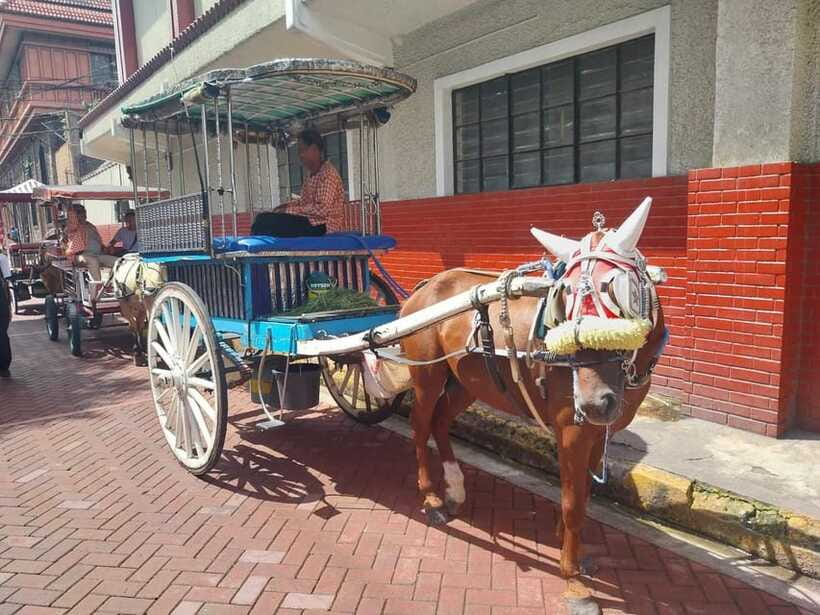
After the Intramuros sights, you board a tuktuk for the ride to Chinatown. This is a short transfer, but it gives the day a welcome change of pace. You can see more of the streets without committing to a long vehicle journey, and the open design offers a breezy view as you pass landmarks and cobblestone roads.
The tuktuk is also part of the character of the tour. A regular taxi would move you from one neighborhood to another, but this ride keeps the transfer connected to the experience. You get a glimpse of Manila’s mix of older streets and modern city life.
Do not treat the tuktuk as a sightseeing ride lasting an hour. It lasts about 20 minutes. Its value is the transition, the novelty, and the chance to rest your feet before the food section.
More Intramuros tours:
- Intramuros, Manila: Historical Bamboo Bike Tour
★ 4.8 · 583 reviews - Experience Intramuros with Bamboo Bicycle – Ecotours
★ 5.0 · 508 reviews - Manila: Intramuros, Chinatown, and Old Manila Half-Day Tour
★ 4.8 · 475 reviews - Manila Old and New: Sightseeing Tour Including Intramuros and Fort Santiago
★ 4.5 · 377 reviews
Binondo and the Chinese Filipino food trail
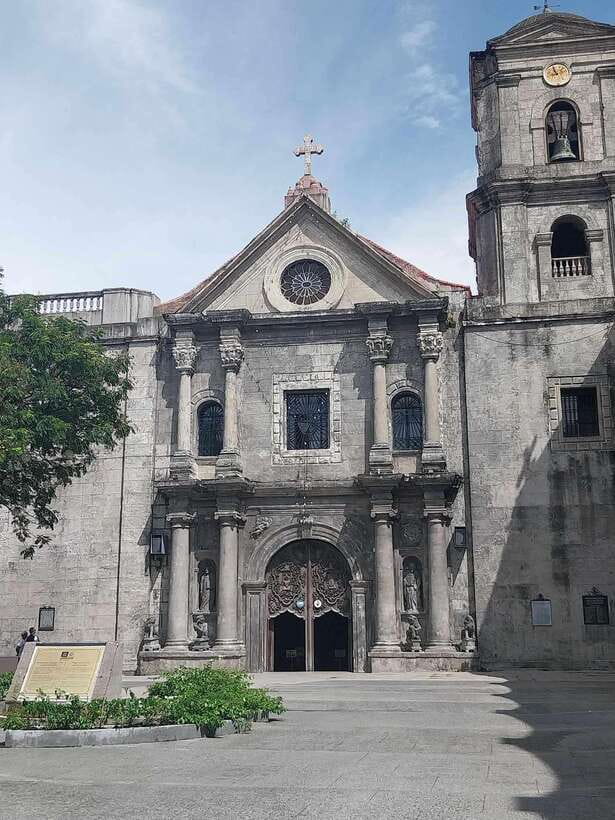
Binondo is known as the world’s oldest Chinatown, and the food portion is the longest part of the day. You spend roughly three hours tasting Chinese delicacies and hearing how Chinese traditions influenced Filipino cooking.
Seven tastings are included. The exact selection can depend on availability, but the expected range includes:
- Fried siopao
- Pork siomai
- Lumpia
- Hopia with mung bean filling
- Pansit
- Egg tart
- Buchi
This is not a formal sit-down meal followed by a quick dessert. It is a series of samples spread through the Chinatown portion, so you should arrive ready to eat and walk. The tastings are substantial enough that one visitor found it difficult to resist additional snacks after the meal.
The variety is the real strength. Siopao and siomai introduce familiar savory flavors, while hopia and egg tart shift the focus to pastry. Pansit brings noodles into the mix, and buchi adds another texture and style. You get a useful introduction rather than seven versions of the same dumpling.
The food also gives the guide a practical way to explain cultural exchange. Instead of hearing a broad lecture about Chinese influence, you see it in dishes that have become part of Filipino food life. That makes the cultural discussion easier to remember.
Availability can change, so do not book this expecting every item to appear exactly as listed. The tour promises seven Chinese delicacies, with the specific choices depending on what is available that day.
What the guide adds to the day
The guide can make or break a walking tour, and the named guide praise here is unusually consistent. Jane is described as friendly, clear, and attentive. One account uses the spelling Jayne, so you may see either version when communicating about the tour.
Jane’s role goes beyond pointing toward buildings and food stalls. You can expect explanations at the historical sites, help with photographs, and background on how Chinese culture shaped Binondo and Filipino cuisine. The guide also appears to be attentive after the formal route ends.
One French-speaking visitor said the walking pace felt accessible and pleasant, and appreciated that the guide waited for a taxi and later checked that the group had arrived safely. Another visitor traveling with his father valued the explanations and the effort to keep the day interesting. A guest visiting during Chinese New Year also enjoyed dining with Jane and walking through Chinatown at that busy seasonal time.
Those details matter if you are nervous about navigating Manila. The tour begins at Fort Santiago and ends at Binondo Church, so you are not returned to your hotel. The guide’s help with the end of the trip can be useful, but you should still plan your onward transport.
Finishing at Binondo Church
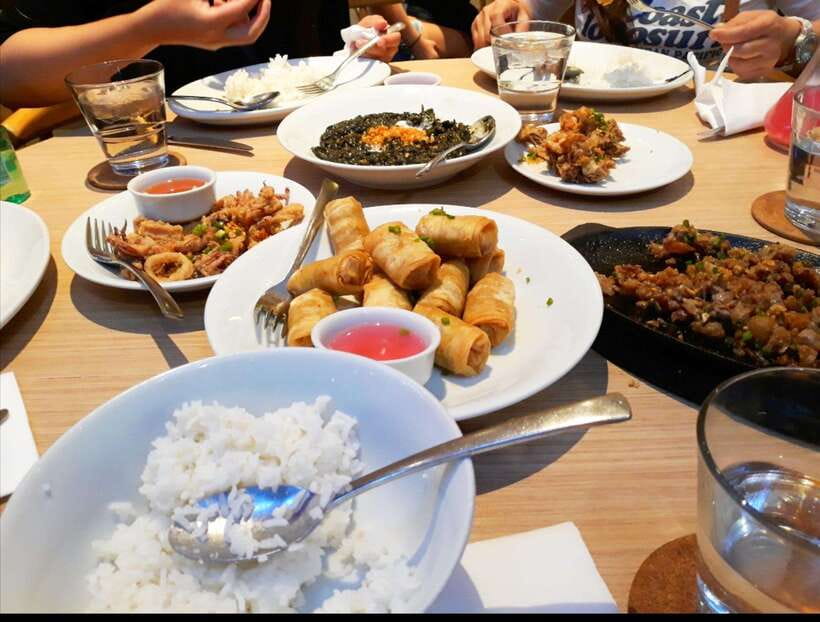
The route ends at the Minor Basilica and National Shrine of Saint Lorenzo Ruiz, commonly called Binondo Church. This gives the food walk a final heritage stop rather than ending abruptly at a restaurant.
The church also neatly links the day’s two themes. You began with Spanish colonial Manila inside Intramuros and finish in the Chinese Filipino center of Binondo. The route does not pretend these are separate versions of the city. It shows how several cultures share the same urban story.
Because the tour finishes here, you should decide in advance what you want to do afterward. The supplied details do not include hotel drop-off or onward transportation. The guide may offer practical help, but getting back to your accommodation is your responsibility.
Is $80 a fair price?
At $80 per person, this is not the cheapest way to walk around Intramuros or eat in Binondo. The value depends on how much structure and explanation you want.
You are paying for five hours, a professional guide, Fort Santiago admission, the tuktuk ride, photography help, and seven food tastings. If you tried to arrange those pieces separately, you would also spend time figuring out the route between Intramuros and Binondo and choosing places to eat.
The price looks strongest for a first visit to Manila, especially if you want a single half-day introduction. A small group of up to eight is another point in its favor. Private guiding would normally cost more, while a large group tour may feel less personal.
The value is weaker if you already know Intramuros, speak comfortably with local vendors, or prefer to choose every food stop yourself. You may also want a longer church visit or more time at Fort Santiago than a combined route allows.
Who should book this experience?
I would recommend it to first-time Manila visitors who want a clear introduction without spending a full day on one subject. It works particularly well for couples, families with older children, and small groups who enjoy walking and trying several foods in one outing.
It also suits visitors who want cultural context with their meals. You are not simply checking off a fort and then eating dumplings. The guide connects the monuments and dishes, giving you a better sense of how Manila developed.
Food-focused visitors should find the Binondo section worthwhile, but people with strict dietary needs need to be cautious. The tour states that it is not suitable for people with food allergies, even though you are asked to share allergies or dietary restrictions in advance. That warning should be taken seriously.
This is not a good choice for wheelchair users, anyone unable to walk for several hours, or visitors looking for a slow, private museum tour. It is also less suitable if you dislike group tastings or cannot eat a range of ingredients.
Wear comfortable footwear, bring water and sunscreen, and carry a camera if you want help with photos. Smoking is not allowed, and flash photography is prohibited.
Practical booking details
The tour lasts five hours and is offered in English or Tagalog. The starting time depends on availability, and the exact meeting details are sent within 24 hours after booking. The stated starting point is the Fort Santiago Gate, with Binondo Church as the finish.
One detail deserves checking before you pay: the supplied location field says Nueva Vizcaya, while the route itself clearly takes place in Manila, beginning at Fort Santiago and ending in Binondo. Confirm the city and meeting point in your booking message so you do not arrive in the wrong province.
You can cancel up to 24 hours before the start for a full refund, and a reserve-now, pay-later option is available. Those terms are useful if your Manila schedule is still shifting.
Should you book the Intramuros and Binondo tour?
Book it if you want one well-organized half-day that joins Manila’s monuments with its food culture. The tuktuk transfer breaks up the walking, the seven tastings give you a broad sample of Binondo, and the small group format should keep the guide’s attention within reach.
Skip it if you need wheelchair access, have food allergies, or prefer to explore at your own pace. For everyone else, $80 is reasonable when you value admission, transport, food, and a guide in one package. The strongest reason to choose it is the route itself: Fort Santiago and San Agustin Church tell one side of Manila, while siopao, hopia, pansit, and egg tart tell another.
FAQ
How long does the tour last?
The tour lasts five hours.
Where does the tour start?
It starts at the Fort Santiago Gate in Intramuros. Exact meeting details are advised within 24 hours after booking.
Where does the tour end?
The tour ends at the Minor Basilica and National Shrine of Saint Lorenzo Ruiz, also called Binondo Church.
Which languages are offered?
The tour is offered in English and Tagalog.
How many people are in the group?
The group is limited to eight participants.
What food is included?
Seven food tastings are included. Possible items include fried siopao, pork siomai, lumpia, hopia, pansit, egg tart, and buchi, depending on availability.
Is the tuktuk ride included?
Yes. A tuktuk ride from Intramuros to Chinatown is included.
Is the tour suitable for people with food allergies or wheelchair users?
No. The tour is listed as unsuitable for people with food allergies and wheelchair users. You should still advise the operator about any dietary restrictions before the tour.
Just added around Manila
- 3 Days Private Tour in Banaue Ifugao visiting Batad Rice Terraces★ 3.5 · 3 reviews
- Unforgettable Manila Fishing Village Day Excursion 2024★ 5.0 · 4 reviews
- indigenous Forest experience Manila 2023★ 5.0 · 4 reviews
- Cultural Dinner and Show in Manila★ 5.0 · 4 reviews
- Shared Old Manila Tour★ 5.0 · 5 reviews
- Shared Cruise Shore Excursion of Manila Old and New City Tour★ 4.0 · 10 reviews
- 5 Days Sagada Banaue Batad Discovery (PRIVATE GROUP TOUR Max 6 Travellers)★ 5.0 · 16 reviews
- Private Departure Airport Transfer in Manila Bay and Makati Area★ 5.0 · 3 reviews
Intramuros Walking Tours, compared.
Intramuros, Manila: Historical Bamboo Bike Tour
Read our review →
Experience Intramuros with Bamboo Bicycle – Ecotours
Read our review →
Intramuros, Chinatown, and Old Manila Half-Day Tour
Read our review →
Manila Old and New: Sightseeing Tour Including Intramuros and Fort Santiago
Read our review →
Explore Intramuros: Introduction to Philippine History
Read our review →Browse the lists this tour appears in