
Reviewed · INTRAMUROS WALKING TOURS
Intramuros Walking Tour with Transportation by Don’t Skip Manila
Manila’s past comes into focus inside Intramuros, the old walled city where Spanish rule shaped the capital for centuries. This tour links Fort Santiago, the Rizal Shrine, Manila Cathedral, and Casa Manila, giving you a useful first look at the city without having to sort out transport or entrance fees yourself.
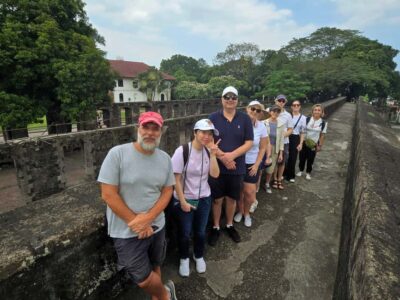
I like the small-group format, which gives you a better chance to ask questions than a large bus tour. I also like the mix of serious history and lighter touches, including a horse-drawn carriage ride and, on some outings, a cold cheese and avocado ice cream treat from guide Andre. The main caution is the heat: Manila can be very hot and humid, and one carriage ride may be harder to follow because the driver’s commentary is not always easy to hear.
Key points to know before booking
- Four major historic stops: Fort Santiago, the Rizal Shrine, Manila Cathedral, and Casa Manila.
- Air-conditioned transport: Useful for moving around Manila and taking a break from the heat.
- Horse-drawn carriage ride: Included when more than four people join the tour.
- Strong guide-led storytelling: Guides including Andre, Andrei, Anne, and Andrea are praised for making history lively and easy to follow.
- Weekend morning departure: The stated meeting window is Saturday and Sunday from 7:30 to 8:30 AM.
- Good value for a half-day outing: The $83.34 price includes admissions, transport, guide service, water, and listed taxes.
Why Intramuros is the right place to start
Intramuros means within the walls, and this district was once the Spanish colonial center of Manila. It was the seat of government and political power during the Spanish period, so a walk here helps explain how the city developed and why Manila’s past includes Malay, Spanish, Japanese, and Filipino chapters.
The tour is not simply a ride past old buildings. You move through a compact historic district and enter several sites tied to religion, government, colonial life, and the struggle for Filipino independence. That combination gives the outing more weight than a basic sightseeing loop.
You should expect a mixture of walking, indoor visits, and short vehicle transfers. The listed duration is about four to five hours, though the pace can depend on traffic, weather, group size, and the time spent at each stop.
More Intramuros tours:
- Intramuros, Manila: Historical Bamboo Bike Tour
★ 4.8 · 583 reviews - Experience Intramuros with Bamboo Bicycle – Ecotours
★ 5.0 · 508 reviews - Manila: Intramuros, Chinatown, and Old Manila Half-Day Tour
★ 4.8 · 475 reviews
Fort Santiago: Manila’s most important starting point
Fort Santiago receives about an hour, making it the longest scheduled stop. The citadel was first built by Miguel López de Legazpi for the newly established Spanish city of Manila, and it became part of Intramuros’ defensive system.
This is where the tour’s political and military story takes shape. The fort helps you picture Manila as a walled colonial capital rather than just an old neighborhood. Its location also connects the history of the city with the need to control movement, protect government power, and defend the settlement.
An hour is a sensible amount of time here. You have enough room to listen, look around, and ask questions without turning the visit into an all-day museum stop. The guide’s role matters especially at Fort Santiago because walls and gates do not explain themselves. A good storyteller can connect the physical site to the wider history of Manila.
The tour’s strongest praise centers on that storytelling. Andre, Andrei, Anne, and Andrea are described as animated, warm, funny, and clear. One guide used photographs and a speaker with music to set the mood for different parts of the story. That approach will suit you if dates and names alone tend to blur together.
The Rizal Shrine and the final night of José Rizal
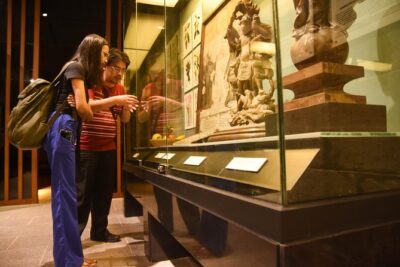
The Rizal Shrine takes about 30 minutes and is included in the tour price. It occupies the building where José Rizal spent his final night. The museum also preserves the story of how he hid his famous poem, Mi último adiós, inside an oil lamp.
This stop shifts the focus from colonial power to Filipino identity. Rizal’s life and work are central to the country’s national story, and the shrine gives you a direct place to consider his final hours and the meaning attached to his writing.
Half an hour is short, but it works as part of a larger tour. You will not have unlimited time to study every display, so listen closely to the guide and ask about the details that interest you most. If you want a slow museum visit, this schedule may feel brisk. If you want a clear introduction to Manila’s major historical figures, the stop should fit well.
The tour is especially useful for someone visiting Manila on a short stay or during a long layover. One booking was made for a 17-hour stop between flights, and the four to five hour length leaves room for a focused visit rather than an exhausting full-day commitment.
Manila Cathedral in the heart of the Walled City
The tour allows about 15 minutes at Manila Cathedral, the first cathedral in the Philippines and a basilica dedicated to the Immaculate Conception. It is located within Intramuros and remains one of the district’s key landmarks.
Fifteen minutes will give you a quick look rather than a long architectural study. Still, the stop adds an important religious layer to the tour. Intramuros was not only a military and political center. Churches and religious institutions played a major role in Spanish colonial Manila, and the cathedral helps show that influence.
Your guide can also place the cathedral within the larger story of the walled city. This is one of those stops where context is more valuable than simply taking a photograph. The building matters because of its position in the former colonial capital and its place in Philippine Catholic history.
More walking tours in Manila:
- Manila: Street Food and Drinks Walking Tour with Tastings
★ 4.8 · 114 reviews - Viva Old Manila: Intramuros Walking Tour
★ 4.9 · 104 reviews - Manila’s Walled City: Intramuros Walking Tour
★ 5.0 · 82 reviews - Manila: Sightseeing and Food Walking Tour with Tastings
★ 4.7 · 68 reviews
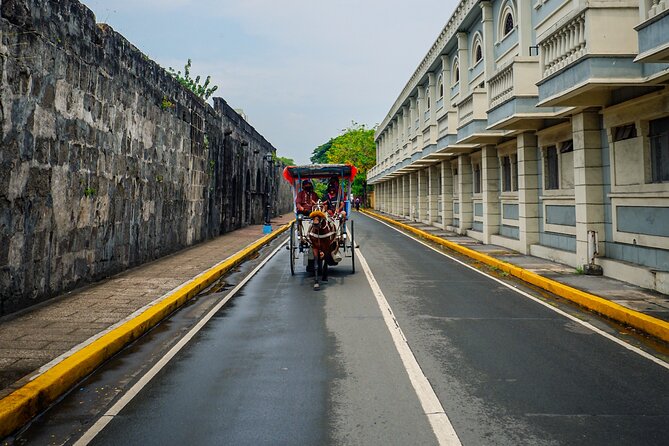
A carriage ride through Intramuros
The horse-drawn carriage ride is included when more than four people join the outing. That condition matters. If your group is smaller, you should not assume the carriage ride will be part of the experience.
The ride offers a slower way to see the streets and walls, and it breaks up the walking. In Manila’s heat, that change of pace can be welcome. It also adds a traditional sightseeing element that you would not get from an air-conditioned vehicle alone.
There is one practical weakness. The carriage driver may not be the main guide, and the commentary can be difficult to hear. You may also have trouble seeing exactly what the driver is pointing toward. I would treat the carriage as a pleasant way to move through Intramuros, not as the main source of historical explanation.
The most useful history will likely come from the tour guide before or after the ride. If hearing every spoken detail matters to you, stay close to the guide when possible and use the carriage mainly for the atmosphere and views.
Casa Manila and the details of colonial life
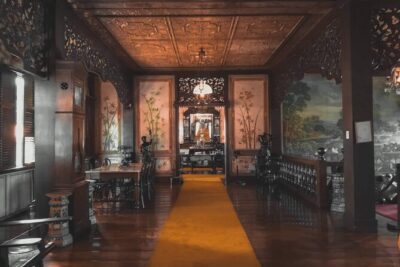
Casa Manila receives about 30 minutes. This museum recreates the lifestyle of a wealthy household during the Spanish colonial period and is based on an 1850s San Nicolas House once located on Calle Jaboneros.
This stop changes the scale of the tour. Fort Santiago shows public power and defense. Casa Manila shows how colonial life could look inside a home, through rooms, furnishings, and domestic details. The museum helps you picture social life rather than only political events.
The visit is not long, so you will probably get an overview instead of a detailed examination of every room. Still, it is a smart inclusion because it gives the tour variety. After forts, churches, and national heroes, a house museum shows how history can be read through everyday spaces.
Casa Manila is also a good point to ask your guide about the difference between the grand colonial image presented by the house and the wider realities of life in Manila. The tour’s guides are praised for answering questions and connecting individual sites to the broader story of the Philippines.
How the guides shape the experience
The guide makes or breaks a history tour, and this one depends heavily on personality. Andre and Andrei are repeatedly praised for being enthusiastic, engaging, funny, and easy to follow. Anne is also singled out for strong storytelling, while Andrea is described as both humorous and well informed.
You may hear history supported by photographs, music, and small details rather than a nonstop list of dates. That makes the tour a good match for you if you want an explanation of why places matter, not just a series of names.
The tone appears to be lively without losing the serious parts. Accounts of the tour describe moments that are funny, informative, and moving. A guide who cares about Manila can make the city feel personal, especially when discussing Filipino pride, José Rizal, and the difficult periods under Spanish and Japanese rule.
Guide assignments can change, so you should not book solely around one name. Still, the repeated praise for the company’s guides suggests that the guiding style is one of the experience’s biggest strengths.
Transport, heat, and the pace of the morning
Pickup is offered, and the outing includes an air-conditioned vehicle and bottled water. That matters in Manila, where walking between historic sites can feel much harder than the map suggests. The vehicle gives you a cool break and removes some of the stress of arranging transportation between locations.
The stated meeting period is Saturday and Sunday from 7:30 to 8:30 AM. A morning start is helpful because the heat and humidity can become uncomfortable later in the day. Bring light clothing, comfortable shoes, sun protection, and enough interest in walking on hard surfaces.
The group is described as a small group of 12 people or fewer, while the additional information gives a maximum of 24 participants. I would read this as a tour that is intended to feel intimate but may operate with a larger limit on some departures. If group size is crucial to your decision, confirm the expected size when booking.
Most people can participate, but this is not a purely vehicle-based tour. You will walk through historic sites and spend time outdoors. The air-conditioned vehicle helps, but it does not remove the need for comfortable footwear and heat planning.
Is the $83.34 price fair?
At $83.34 per person, this is not Manila’s cheapest way to see Intramuros. The value comes from what is bundled: air-conditioned transport, a guide, museum entrance fees, bottled water, taxes, and the carriage ride when the group condition is met.
You are also paying for structure. Instead of working out how to reach Fort Santiago, the Rizal Shrine, Manila Cathedral, and Casa Manila, you get a planned half-day route with historical interpretation. That can be worthwhile on a first visit, during a layover, or when you want to avoid the uncertainty of Manila traffic and heat.
The price makes less sense if you prefer to explore at your own speed, spend a long time in museums, or use inexpensive local transport. Casa Manila and the cathedral receive fairly short visits, and the carriage commentary may not be easy to hear. Independent visitors who already know the district may want more time at fewer sites.
For a first introduction, I think the price is reasonable because the tour combines several admissions and transport with a guide who adds meaning to the buildings. The strongest value is not the carriage ride. It is the concentrated history and the convenience.
Who should book this tour?
I would recommend it for a first-time Manila visitor who wants a clear introduction to the city’s past in one morning. It also suits you if you are staying outside Intramuros, since pickup and vehicle support can simplify the outing.
It is a particularly good fit for a short visit or long layover. The four to five hour schedule covers major sites without asking you to give up an entire day, though you should allow extra time for transportation if your flight schedule is tight.
Families and mixed-age groups may appreciate the varied format. You are not standing in one museum for hours. The route alternates between a fort, shrine, cathedral, house museum, carriage ride, and short transfers.
I would be more cautious if you dislike hot weather, have difficulty with extended walking, or need a very quiet and detailed museum experience. I would also confirm the carriage arrangement if that feature is important to you, since it is included only when more than four people join.
Free cancellation is available up to 24 hours before the start time. The outing depends on suitable weather and a minimum number of participants, so a cancellation caused by weather or insufficient enrollment comes with the option of another date or a full refund.
Should you book it?
Book this tour if you want the main Intramuros sights explained by an energetic local guide, with transport and admissions handled for you. The combination of Fort Santiago, the Rizal Shrine, Manila Cathedral, and Casa Manila gives you a strong first look at Manila’s colonial and national story.
Skip it if you want to linger at each site, avoid scheduled group travel, or explore on a very tight budget. For everyone else, the clear storytelling, manageable half-day length, and air-conditioned transport make this a sensible way to begin understanding Manila.
FAQ
How long does the Intramuros tour last?
The tour lasts approximately four to five hours.
What sites are included?
The route includes Fort Santiago, the Rizal Shrine, Manila Cathedral, Casa Manila, and additional time within Intramuros. The tour information also lists a waterfront promenade along Manila Bay.
Are entrance fees included?
Yes. Museum entrance fees, all listed taxes, and tour guide services are included.
Is transportation provided?
Yes. The experience includes an air-conditioned vehicle, and pickup is offered. Bottled water is also provided.
Is the horse-drawn carriage ride guaranteed?
No. The carriage ride is included if more than four tourists join the tour.
When does the tour operate?
The stated meeting period is Saturday and Sunday from 7:30 AM to 8:30 AM.
Can I cancel for a refund?
You can cancel up to 24 hours before the experience starts for a full refund. Cancellations or changes made less than 24 hours before the start time are not refunded.
Just added around Manila
- 3 Days Private Tour in Banaue Ifugao visiting Batad Rice Terraces★ 3.5 · 3 reviews
- Unforgettable Manila Fishing Village Day Excursion 2024★ 5.0 · 4 reviews
- indigenous Forest experience Manila 2023★ 5.0 · 4 reviews
- Cultural Dinner and Show in Manila★ 5.0 · 4 reviews
- Shared Old Manila Tour★ 5.0 · 5 reviews
- Shared Cruise Shore Excursion of Manila Old and New City Tour★ 4.0 · 10 reviews
- 5 Days Sagada Banaue Batad Discovery (PRIVATE GROUP TOUR Max 6 Travellers)★ 5.0 · 16 reviews
- Private Departure Airport Transfer in Manila Bay and Makati Area★ 5.0 · 3 reviews
Intramuros Walking Tours, compared.
Intramuros, Manila: Historical Bamboo Bike Tour
Read our review →
Experience Intramuros with Bamboo Bicycle – Ecotours
Read our review →
Intramuros, Chinatown, and Old Manila Half-Day Tour
Read our review →
Manila Old and New: Sightseeing Tour Including Intramuros and Fort Santiago
Read our review →
Explore Intramuros: Introduction to Philippine History
Read our review →Browse the lists this tour appears in