
Reviewed · INTRAMUROS WALKING TOURS
Manila: Filipino Historic Walking Tour in Intramuros
Intramuros is where Manila’s past becomes easy to read. Within its old walls, churches, aristocratic homes, military defenses, and war memorials sit close together, giving you a compact lesson in how Spanish rule, Catholicism, World War II, and the Filipino independence movement shaped the country.
I like this tour for two clear reasons: the guide gives meaning to places that can look quiet or formal, and the entrance fees to San Agustin Church and Museum, Casa Manila, and Fort Santiago are included. The small group, limited to 15 people, should also make it easier to ask questions. The main drawback is the walking: three hours on historic streets may be tiring, and the tour is not suitable for wheelchair users or people with mobility impairments.
Key points to know before you book
- San Agustin Church begins the story: Start at the oldest stone church in the Philippines and learn why Spain came to this part of the world.
- Casa Manila shows colonial life indoors: See a restored 19th-century home where European and Asian design meet in one carefully arranged setting.
- Fort Santiago brings politics and war into focus: The old garrison helps explain both Spanish military control and the Filipino fight for independence.
- World War II is part of the route: The Memorare Manila 1945 memorial gives the walk a sobering modern chapter.
- A guide adds real value: You move beyond dates and buildings to hear the stories connecting Catholic power, colonial rule, and local resistance.
- Plan for a respectful dress code: Short skirts and sleeveless shirts are not allowed, and comfortable shoes are essential.
Why Intramuros makes such a useful history lesson
Intramuros means within the walls, and that is the basic idea behind this Manila walking tour. Instead of spreading historical stops across the city, the route keeps you in the old walled district, where each site helps explain the next.
The tour begins with Spain’s arrival and its long influence on the Philippines. You hear why Spanish forces came across the world, how Catholicism became central to colonial rule, and what changed during more than 300 years of Spanish occupation.
That context matters. San Agustin Church is not simply an old building, Casa Manila is not just a grand house, and Fort Santiago is not merely a photogenic fortification. Together, they show how religion, social rank, military power, and resistance worked inside the colonial city.
I especially like this kind of guided route because Intramuros can be visited independently, but the meaning is easy to miss. A wall may look like a wall. A church may look like a church. A guide connects those objects to the larger story and points out details you might otherwise pass without noticing.
The tour is conducted in English or Tagalog. Its maximum group size is 15, which is small enough to keep the walk personal without making it a private tour.
More Historical Tours in Manila
- Intramuros, Manila: Historical Bamboo Bike Tour
★ 4.8 · 583 reviews - Explore Intramuros: Introduction to Philippine History
★ 5.0 · 80 reviews - Experience Manila’s Heritage: Intramuros & More in Half a Day!
★ 5.0 · 76 reviews
San Agustin Church and Museum: begin with the oldest stone church
Meet your guide in the lobby of the San Agustin Church Museum. This is the practical starting point, and it gives the tour an immediate sense of place rather than beginning with a general introduction somewhere outside the district.
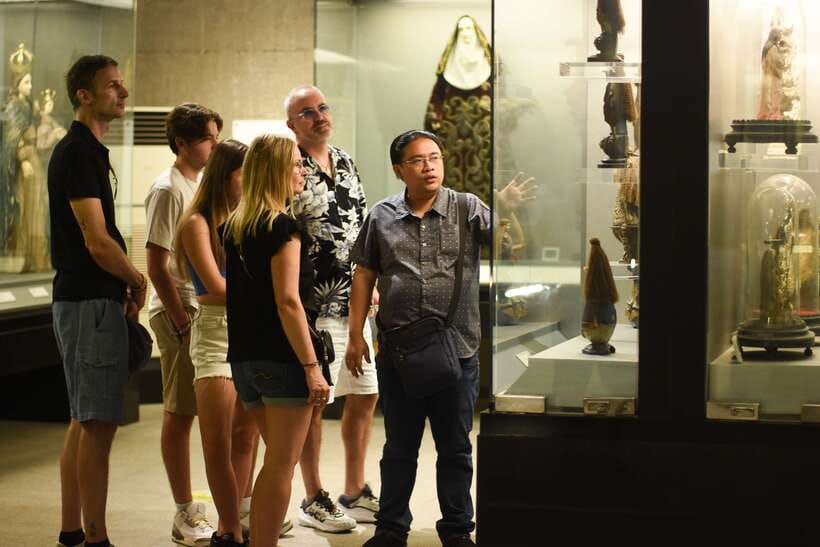
San Agustin Church is presented as the oldest stone church in the Philippines. Its importance goes beyond age. The church opens the discussion about why Spanish power reached the Philippines and how Catholic institutions became a lasting part of Filipino public life and culture.
Expect the guide to explain the church’s connection to Spanish rule and the marks left by that period. The value here is the interpretation. You are not simply asked to admire old stonework. You are encouraged to consider the church as a center of religion, authority, and colonial society.
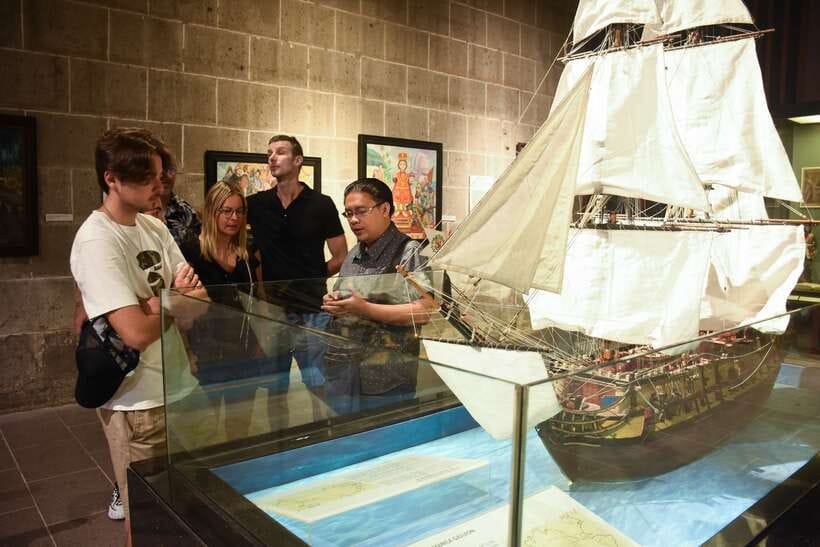
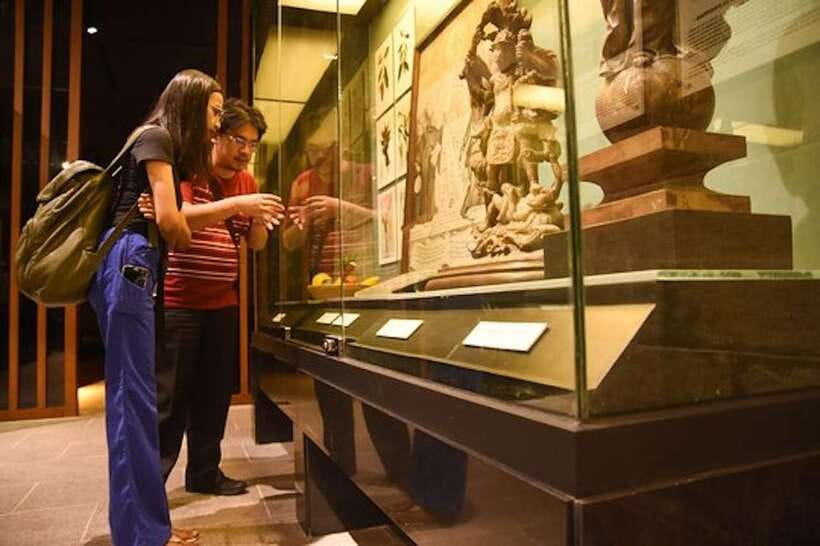
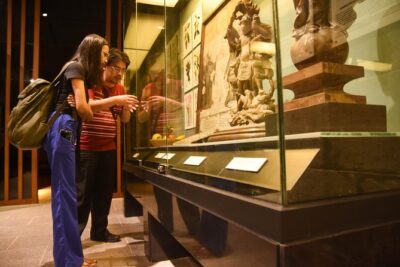
The adjoining San Agustin Museum adds objects and interior spaces to the story. Its artifacts offer a closer look at the relationship between Manila’s old city and the Catholic Church. This is one of the tour’s strongest stops for anyone who wants more than a quick exterior view.
Allow yourself time to look carefully. The museum portion is guided, so you can ask how the objects fit into the wider story of the Philippines. If you prefer a fast sightseeing circuit, the amount of historical explanation may feel dense. If you enjoy context, it is a good use of the first part of the three-hour tour.
Dress with care here. Short skirts and sleeveless shirts are not allowed, so modest clothing is the safer choice for the church and the other historic sites.
Casa Manila: colonial life in rooms rather than ruins
After San Agustin, you cross the street to Casa Manila. The change is useful. The church shows religious and institutional power, while Casa Manila lets you picture how an affluent 19th-century household might have lived.
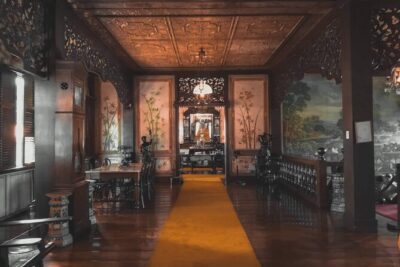
This restored home is presented as an aristocrats’ residence, with furnishings and design influenced by both East and West. That mix is one of the most interesting parts of the stop. Colonial Manila was not simply Spanish in appearance. Its homes reflected trade, local materials, Asian traditions, European taste, and the social divisions of the period.
I like Casa Manila because it gives the colonial story a human scale. Fortifications and churches can tell you who held power, but a home helps you think about daily habits, status, decoration, and the people who benefited from the system.
The house is carefully restored, so you should expect an arranged historic interior rather than a casual walk through an ordinary residence. The guide helps explain what you are seeing and why the design matters.
This stop also gives the tour a change of pace. You move from church history into domestic life, then return to the walls and streets of Intramuros. That variety keeps the three hours from becoming a single long sequence of similar stone buildings.
A quieter stretch of the Intramuros walls
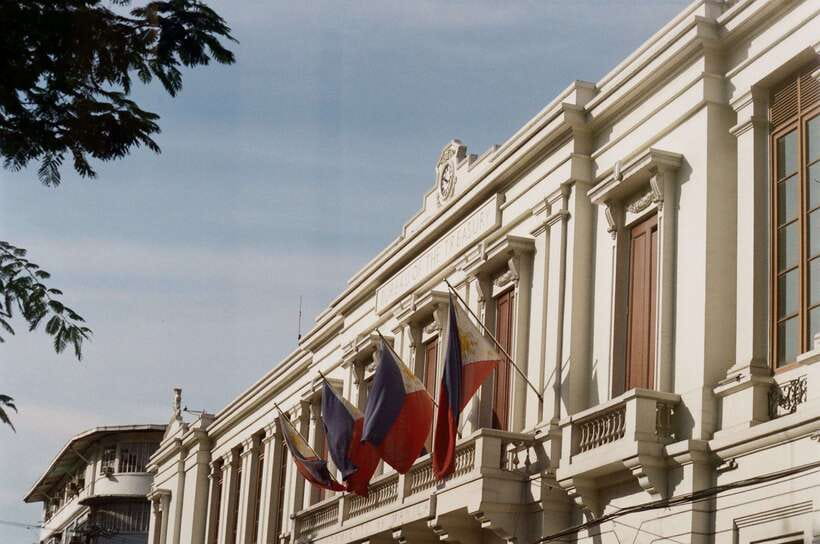
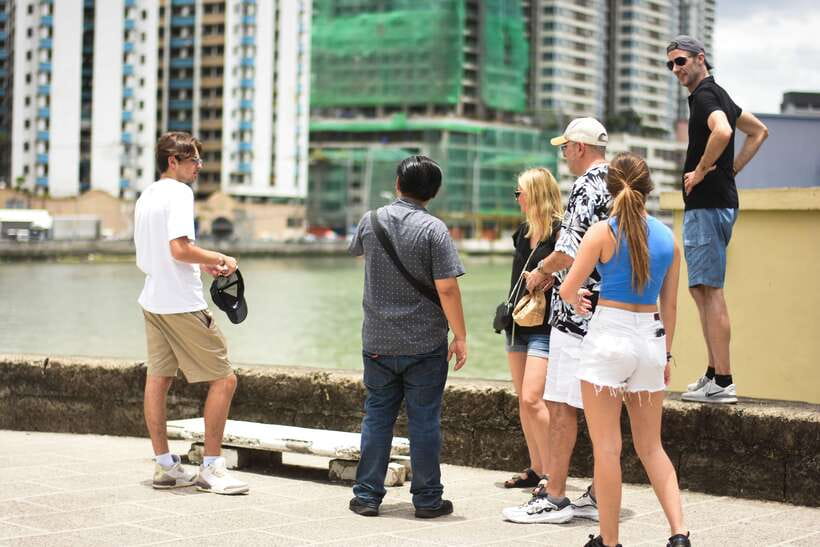
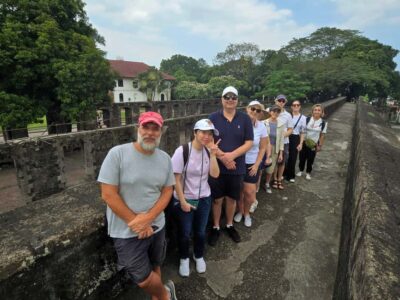
The route then heads toward a less frequently visited section of the historic wall. The information provided for the tour does not promise a long wall walk, but it does include a chance to see a quieter part of Intramuros and hear about its past.
That can be a welcome contrast to the better-known landmarks. The wall is not only a background for photographs. It shows how the old city was enclosed and defended, and it helps you understand Intramuros as a planned colonial center rather than a collection of unrelated buildings.
This is also where comfortable shoes become important. You will be walking through narrow streets and historic areas for about three hours, and the tour is not designed for people with mobility impairments. Anyone who has difficulty walking should take that limitation seriously before booking.
The route is not a transport-heavy sightseeing trip. Hotel pickup and drop-off are not included, and you make your own way to the San Agustin Church Museum lobby. After the walk, the tour finishes at Fort Santiago, so you should plan your onward transport from there.
More Intramuros tours:
- Experience Intramuros with Bamboo Bicycle – Ecotours
★ 5.0 · 508 reviews - Manila: Intramuros, Chinatown, and Old Manila Half-Day Tour
★ 4.8 · 475 reviews - Manila Old and New: Sightseeing Tour Including Intramuros and Fort Santiago
★ 4.5 · 377 reviews - Manila: Guided Sunset Bamboo Bike Tour in Intramuros
★ 4.8 · 119 reviews
Memorare Manila 1945: a short but serious stop
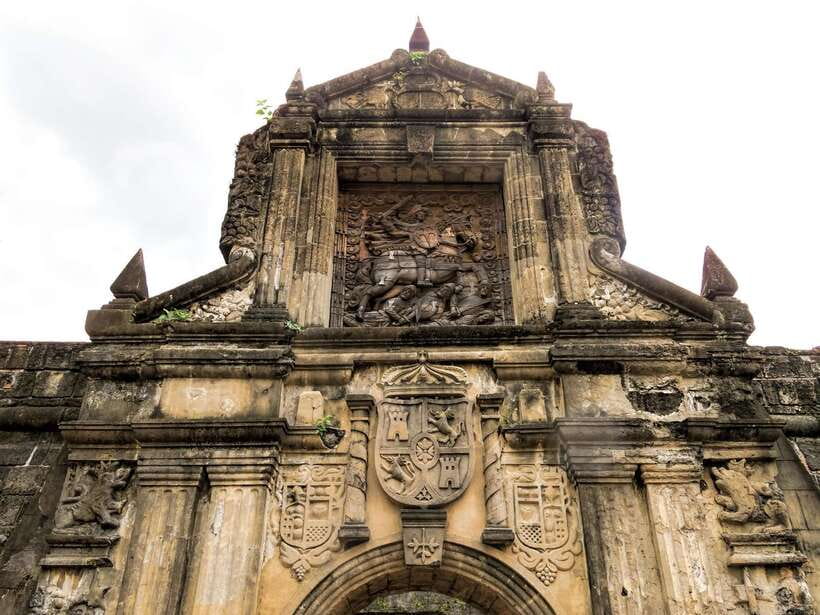
The next major pause is Memorare Manila 1945, a memorial connected to the role of the Philippines in World War II. It is a sightseeing stop rather than a museum visit, but it gives the tour a needed shift from colonial beginnings to the destruction and suffering of the 20th century.
The guide uses the memorial to explain what happened in Manila during the war and why that period still matters to the city’s identity. This is not the longest stop on the route, yet it helps prevent the tour from treating Intramuros as a preserved Spanish-era set piece.
I value the inclusion of this memorial because Philippine history did not end with Spanish rule. A useful Manila tour needs to show how later events affected the old city, and the World War II stop adds that wider time frame.
The memorial may feel brief compared with the church, museum, and fort. That is worth knowing if World War II is your main interest. The tour introduces the subject, but it is not marketed as a dedicated war-history walk.
Manila Cathedral and the continuing role of Catholicism
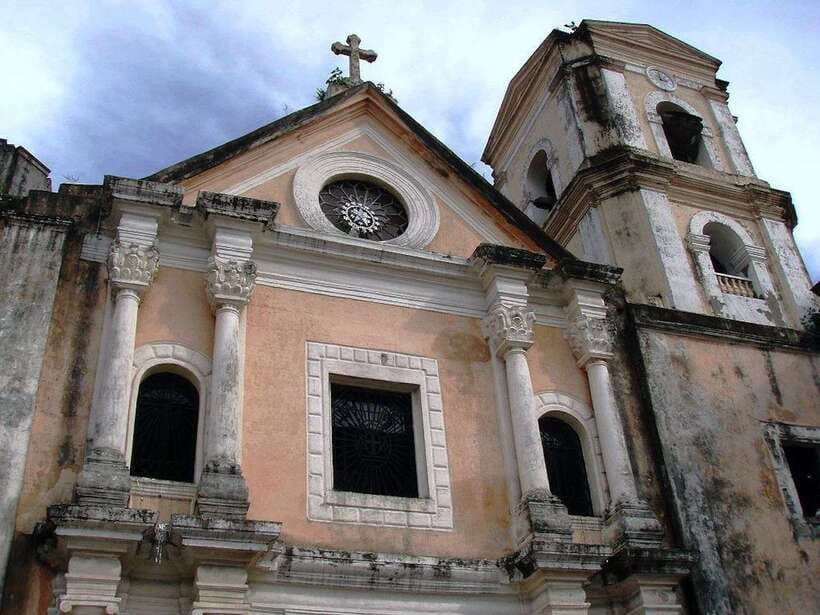
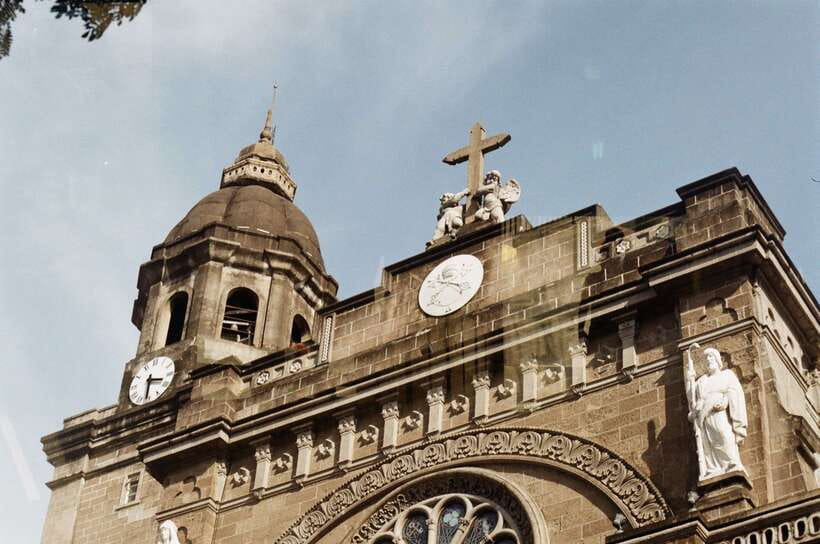
The route continues to Manila Cathedral, described as the seat of the Catholic Church in the Philippines. This stop brings the Catholic thread back into view after the museum and the war memorial.
You see how the church remains tied to the country’s national story, not only to the Spanish period. The cathedral helps explain the continuing public importance of Catholicism and gives you another point of comparison with San Agustin Church.
The visit is listed as sightseeing rather than a guided interior tour, so expect a shorter stop than at San Agustin Museum, Casa Manila, or Fort Santiago. Still, its location and role make it an important part of the route.
A guide can help you see the difference between visiting a major religious building and understanding its place in Philippine society. If you are not familiar with the country’s Catholic history, this part of the walk adds useful structure.
Fort Santiago: the strongest finish for independence history
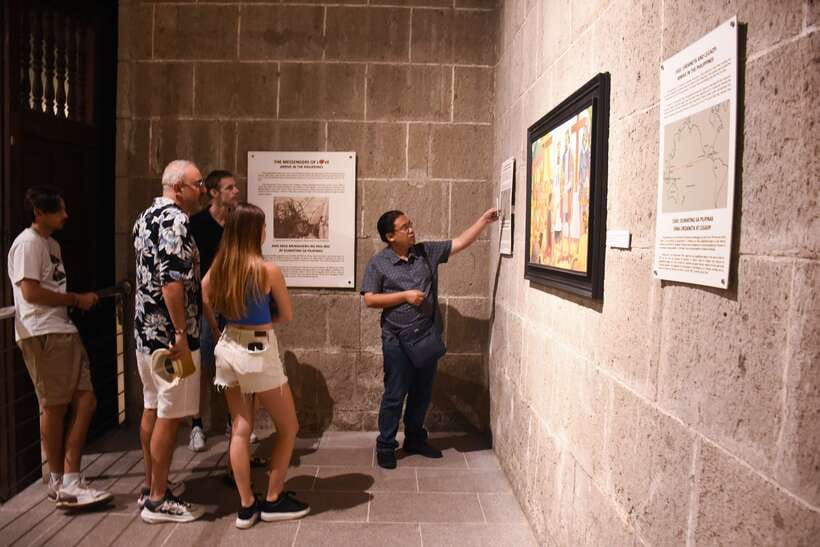
The tour ends at Fort Santiago, where the focus turns to military power and the Filipino fight for independence. This is a fitting final stop because it brings together many of the subjects introduced earlier: Spanish rule, defense, political control, resistance, and the long struggle to shape an independent nation.
The fort is included in the entrance price, and the guide leads you through it. You should expect the fort to receive more attention than a quick photo stop. It is the place where the tour’s political story becomes most direct.
Fort Santiago also gives the walking route a strong sense of closure. You begin with the arrival and influence of Spain, move through religion and colonial society, confront the damage of World War II, and finish with the Filipino independence movement.
The tour ends here rather than returning to San Agustin Church. That matters when planning your day. If you have a lunch reservation, hotel appointment, or another activity, allow time to get from Fort Santiago to your next stop.
What $55 means in practical value
At $55 per person, this is not the cheapest way to stroll around Intramuros. You can see parts of the district without a paid guide, and some exterior landmarks can be viewed independently.
The price becomes easier to justify because three major admissions are included: San Agustin Church and Museum, Casa Manila Museum, and Fort Santiago. You are also paying for a live guide, three hours of organized sightseeing, and the explanations that connect the buildings.
I would see the value this way:
- If you want a quick photo stop, the price may feel high.
- If you want the colonial story explained in clear sequence, the guide adds much more value.
- If you plan to visit all three included sites anyway, the bundled entry fees help.
- If you dislike structured walking tours, the fixed route and three-hour pace may not suit you.
The strongest praise attached to this experience centers on the guides. Past bookings specifically mention Jerome as friendly, flexible, and clear, while other comments describe the guide as funny, motivated, and well informed. Guides can change, so you should not assume Jerome will lead your departure, but the pattern suggests that the human side of the tour is its main strength.
One detail is worth keeping in mind: a past visitor found that an unexpected Marian parade created some confusion during the visit. That is a reminder that Intramuros remains an active city district, not a sealed museum. Religious events and local activity can affect what you see on a given day.
Who will enjoy this walking tour most
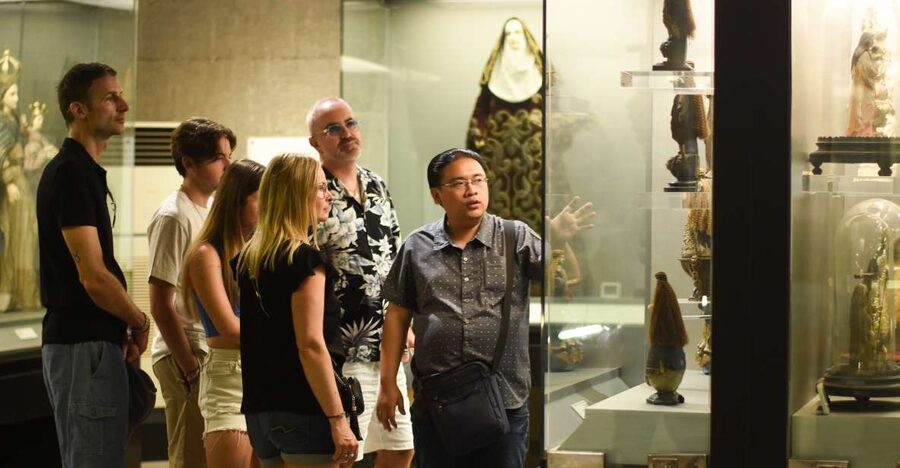
I would recommend this tour to first-time visitors who want a strong introduction to Manila’s old city. It suits you especially well if you enjoy asking questions, want help placing sites in historical order, or prefer a guide to wandering without a plan.
It is also a good match for anyone interested in the relationship between Spain and the Philippines, the role of Catholicism, colonial architecture, and the independence movement. The mixture of church, home, wall, memorial, cathedral, and fort gives you several ways into the story.
Families with older children may find the route useful if the children can manage three hours of walking and sustained historical explanation. The tour is less suitable for anyone who needs step-free access or has limited mobility.
Bring comfortable shoes. Dress respectfully for the churches and museums. Because the activity depends on good weather, a cancellation may lead to a different date or a full refund. You can cancel up to 24 hours before the start for a full refund, and the reserve-now, pay-later option keeps your plans flexible.
Should you book the Intramuros history walk?
Book it if you want Manila’s historic district explained by a person rather than pieced together from signs. The route covers the essential sites, the admissions are included, and the walk gives you a clear story from Spanish arrival to independence and World War II.
Skip it if you want a short, self-paced visit or if three hours on foot would be uncomfortable. For most first-time visitors who can walk easily, $55 is a fair price for the access and historical context, particularly if your alternative is paying separate entry fees and missing the connections between the sites.
FAQ
Where does the tour begin?
Meet your guide in the lobby of the San Agustin Church Museum. Use the provided WhatsApp contact number to identify your guide.
Where does the tour finish?
The tour finishes at Fort Santiago.
How long does the tour last?
The walking tour lasts about three hours. One past booking finished a little under three hours.
What languages are available?
The live guide can conduct the tour in English or Tagalog.
Which entrance fees are included?
Admission to Fort Santiago, San Agustin Church and Museum, and Casa Manila Museum is included.
Is hotel pickup included?
No. Hotel pickup and drop-off are not included.
What should I wear?
Wear comfortable shoes and clothing suitable for visiting religious and historic sites. Short skirts and sleeveless shirts are not allowed.
Is the tour suitable for wheelchair users?
No. The activity is not suitable for wheelchair users or people with mobility impairments.
What happens if the weather is bad?
The activity requires good weather. If it is canceled because of weather, you can receive a different date or a full refund.
How large is the group?
The group can have a maximum of 15 participants.
Can I cancel for a refund?
Yes. You can cancel up to 24 hours in advance for a full refund. You can also reserve now and pay later.
More Walking Tours in Manila
- Manila: Street Food and Drinks Walking Tour with Tastings
★ 4.8 · 114 reviews - Viva Old Manila: Intramuros Walking Tour
★ 4.9 · 104 reviews - Manila’s Walled City: Intramuros Walking Tour
★ 5.0 · 82 reviews - Manila: Sightseeing and Food Walking Tour with Tastings
★ 4.7 · 68 reviews
Just added around Manila
- 3 Days Private Tour in Banaue Ifugao visiting Batad Rice Terraces★ 3.5 · 3 reviews
- Unforgettable Manila Fishing Village Day Excursion 2024★ 5.0 · 4 reviews
- indigenous Forest experience Manila 2023★ 5.0 · 4 reviews
- Cultural Dinner and Show in Manila★ 5.0 · 4 reviews
- Shared Old Manila Tour★ 5.0 · 5 reviews
- Shared Cruise Shore Excursion of Manila Old and New City Tour★ 4.0 · 10 reviews
- 5 Days Sagada Banaue Batad Discovery (PRIVATE GROUP TOUR Max 6 Travellers)★ 5.0 · 16 reviews
- Private Departure Airport Transfer in Manila Bay and Makati Area★ 5.0 · 3 reviews
Intramuros Walking Tours, compared.
Intramuros, Manila: Historical Bamboo Bike Tour
Read our review →
Experience Intramuros with Bamboo Bicycle – Ecotours
Read our review →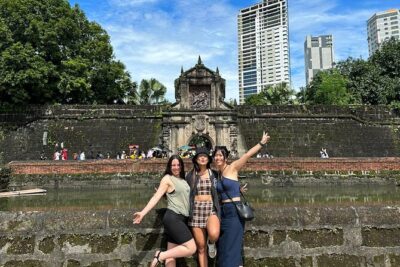
Intramuros, Chinatown, and Old Manila Half-Day Tour
Read our review →
Manila Old and New: Sightseeing Tour Including Intramuros and Fort Santiago
Read our review →
Explore Intramuros: Introduction to Philippine History
Read our review →Browse the lists this tour appears in